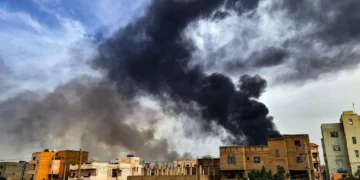
The African Union Commission (AUC) has issued a strong condemnation of the recent surge in violence and reported atrocities in El Fasher, the capital of North Darfur State in western Sudan. In a statement released on Monday evening, Chairperson Mahmoud Ali Youssouf expressed grave concern over the humanitarian impact and potential violations of international humanitarian and human rights law stemming from the reported takeover of the city by the Rapid Support Forces (RSF), a paramilitary group engaged in a prolonged conflict with the Sudanese Armed Forces (SAF).
Youssouf stated that the African Union “condemns in the strongest terms the grave violations of human rights and international humanitarian law, including alleged war crimes and ethnically targeted killings of civilians.” The AU urged all parties to the conflict to prioritise the protection of civilians and to uphold their obligations under international law.
The statement comes in the wake of the RSF’s announcement on 27 October 2025 that it had assumed full control of El Fasher after months of siege. Independent verification of the situation remains limited due to restricted access, but humanitarian agencies and Sudanese civil society groups have reported alarming accounts of civilian suffering, widespread displacement, and destruction of essential infrastructure. The United Nations and other international observers have raised urgent concerns about deteriorating conditions and the risk of mass atrocities.




Since the eruption of hostilities in April 2023, Sudan has been caught in a devastating armed struggle between the SAF, led by General Abdel Fattah al-Burhan, and the RSF, headed by General Mohamed Hamdan Dagalo, also known as Hemeti. This intra-military conflict has claimed tens of thousands of lives and displaced over seven million people, both internally and across neighbouring countries, compounding an already fragile humanitarian landscape.
The AU Chairperson reiterated the continental body’s position that there is no viable military solution to Sudan’s crisis and called for an immediate cessation of hostilities. He further appealed for the urgent establishment of humanitarian corridors to facilitate the delivery of life-saving assistance to affected populations. “The people of Sudan must not be further victimised by protracted violence,” Youssouf noted, highlighting the need for inclusive dialogue and political engagement as the only sustainable path forward.
While the conflict continues to generate international attention, responses have remained largely disjointed, with ceasefire efforts failing to hold and accountability mechanisms remaining out of reach. The AU’s intervention signals a continued commitment to promoting African-led solutions and reinforcing norms of civilian protection within the continent’s conflict zones.
This latest development underscores the broader geopolitical and socio-ethnic dimensions of Sudan’s conflict, which has fractured along both institutional and communal lines. The war has also strained regional stability, particularly in the Sahel and Horn of Africa regions, and disrupted cross-border humanitarian operations and trade.
El Fasher, historically a key centre in Darfur’s socio-political fabric, has once again become the site of immense suffering. The African Union’s call for accountability and its emphasis on African-centred peacebuilding approaches reflects a growing consensus that African crises require contextual and historically informed responses, rather than externally imposed templates.
The situation remains fluid. However, the AU’s message is clear: perpetrators of atrocities must be held accountable, and regional and international actors must support Sudanese-led dialogue initiatives aimed at restoring peace and dignity to the people of Sudan.