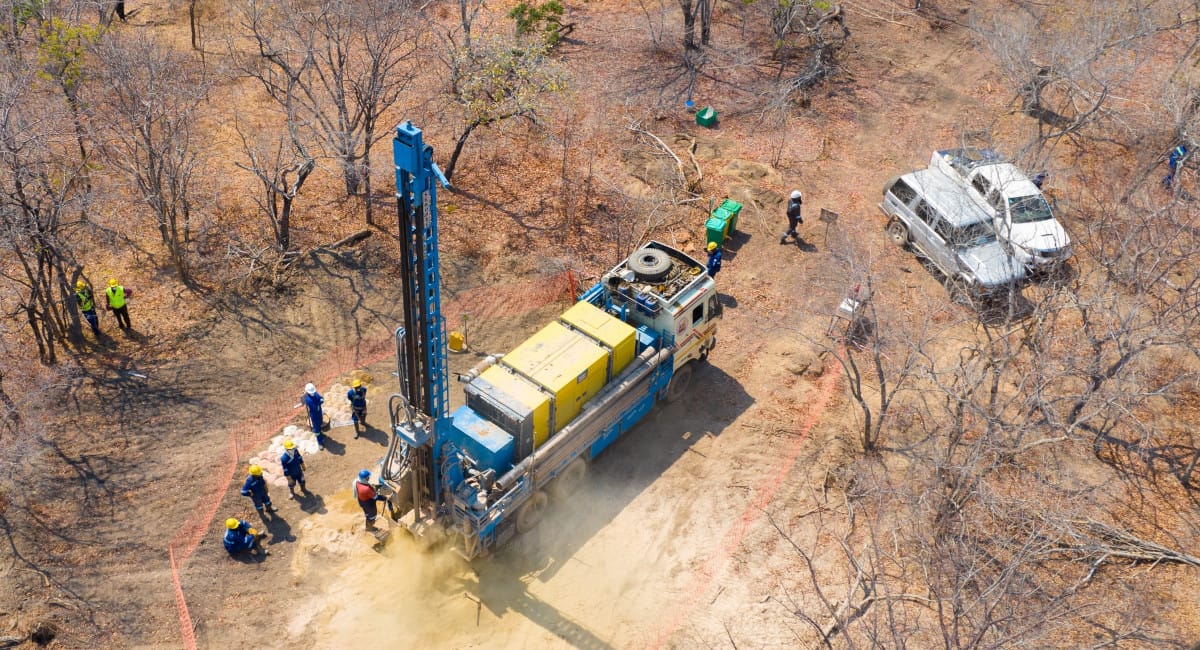
Atomic Eagle Limited, an Australian listed uranium exploration and development company with operations across the African continent, has initiated an extensive drilling programme at its Muntanga Uranium Project in southern Zambia. The campaign signals a renewed phase of activity at a site long recognised within regional geological surveys as holding significant uranium potential.
The company reports that the current programme is the most extensive undertaken at Muntanga in close to two decades, focusing on resource expansion across multiple deposits including Chisebuka and Muntanga East. This follows a recent update to the project’s Mineral Resource Estimate, which indicates total contained uranium of approximately 58.8 million pounds of U₃O₈, reflecting a 24 percent increase on previous estimates.
According to company disclosures, the revised resource comprises both Measured and Indicated categories amounting to 50.4 million tonnes, alongside a further 35.8 million tonnes classified as Inferred. These figures contribute to positioning Muntanga as a project of regional scale within southern Africa’s evolving uranium landscape.




At deposit level, Chisebuka is estimated to contain 19.9 million tonnes at an average grade of 220 parts per million, equating to roughly 9.7 million pounds of uranium oxide. Muntanga East, while smaller, is reported to host 3.1 million tonnes at 252 parts per million for approximately 1.7 million pounds. Both zones remain open along strike and at depth, suggesting potential for further resource growth as drilling progresses.
A feasibility assessment reviewed by independent consultants has outlined a possible development pathway based on open pit mining combined with heap leach processing. The study indicates potential annual production of approximately 2.2 million pounds of uranium over a projected mine life of 12 years. Recovery rates above 90 percent and relatively low acid consumption are cited as favourable processing characteristics, though such projections remain subject to further technical validation and market conditions.
The company has also reported a cash position of approximately 16.3 million United States dollars as of March 2026, which it considers sufficient to support ongoing exploration and near term development activities. This financial footing may provide continuity for the current drilling campaign, although longer term project financing would depend on feasibility outcomes and broader market dynamics.
Geographically, the Muntanga project lies near Zambia’s border with Zimbabwe and is connected to established transport corridors leading դեպի the port of Walvis Bay in Namibia. This positioning offers logistical advantages within a regional framework where cross border infrastructure increasingly underpins mineral export strategies.
The renewed focus on Muntanga comes at a time of heightened global interest in uranium, driven in part by discussions around energy transition pathways and the role of nuclear power within diversified energy systems. Within Africa, countries including Namibia, Niger, and South Africa have long histories of uranium production, while others such as Zambia are navigating how such resources might contribute to national development priorities.
While the project’s technical indicators suggest potential viability, its future trajectory will likely depend on a range of factors including regulatory processes, environmental considerations, community engagement, and global uranium pricing. In this context, developments at Muntanga form part of a broader conversation about how mineral resources across the continent are governed, developed, and integrated into both local economies and international supply chains.