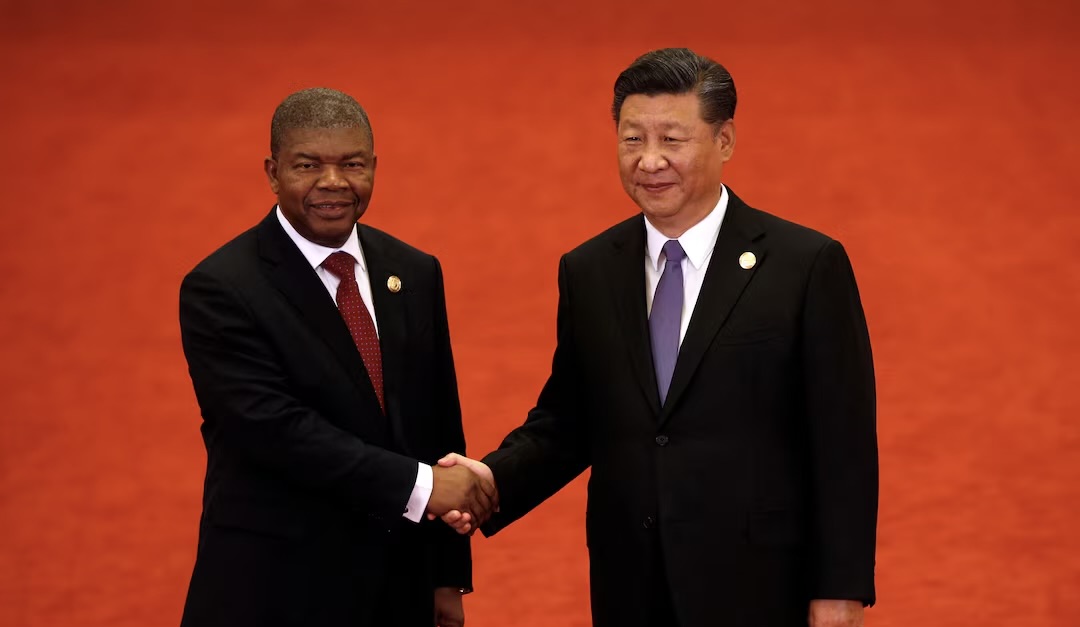
Angola has attracted 596 investment proposals valued at approximately $21.8 billion over the past five years, with Chinese investors accounting for around 80 per cent of the total. The figures highlight the continued significance of Chinese capital in Angola’s evolving economic landscape while also reflecting broader global competition for Africa’s natural resources and infrastructure opportunities.
The data was presented by Arlindo das Chagas Rangel, chairman of the Angolan Private Investment and Export Promotion Agency (AIPEX), the government institution responsible for facilitating foreign investment and promoting exports. According to AIPEX, the proposals cover a range of sectors including energy, mining, infrastructure development and industrial production.
China’s prominence among investors reflects a long standing economic partnership between Luanda and Beijing. Angola has been one of China’s most significant economic partners in Africa since the early 2000s, particularly in oil supply and infrastructure development. Chinese companies have participated in major reconstruction projects following Angola’s civil war, including transport networks, housing developments and energy infrastructure.



Portuguese firms submitted 72 investment proposals valued at approximately $92.6 million during the same period. While Portugal maintains historic commercial ties with Angola, the scale of recent proposals indicates the expanding role of Asian capital within Angola’s investment environment and across the African continent more broadly.
Angola remains Africa’s second largest oil producer after Nigeria and continues to rely heavily on hydrocarbons as a central component of its export economy. At the same time, the government has introduced a series of policy reforms aimed at improving the investment climate and encouraging economic diversification beyond oil.
Changes to the country’s Private Investment Law have removed the requirement for foreign investors to partner with local shareholders holding at least 35 per cent equity. The legislation has also eased restrictions on capital repatriation and reduced minimum investment thresholds, measures intended to streamline procedures and make Angola more accessible to international investors.
These reforms form part of a broader privatisation programme launched in 2019 which aims to restructure the role of the state in the economy and increase private sector participation. The programme includes plans to privatise more than 100 state owned enterprises across sectors such as transport, energy, agriculture and industry.
Infrastructure development remains central to Angola’s long term economic strategy. One of the most significant projects is the Lobito Corridor, a railway and logistics route connecting the port of Lobito on Angola’s Atlantic coast to the Democratic Republic of the Congo and Zambia. The corridor is designed to facilitate the transport of minerals and agricultural commodities from central Africa to international markets, while also strengthening regional trade links.

The project illustrates how transport infrastructure can support economic integration across southern and central Africa. By connecting resource rich inland regions to coastal export hubs, such corridors have the potential to reduce transport costs, expand trade routes and improve access to global markets.
China’s continued interest in Angola reflects a broader effort by several global economies to secure reliable access to energy resources and critical minerals. At the same time, Angola’s investment environment is increasingly shaped by a range of international partners. The United States, European countries and Russia have also shown interest in opportunities within Angola’s energy, mining and infrastructure sectors.
From a continental perspective, Angola’s experience reflects the wider transformation of economic partnerships across Africa. Governments across the region are pursuing policy reforms aimed at attracting foreign capital while also strengthening regional trade networks and industrial development.
While Chinese investors currently dominate the volume of investment proposals, the broader picture points to a competitive and evolving investment landscape in which African countries are engaging multiple partners as they seek to advance development priorities, expand infrastructure and deepen economic cooperation across the continent.