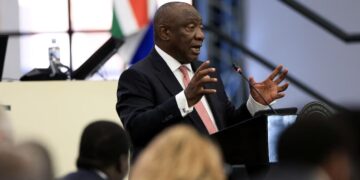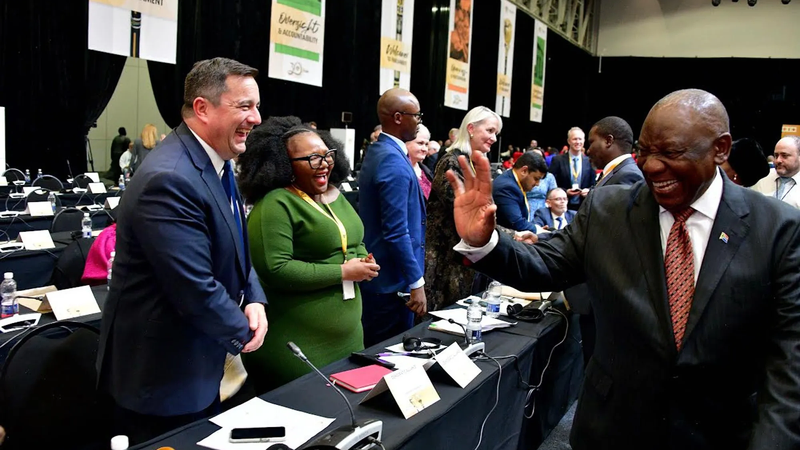
South Africa’s political landscape is abuzz with speculation as President Cyril Ramaphosa, re-elected for a second term, prepares to announce an inclusive cabinet following the formation of a government of national unity. This unprecedented development comes after the African National Congress (ANC) lost its outright majority in the May 29 general election for the first time in three decades.
In response to the electoral outcome, the ANC has formed an alliance with the centre-right Democratic Alliance (DA), the Zulu nationalist Inkatha Freedom Party (IFP), and other smaller parties, marking a significant departure from its long-standing solitary rule. The ANC emphasised its readiness to set aside political differences and prioritise national interests in this new coalition.
The forthcoming cabinet announcement has generated widespread speculation regarding potential appointments from the diverse political factions. The collaboration between the ANC and the DA, traditionally fierce adversaries, has particularly piqued public interest and raised questions about the distribution of key ministerial positions.



Chief Justice Raymond Zondo officiated the first parliamentary session post-election on Friday, administering the oath to newly elected Members of Parliament in batches. The session also saw the election of the Speaker from the ANC and a Deputy Speaker from the DA, reflecting the newfound political cooperation.
International leaders have extended their congratulations to Ramaphosa. US President Joe Biden expressed his anticipation of continued collaboration between the two nations. African Union (AU) Chairperson Moussa Faki praised Ramaphosa’s enduring support for the AU’s continental agenda. Namibia’s President Nangolo Mbumba, referring to Ramaphosa as his “dear brother,” voiced confidence in his leadership to elevate South Africa to greater heights.

As Ramaphosa prepares to announce his cabinet, speculation is rife about which figures from the ANC, DA, IFP, and other parties will be entrusted with key ministerial portfolios. The coalition government aims to balance experience with fresh perspectives to address the nation’s pressing challenges.
The ANC’s concession to form a coalition government signifies a notable shift in the party’s strategy. “We are ready to set aside our political differences and find innovative ways to work together in the interest of our nation,” the humbled party stated. This sentiment marks a significant departure from the ANC’s long-standing solitary rule and demonstrates an adaptability to the changing political climate.
However, the path ahead is laden with challenges. The ideological chasm between the ANC and DA has prompted public scepticism, raising questions about the feasibility and stability of such an alliance. The DA has historically been the main opposition party, often critical of the ANC’s policies and governance.
The forthcoming inauguration of Ramaphosa on June 19 is expected to be a defining moment, setting the tone for his administration under this new coalition framework. As the nation anticipates this event, the inclusive cabinet’s ability to foster unity and drive effective governance will be closely scrutinised.
South Africa stands at a crossroads, with the potential for a transformative political era that prioritises collaboration over division. As the world watches, the success of this government of national unity could serve as a blueprint for other nations grappling with political fragmentation.