Air India’s deep flight cuts, triggered by the Iran war and Pakistan’s airspace ban, are opening the door for global carriers to expand rapidly into one of the world’s fastest-growing aviation markets.
Airlines including Lufthansa Group and Cathay Pacific are adding capacity to and from India, capitalising on disrupted routes and rising passenger demand for travel to Europe and North America.
The shift is already visible in the numbers. Foreign airlines increased their share of India-origin international flights to 58.4% between March and May, up from 51.2% a year earlier. Over the same period, Air India scheduled 6,404 international flights, a drop of 17.5% year on year, and has announced further cuts for the June to August period.



At the heart of the disruption is a combination of geopolitical and operational pressures. The Iran war has made routes through the Gulf less attractive, while Pakistan’s ongoing ban on Indian aircraft using its airspace has forced costly detours, increasing fuel consumption and flight times.
Those pressures have hit Air India particularly hard.

The airline, owned by Tata Group and partly backed by Singapore Airlines, has been in the midst of an ambitious turnaround plan aimed at becoming a competitive global carrier. That strategy relied heavily on expanding long-haul routes and upgrading its fleet.
But rising jet fuel prices and longer routes have made many of those international services unprofitable. In an internal memo, CEO Campbell Wilson warned that the “massive rise” in fuel costs, combined with airspace constraints, had undermined the airline’s economics.
The financial impact is significant. Air India is expected to post record losses exceeding $2.1 billion for the 2025–26 fiscal year, with more than 60% of its revenue tied to international operations.
Some routes have been hit harder than others. Flights from India to the United States have plunged by over 77%, while European routes have seen more modest declines.
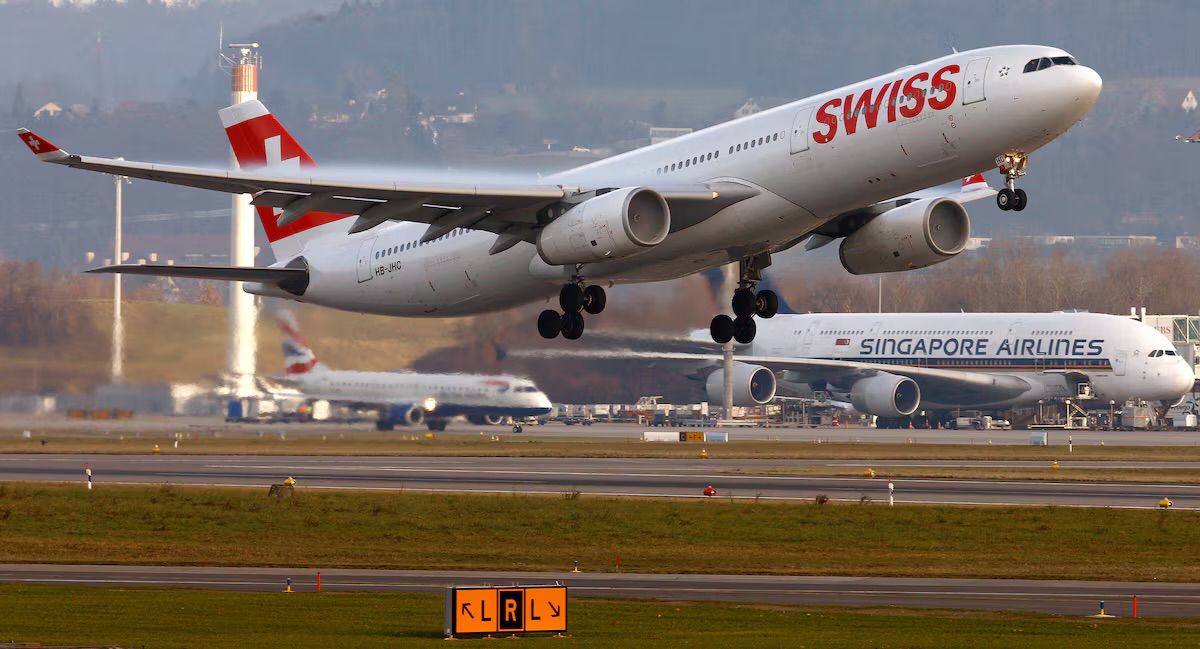
Meanwhile, competitors are moving quickly to fill the gap. European carriers are among the biggest beneficiaries, with airlines such as Swiss and KLM ramping up services and capturing a growing share of long-haul traffic.
Even as Middle Eastern giants like Emirates maintain steady schedules, the broader shift suggests a rebalancing of market share in India’s skies.
The longer-term concern for Air India is strategic. What was meant to be a period of expansion and brand rebuilding is now being shaped by external shocks, giving rivals an opening to strengthen their foothold in a critical market.
For passengers, the immediate effect is higher fares and fewer non-stop options. For the industry, it is a reminder of how quickly geopolitics can redraw the map of global aviation.