The recent Africa Climate Summit and Addis Ababa Declaration mark a pivotal moment in the continent’s approach to climate resilience. Moving beyond rhetoric, African leaders and institutions have charted a clear and actionable path — one that prioritises adaptation, agricultural transformation, and financial reform rooted in African agency and ingenuity.
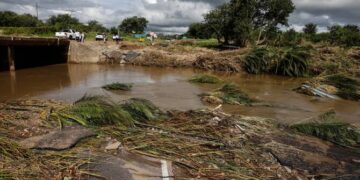
Central to this evolving framework is the recognition that Africa’s climate resilience begins on the farm. Agriculture supports over 60 per cent of the continent’s workforce and contributes nearly 35 per cent of its GDP. Yet, it remains the sector most exposed to climate shocks. Droughts, floods, and unpredictable weather have reduced yields by up to 25 per cent, with climate-related fatalities tripling over the past decade, according to the African Development Bank (AfDB).
The launch of the Africa Climate Innovation Compact, designed to mobilise USD 50 billion annually and deliver 1,000 African climate solutions by 2030, offers a credible mechanism to transform these ambitions into tangible progress. By aligning homegrown innovations in agriculture, water, energy, and community resilience with blended finance, the Compact ensures African ideas are not sidelined but scaled.



Complementing this initiative, African development banks and commercial lenders have committed USD 100 billion towards green industrialisation. This signals a strategic pivot: leveraging clean energy to power industries, expand trade, and generate jobs — an approach built not on dependency but on self-determined economic transformation.
Adaptation lies at the heart of these efforts. From rainwater harvesting and afforestation to soil regeneration and drought-tolerant seeds, African states are embedding resilience into their agricultural ecosystems. Notably, the Great Green Wall — stretching 8,000 kilometres across 11 countries — and Ethiopia’s Green Legacy Programme, which aims to plant 50 billion trees by 2026, exemplify large-scale climate action rooted in local knowledge and community ownership.
However, structural inequities in global finance remain. African leaders, through the Addis Ababa Declaration, have renewed calls for reform of multilateral development banks to reduce borrowing costs and amplify African representation in decision-making. By promoting grant-based rather than loan-based adaptation financing, the declaration seeks to prevent the worsening of already heavy debt burdens while catalysing private co-investment.
The declaration also integrates African-led frameworks such as the Comprehensive Africa Agriculture Development Programme (CAADP) and the Food and Agriculture for Sustainable Transformation (FAST) partnership, focusing on channeling resources directly to smallholder farmers, women, and youth. This inclusivity ensures that climate solutions translate into equitable livelihoods rather than abstract policy goals.
Beyond finance, access to clean and reliable energy remains a cornerstone of rural transformation. The Mission 300 initiative seeks to connect 300 million people to modern energy, while the clean cooking programme aims to reach 900 million by 2030. These are not peripheral goals: access to energy underpins value addition, education, health, and ultimately, climate resilience.
Critically, Africa’s climate narrative is evolving. The discourse in Addis Ababa shifted from one of deficit to one of capability — highlighting what Africa can build, not merely what it lacks. Kenya’s investments in green infrastructure and Ethiopia’s hydropower expansion are emblematic of this new self-assured narrative. Civil society’s growing insistence on accountability and local participation further ensures that this transformation remains people-centred and transparent.
As the continent approaches COP30, the next phase must translate plans into tangible outcomes. Four pragmatic shifts can accelerate progress:


- Make adaptation grants the norm, particularly for local governments and smallholders.
- Integrate climate-smart agriculture to improve productivity, reduce risk, and preserve ecosystems.
- Scale proven practices — from water harvesting to regenerative farming — through concessional finance.
- Empower women and youth at the centre of design and implementation, recognising their pivotal roles in local economies.
Africa’s young population, abundant land, and vast renewable energy potential position it not as a victim of climate change but as a global leader in low-carbon growth. The challenge ahead is not capacity, but coordination. If agriculture becomes the foundation of Africa’s climate strategy, the continent can achieve both resilience and prosperity — feeding itself and the world while shaping a new, humanised narrative of African strength and stewardship.
As we move forward, let this be the measure of success: farmers who thrive despite drought, communities that rebuild stronger after floods, and nations that grow sustainably from within. That is Africa’s climate playbook — written on its own terms, and starting on the farm.