That sentiment captured the pulse of Africans Make Everything Cool, one of the most urgent and emotionally resonant panels at SXSW London’s Nature & Climate House.
As the UK hosted its first-ever edition of the global innovation festival, SXSW promised to reimagine the future — with programming across music, tech, film, culture, and climate. But amid the buzzwords, branded stages, and lofty pledges, one thing was hard to ignore: Africa’s voice was missing.
Climate change is racialised, not just in its impacts, but in whose voices shape the narrative, receive the funding, and are invited into the rooms where decisions are made. Africa holds 17% of the world’s population and contributes less than 4% of global emissions, yet is among the most severely affected regions. Still, African nations are often spoken about, rather than with, used as examples rather than engaged as experts.



That’s what made Africans Make Everything Cool feel different.
Curated by Crtve Development in collaboration with Bellwethers, the session didn’t just ask what’s missing in climate action — it asked who’s missing, and why.
And it dared to answer with clarity: culture.
Framed as a provocation rather than a conclusion, the panel brought together four creative leaders from across the continent and diaspora: filmmaker Eric Myers (Sierra Leone/UK), creative producer Hayat Aljowaily (Egypt/France), evangelist and artist Moniqué Lawz (Ghana/UK), and Dr. Okito Wedi, founder of Crtve Development (DRC/South Africa). Together, they called for a shift — from climate framed by boardrooms and policy papers to one grounded in feelings, memory, and lived experience.
Because the climate story isn’t failing because of facts, it’s failing because of disconnection.

Storytelling is a Climate Tool — We Just Forgot How to Use It
“Film shapes mindsets. It shapes culture. But when it comes to climate, we’re not using it enough.” – Eric Myers
Eric Myers distilled one of the core tensions of the session: climate science has the data, but creatives have the emotional reach. From Nollywood to Marvel, stories shape what people believe and how they behave. But too often, climate communication relies on guilt and graphs, not rhythm and resonance.
Hayat Aljowaily built on this, reflecting on how recent earthquakes in Egypt shifted public perception only when the experience became immediate. “You can’t connect with something you don’t see yourself in,” she said. And right now, too many Africans — and indeed, too many communities globally — still don’t see themselves in the dominant climate narrative.
From Village to Visuals: Decentralising the Climate Agenda
One of the most grounded moments came from Moniqué Lawz, who shared her experience living near the Akosombo Dam in Ghana. There, she regularly witnesses local residents burning waste — not due to a lack of awareness, but a lack of alternatives. “It’s easy to say ‘don’t do that,’ but who’s providing the solution?” she asked.
Her approach is rooted in relationship and responsibility. Rather than condemning, she engages. She speaks with her neighbours, explains the health risks, and helps connect them to resources. “Start with what’s in your hands,” she urged, a reminder that meaningful change often begins through local connection, shared knowledge, and collective action.
This grounded, place-based insight was a clear response to the often top-down and abstract climate discourse. Africans aren’t passive recipients of environmental damage, they are active participants in designing responses, often without external recognition or support.
Why Climate Needs Cool: Reframing Relevance
“If TikToks mocking climate get more views than IPCC reports, maybe the problem isn’t the audience — it’s the medium.”
Dr. Okito Wedi, founder of Crtve Development, made a compelling case for culture as the frontline of climate action. Her organisation is built on the belief that storytelling is not a side piece to policy — it’s a strategy in its own right. “Art comes before policy,” she said. “Culture sets the tone long before governments respond.”
Instead of relying on fear-based messaging or charity appeals, Crtve Development embeds climate narratives where people actually live — in music, film, fashion, and digital storytelling. The aim is to build resonance, not just reach.
But Dr. Wedi also delivered one of the most sobering truths of the session, one that challenged assumptions about Africa’s role:
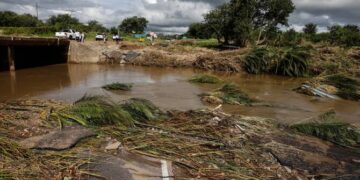
“Yes, we’re the most affected and the least responsible — but what does that actually do for us? Are we waiting for the UK, for China, for the US? We’re still the ones dealing with the floods.”
Her argument wasn’t about blame. It was about agency. Just as individuals are responsible for their healing after trauma, she said, African nations must take charge of their own climate futures. “You have to take responsibility for your own health. You have to choose how you move forward.”
The call wasn’t to ignore structural injustice — it was to lead in spite of it.
And that leadership, she insisted, starts with creatives.
AI, Algorithms & African Agency
The panel also tackled a fast-growing frontier of influence: artificial intelligence.
AI was framed as the next major site of cultural authorship. As large language models and visual generators reshape how knowledge and culture are produced, the question became: Who’s training the machine? And who’s being left out?
Hayat Aljowaily put it plainly:
“If we don’t feed AI our perspectives, we’ll be erased by default. The dataset will speak for us — or over us.”
Dr. Wedi echoed the concern: “We can’t afford to ignore these technologies and then act surprised when they erase us.”
The panel acknowledged the tensions — the environmental cost of AI, its exploitative energy demands, and the entrenched biases baked into Western-trained models. But they also recognised the cost of disengagement.
Because AI isn’t neutral. It is already influencing content moderation, policy priorities, and funding flows — including in the climate space. And if African voices aren’t part of that architecture, the systems will continue to exclude, flatten, or misrepresent them.
Participation, they argued, is not about endorsing the system — it’s about shaping it. Silence is not neutrality; it’s invisibility.
The Work Begins Here
At its core, Africans Make Everything Cool was a blueprint for creative leadership in climate justice. It offered a way to move from distant reports to local realities — not by simplifying the science, but by humanising the story.
The session closed with a clear sense of responsibility, not celebration. As Moniqué Lawz reminded the room, the work starts with what’s already in your hands — a neighbour, a platform, a story, a skill. From Ghana to London to Cairo, it is culture that connects the dots and carries the message.

This was a call to take culture seriously as a strategy for climate justice — to lead through imagination, creativity, and connection as essential tools for impact.
Because when Africans tell their own stories, they don’t just change the narrative.
They shape who gets to be part of the future.
5 June 2025 | Nature & Climate House, SXSW London
By Korrine Sky, Editor-at-Large, Southern African Times