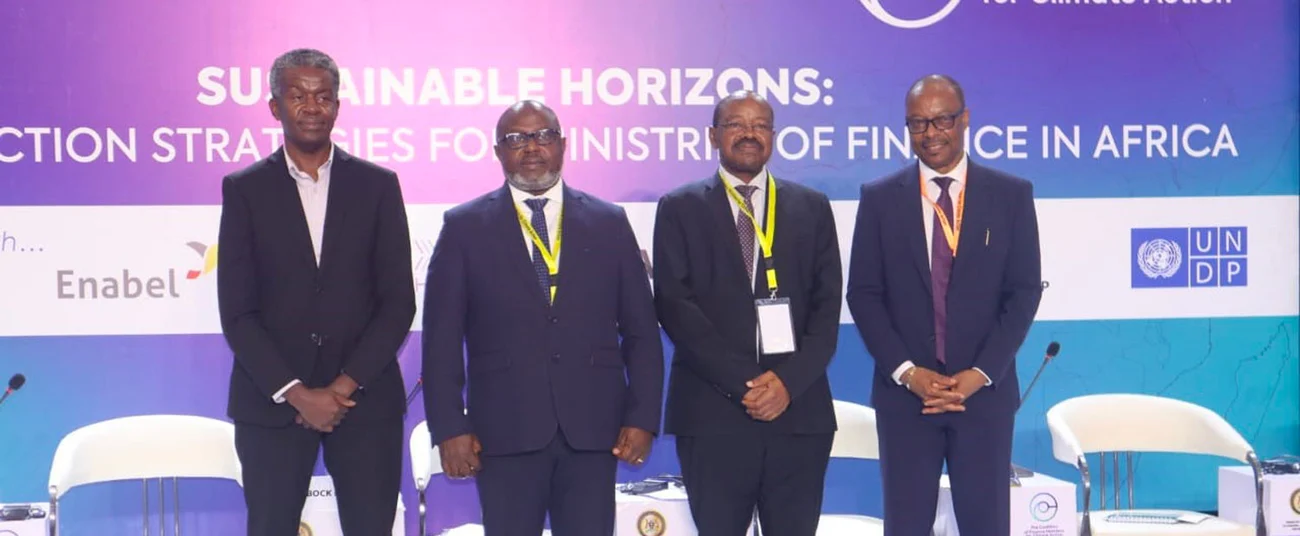
The urgent need for enhanced private sector engagement in climate finance was underscored at a pivotal summit held in Kampala, Uganda, on 2 August. The conference, titled “Sustainable Horizons: Climate Action Strategies for Ministries of Finance in Sub-Saharan Africa,” was organised by the Coalition of Finance Ministers for Climate Action (CFMCA). It highlighted the critical gap in climate financing and the role of private investment in bridging this deficit.
Prof. Anthony Nyong, Director of the Climate Change and Green Growth Department at the African Development Bank (AfDB), addressed the gathering with a stark message. He reported that private sector contributions to adaptation activities in Africa amounted to less than 3 per cent between 2019 and 2022. Prof. Nyong emphasised the need to mobilise $213.4 billion annually from the private sector to address Africa’s climate finance shortfall by 2030. He cited perceived investment risks and suboptimal credit ratings as principal barriers hindering private sector involvement.
The conference included a panel discussion on the “Unique Opportunities and Challenges for African Ministers of Finance,” moderated by Uganda’s Minister of State for Planning, Amos Lugoloobi. The panel featured Mr. Bock Kalokh, Minister of Finance for Sierra Leone, and Mr. Joseph Ng’ang’a, CEO of the Africa Climate Summit and interim CEO at the Global Energy Alliance for People and Planet.
Minister Kalokh articulated a pressing need for increased financial resources to support climate mitigation and adaptation strategies by the 2030 deadline. He pointed to the agriculture sector’s substantial contribution to greenhouse gas emissions and called for immediate action. “Do we need further evidence before action? Do we wait to be on life support before we act? It is time to act, and we need to act now,” Kalokh asserted. He urged finance ministries to prioritise funding for climate resilience and disaster mitigation, highlighting the escalating climate crisis and the challenges posed by an unclear climate finance architecture.
Mr. Ng’ang’a focused on Africa’s critical role in the global climate dialogue. He stressed that the continent should be seen not merely as a victim of climate change but as a proactive player with the potential to offer solutions. “We have resources; if we accessed global financing, we could deliver solutions on climate,” Ng’ang’a said. He advocated for viewing climate action as an opportunity to foster economic development, create jobs, and address climate impacts within Africa.
In response to these challenges, Prof. Nyong spotlighted the African Financial Alliance on Climate Change (AFAC) initiative by the African Development Bank, which aims to accelerate capital allocation for Africa’s climate resilience. The initiative is designed to galvanise private sector investment and streamline funding mechanisms for climate-related projects.
The summit concluded with a unified call for immediate and strategic action to combat climate change in Sub-Saharan Africa. The discussions underscored the need for ministries of finance to prioritise and fund climate resilience initiatives. The African Development Bank positioned itself as a crucial facilitator in mobilising necessary resources and engaging the private sector to address Africa’s climate finance needs.
The event received support from several notable organisations, including Enabel, the NDC Partnership, UNEP, UNDP, the Coalition for Capacity on Climate Action (C3A), and the World Bank, marking a significant step towards consolidating efforts in climate finance and action.