African economies are increasingly demonstrating their ability to withstand global economic headwinds, signalling a deeper shift towards structural maturity, macroeconomic self-assurance, and continental collaboration. Once narrowly portrayed as vulnerable to global financial turbulence, many of Africa’s largest and emerging economies are now charting a more autonomous course, drawing upon their own policy ingenuity, regional cooperation, and diversified growth strategies.
Across the continent, the narrative is changing. Nations such as Nigeria, South Africa, Egypt, Kenya, Ghana, and Ethiopia are no longer merely reacting to the global economy but are shaping it in ways that align with domestic priorities and regional aspirations. According to the African Development Bank (AfDB), over 60 per cent of African economies have improved their resilience indicators over the past decade — a testament to deliberate policy reform and continental solidarity.
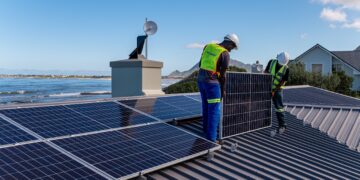
This evolution cannot be divorced from the continent’s proactive fiscal and monetary reforms. In Nigeria, for instance, policymakers have steadily reduced overreliance on oil exports by investing in agribusiness, telecommunications, and financial technology. The government’s recent foreign exchange liberalisation and fiscal consolidation efforts, though challenging, represent a conscious move towards long-term stability. Similarly, South Africa’s pursuit of renewable energy projects and green industrial policy reflects a strategic recognition that sustainability and diversification are no longer optional but essential.



Egypt and Kenya have also adopted policies that strengthen domestic capacity and attract strategic investment. Egypt’s focus on infrastructure and logistics has turned the Suez Canal Economic Zone into a hub for African-Asian-European trade interlinkages. Kenya, meanwhile, has become a continental leader in mobile finance and innovation-led economic inclusion, with M-Pesa and digital microcredit systems enabling millions to participate in the formal economy.
The International Monetary Fund’s (IMF) 2025 Regional Economic Outlook for Sub-Saharan Africa projects that the region’s GDP growth will stabilise at approximately 4 per cent in 2026 — a moderate yet steady recovery, driven largely by infrastructure investment, digital transformation, and intra-African trade. This resilience is being further bolstered by the African Continental Free Trade Area (AfCFTA), which is set to unify a market of over 1.3 billion people and could increase intra-African trade by 52 per cent once fully implemented.
Yet, the resilience on display is not merely statistical. It is philosophical. It is about how African nations conceptualise and operationalise economic sovereignty. While inflation, debt pressures, and currency depreciation continue to affect some economies, many African governments have developed a more nuanced understanding of fiscal discipline and external dependency. The World Bank’s 2024 Global Economic Prospects report highlights how countries such as Côte d’Ivoire and Senegal have pursued countercyclical fiscal policies — investing in social sectors even during downturns — without succumbing to unsustainable borrowing patterns.
This recalibration towards domestic agency has also been supported by the rise of regional financial institutions that are gradually reducing Africa’s reliance on external financing systems. The Pan-African Payment and Settlement System (PAPSS), for instance, is enabling cross-border transactions in local currencies, reducing dollar dependency. Similarly, the African Monetary Institute, currently being established under the African Union framework, aims to enhance macroeconomic coordination across the continent.
However, this progress is not monolithic. Smaller and more fragile states remain exposed to external shocks — particularly those dependent on imported energy or food commodities. Structural inequalities within countries also persist, challenging inclusive development. Yet, the broader trend reflects a continental awakening: a recognition that economic resilience is as much about governance, creativity, and interdependence as it is about growth metrics.
African scholars and policymakers have increasingly critiqued Western-centric lenses that often define resilience through external approval. As Dr. Nneka Okonkwo of the University of Lagos observes, “African economies are not merely absorbing global shocks; they are reconstructing the logic of resilience itself — drawing from communal economies, indigenous knowledge systems, and local innovation to reimagine what stability means.”
That redefinition is visible in how African states are reclaiming the narrative around reform. Instead of austerity, many are now prioritising productive investment — in infrastructure, education, and renewable energy. Instead of passively responding to global market cycles, they are developing regional safety nets through continental institutions. The AfCFTA, coupled with initiatives by the African Export-Import Bank (Afreximbank) and the African Development Fund, is deepening intra-African solidarity while embedding financial mechanisms designed by and for Africans.

There is a growing awareness that the story of Africa’s economic evolution cannot be reduced to GDP figures or credit ratings. It is a story of resilience grounded in people’s lived realities — in farmers embracing climate-smart agriculture, young entrepreneurs driving fintech ecosystems, and policymakers prioritising inclusive growth models rooted in African contexts. It is a story that transcends the notion of “catching up” with global powers and instead focuses on building economies reflective of Africa’s unique rhythms, histories, and aspirations.
In this emerging landscape, Africa is not waiting for global stability to act; it is building its own. The continent’s resilience lies not in isolation but in interconnection — in the deliberate weaving together of policy, culture, and cooperation to forge a development path that is authentically African yet globally engaged.
Read the African Development Bank’s African Economic Outlook 2025
Explore the IMF’s Regional Economic Outlook for Sub-Saharan Africa
Learn more about the African Continental Free Trade Area (AfCFTA)