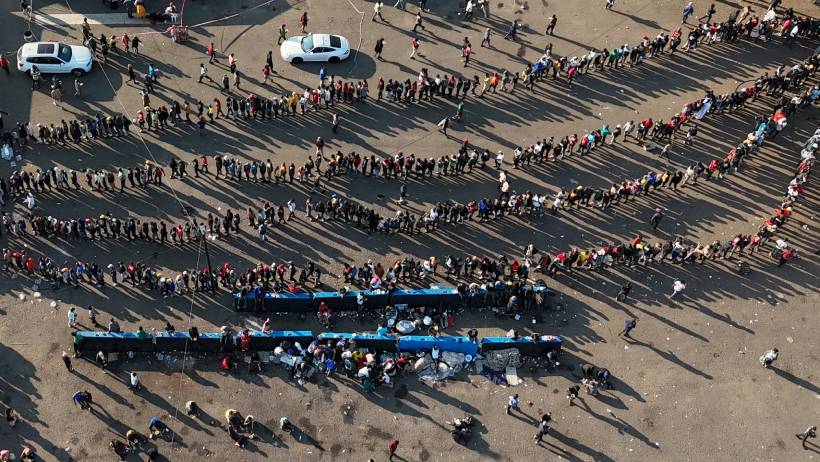
South African authorities have intensified security measures across several major cities after planned anti migrant demonstrations prompted businesses to close, public transport services to scale back operations and thousands of foreign nationals to remain indoors amid concerns over potential unrest.
Police and members of the South African National Defence Force were deployed to key locations on Tuesday as authorities sought to maintain public order while safeguarding the constitutional rights of both demonstrators and residents. The deployments followed growing anxiety over planned marches in Johannesburg, Durban and other urban centres, where organisers had previously issued calls demanding that undocumented migrants leave the country.
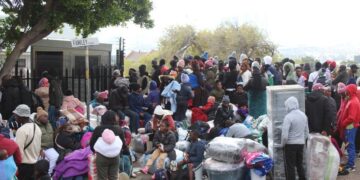
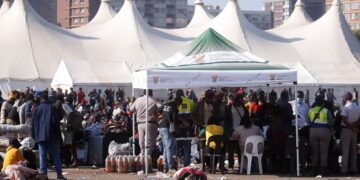
The demonstrations have generated widespread concern among migrant communities, many of whom originate from neighbouring Southern African countries as well as other parts of the continent. Community organisations reported that some foreign nationals had temporarily left affected neighbourhoods or chosen not to travel to work, fearing that the protests could escalate into violence.



In parts of Johannesburg and Durban, reports emerged of landlords asking foreign tenants to vacate residential properties amid fears that buildings housing migrants could become targets of vandalism or attacks. Representatives of migrant communities stated that many of those affected possessed valid documentation permitting them to live and work in South Africa.
Speaking in Durban, Congolese community leader Mabako Majole said a number of legally documented migrants had been displaced after landlords requested that they leave their accommodation. Community organisations have since appealed for greater protection for vulnerable residents and have urged authorities to ensure that legal status is respected irrespective of nationality.
South African police have maintained that they are prepared to respond to any criminal activity while protecting the right to peaceful assembly. Deputy National Commissioner for Policing Tebello Mosikili said the state had an obligation to ensure demonstrations remained peaceful and that law enforcement agencies would intervene should violence or intimidation occur.
The deployment comes against the backdrop of recurring tensions surrounding migration, unemployment and economic inequality within South Africa. The country continues to face one of the highest unemployment rates globally, with many communities expressing frustration over limited economic opportunities, pressure on public services and concerns regarding undocumented migration. Analysts have frequently noted that these challenges are driven by a complex combination of structural economic conditions, governance issues, slow economic growth and regional migration patterns rather than by migration alone.
Successive South African governments have acknowledged concerns relating to undocumented migration while emphasising that immigration management must remain consistent with the country’s constitutional framework and international obligations. The Department of Home Affairs has continued efforts to strengthen border management, modernise immigration systems and process asylum and residency applications, while also working alongside regional partners on migration governance.
President Cyril Ramaphosa addressed the developing situation on Monday, recognising public concern over undocumented migration while cautioning against acts of intimidation or violence.
“The concerns of South Africans regarding illegal immigration are real and deserve to be heard,” the President said in a statement released by The Presidency of South Africa.
He added that while peaceful protest is protected under the Constitution, no individual or group has the right to threaten others, damage property or engage in violence.

South Africa’s Constitution guarantees freedom of assembly, expression and peaceful protest, while also protecting the rights to dignity, equality and security of every person within the country’s borders. Human rights organisations have repeatedly called on authorities to uphold these protections irrespective of nationality or immigration status.
The latest demonstrations have also attracted attention across the African continent, where South Africa occupies an influential political and economic position. Regional observers have noted that migration within Africa reflects longstanding economic, historical and social ties that transcend modern national borders. Labour mobility, family networks and regional trade have connected Southern African societies for generations through frameworks such as the Southern African Development Community.
Civil society organisations have urged restraint from all parties, warning that inflammatory rhetoric risks deepening social divisions while overshadowing the broader structural challenges confronting many communities. They have encouraged dialogue that distinguishes between concerns relating to undocumented migration, legitimate law enforcement responsibilities and the rights of law abiding migrants who contribute to local economies and communities.
Previous episodes of xenophobic violence in South Africa have resulted in deaths, displacement and significant property damage, affecting migrants from countries including Zimbabwe, Mozambique, Malawi, the Democratic Republic of Congo, Ethiopia, Somalia and Nigeria. Those incidents prompted widespread condemnation across Africa and renewed calls for stronger protections for vulnerable communities.
As demonstrations unfold, security agencies continue to monitor developments closely. Government officials have appealed for calm while reaffirming that criminal conduct will be addressed through the rule of law rather than through vigilantism. Community leaders have likewise encouraged residents, regardless of nationality, to avoid confrontation and cooperate with law enforcement as efforts continue to preserve public safety.
The events serve as a reminder that migration remains one of the continent’s most complex policy challenges, requiring balanced responses that address border management, economic inclusion, regional cooperation and the protection of human dignity. Across Africa, sustainable solutions are increasingly recognised as those that strengthen lawful migration systems while preserving the shared values of solidarity and mutual respect that have long characterised relationships between neighbouring nations.