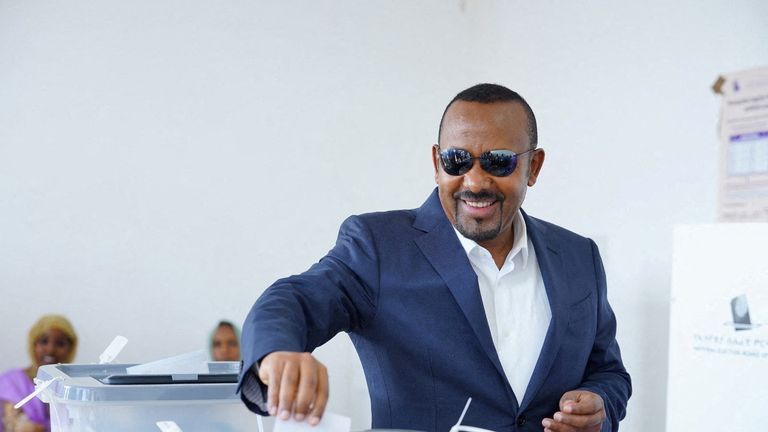
Ethiopia’s ruling Prosperity Party has secured a commanding parliamentary majority following the country’s general elections held on 1 June, according to official results released by the National Election Board of Ethiopia.
The party of Prime Minister Abiy Ahmed won 438 parliamentary seats, comfortably surpassing the 274 seats required to form a majority government in the 547 member House of Peoples’ Representatives. The outcome broadly mirrors the party’s performance in the 2021 elections and reinforces its position as the dominant political force in Africa’s second most populous nation.
The elections took place against a backdrop of continuing security and political challenges in several parts of the country. Voting was not conducted in the Tigray region, while a number of constituencies in the Amhara region were also unable to participate because of ongoing instability and security concerns.



Abiy, who came to power in 2018 following widespread anti government protests, established the Prosperity Party in 2019 after dissolving the Ethiopian People’s Revolutionary Democratic Front coalition that had governed Ethiopia for nearly three decades. Since then, the party has sought to consolidate a national political platform across Ethiopia’s diverse federal structure.
During the election campaign, Prosperity Party candidates highlighted government efforts aimed at strengthening food security, expanding economic reforms and supporting growth. Ethiopian authorities have projected economic growth exceeding 10 per cent in 2026, positioning the country among the continent’s fastest growing economies.
More than 50 million Ethiopians were registered to vote in the election, reflecting the scale and significance of the country’s democratic process. However, the vote also unfolded amid continuing conflicts in parts of Oromia and Amhara, two of Ethiopia’s largest and most influential regions. In Oromia, government forces continue to confront the Oromo Liberation Army, while in Amhara clashes involving Fano armed groups have affected security conditions across several districts.
The absence of voting in Tigray remains a notable feature of the electoral landscape. Although the Pretoria Peace Agreement signed in 2022 formally ended the devastating conflict in northern Ethiopia, political tensions have persisted. Recent developments involving regional political actors have prompted concerns among observers about the potential for renewed instability if outstanding political issues remain unresolved.

Opposition parties have criticised aspects of the political environment surrounding the elections, alleging restrictions on political activity and obstacles to campaigning. The federal government has rejected such allegations and maintains that the electoral process was conducted in accordance with national laws and regulations.
For many observers across Africa, the election underscores both Ethiopia’s strategic importance and the complexity of governing one of the continent’s most diverse societies. Home to more than 120 million people and serving as the headquarters of the African Union, Ethiopia remains central to discussions about governance, development, regional integration and peacebuilding across Africa.
The latest result provides political continuity at a time when Ethiopia continues to navigate economic transformation, post conflict reconstruction and demands for greater inclusion within its federal system. While the Prosperity Party’s parliamentary dominance offers the government a strong mandate to pursue its policy agenda, questions surrounding national cohesion, security and political dialogue are likely to remain central to Ethiopia’s future trajectory.
Further parliamentary processes are expected to take place when the newly elected legislature convenes later this year, paving the way for the formation of the next government.