The contest for control of critical mineral supply chains is increasingly shifting beyond the mine gate. Across the world, governments and investors are recognising that the strategic value of mineral resources depends not only on extraction but also on access to processing facilities, transport infrastructure and reliable energy systems.
Against this backdrop, Greenland Mines Ltd has announced an agreement that could strengthen its long term infrastructure options in the North Atlantic region. The Nasdaq listed company has secured a First Right of Refusal over the Helguvík industrial complex on Iceland’s Reykjanes Peninsula, a move that could support future processing and logistics activities linked to its mineral projects in Greenland.
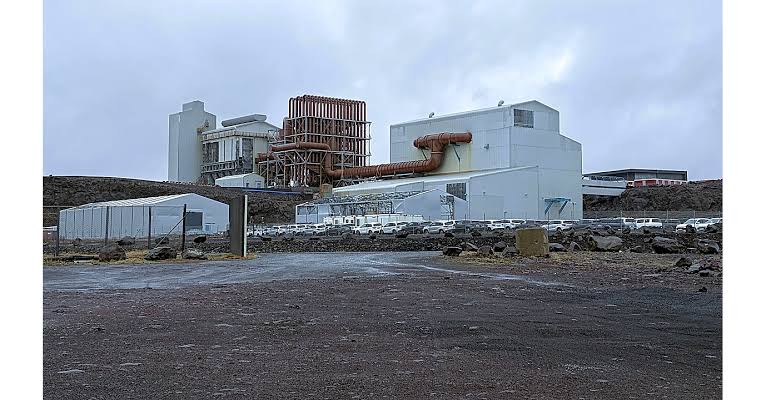
According to the company, the arrangement covers a brownfield industrial site of approximately 60,000 square metres, including existing industrial buildings, deep water port access and power infrastructure capable of supporting up to 40 megawatts of electricity demand. The agreement does not constitute an acquisition, but grants Greenland Mines the opportunity to match any bona fide offer should the site be placed on the market.




The announcement reflects a broader trend within the critical minerals sector. Increasing geopolitical tensions and efforts by governments in Europe, North America and Asia to diversify supply chains have intensified interest in projects located outside dominant producing and processing jurisdictions. While much attention is often focused on mineral discoveries themselves, industry analysts increasingly emphasise that infrastructure, refining capacity and logistics networks frequently determine whether projects ultimately reach commercial production.
Greenland Mines’ principal asset is the Skaergaard Project in eastern Greenland. The company cites a 2022 National Instrument 43-101 mineral resource estimate prepared by SLR Consulting which identified a combined indicated and inferred resource containing approximately 25.4 million ounces of palladium equivalent and 23.5 million ounces of gold equivalent. The estimate was derived from more than 42,000 metres of drilling and channel sampling undertaken across the project area.
The project has attracted attention because of its significant platinum group metals and gold content at a time when concerns regarding supply security have become increasingly prominent. Palladium and platinum are widely used in automotive manufacturing, industrial processes, defence technologies and emerging energy systems, while gold continues to play an important role in financial markets and industrial applications.
For Greenland Mines, the Icelandic infrastructure option appears to form part of a wider strategy aimed at creating an integrated supply chain linking mineral production in Greenland with potential downstream processing facilities in Iceland. Company statements indicate that the Helguvík site is located within practical shipping distance of the Skaergaard project and benefits from access to renewable electricity generated through Iceland’s geothermal and hydroelectric resources.
The emphasis on processing infrastructure is particularly significant. Across Africa, policymakers have increasingly argued that long term value creation from mineral resources requires countries to move beyond the historical model of exporting raw materials. Nations such as Zimbabwe, Namibia, Botswana, South Africa and the Democratic Republic of Congo have all introduced policies aimed at encouraging local beneficiation, refining and manufacturing linked to mineral production.
While Greenland and Iceland operate in very different economic and geographic contexts, the underlying challenge remains familiar. Resource wealth alone does not automatically translate into industrial development. The availability of power, transport corridors, technical skills and processing capacity often determines whether mineral projects generate broader economic benefits.
The Helguvík facility itself has an industrial history. The site previously hosted silicon metal production before operations ceased amid environmental and operational challenges. Greenland Mines has stated that any future development would be subject to modern environmental standards and regulatory requirements. The company has also emphasised that no decision has been made regarding the establishment of processing facilities and that technical, environmental and economic studies remain ongoing.
Alongside Skaergaard, Greenland Mines is also pursuing the acquisition of the Sarfartoq rare earth project in southwestern Greenland. Rare earth elements, particularly neodymium and praseodymium, are regarded as strategically important because of their use in permanent magnets that support electric vehicles, wind turbines and advanced manufacturing technologies.
The combination of platinum group metals, gold and rare earth elements places the company within a growing group of developers seeking to establish alternative sources of supply outside existing dominant production and processing centres. Industry observers note that projects of this nature remain highly dependent on financing, permitting approvals, environmental assessments and market conditions before commercial production can be achieved.
The distinction is important. Mineral resources, while indicative of geological potential, are not equivalent to mineral reserves and do not guarantee future economic extraction. Greenland Mines has not yet completed a feasibility study for the Skaergaard project, and substantial technical and financial milestones remain ahead before any production decisions are made.
Nevertheless, the Helguvík agreement highlights a growing recognition within the mining industry that future competitiveness may depend as much on infrastructure and processing capability as on the quality of the underlying resource.
For African countries navigating their own critical minerals strategies, the development offers a useful reminder that the global competition for strategic minerals increasingly extends across entire value chains. The central question facing resource rich nations is no longer simply who owns the minerals beneath the ground, but who controls the infrastructure, technology and industrial capacity required to transform those minerals into products that power the modern economy.
As governments across Africa seek to capture greater value from lithium, platinum group metals, graphite, rare earths and battery minerals, the lessons emerging from projects in Greenland, Iceland and elsewhere reinforce a common reality. Sustainable mineral wealth is shaped not only by geology, but by the institutions, infrastructure and industrial ecosystems built around it.