Britain will not be required to pay Rwanda tens of millions of pounds following the collapse of the controversial asylum seeker deportation agreement, after an international arbitration panel ruled in London’s favour.
The Permanent Court of Arbitration in The Hague rejected all financial claims brought by Rwanda, which had argued that the United Kingdom remained bound by payment obligations contained in the agreement despite its cancellation by Prime Minister Keir Starmer’s government in 2024.
The ruling marks the final chapter in one of the most contentious immigration policies in recent British political history, a scheme that dominated political debate, sparked legal challenges and strained diplomatic relations between London and Kigali.



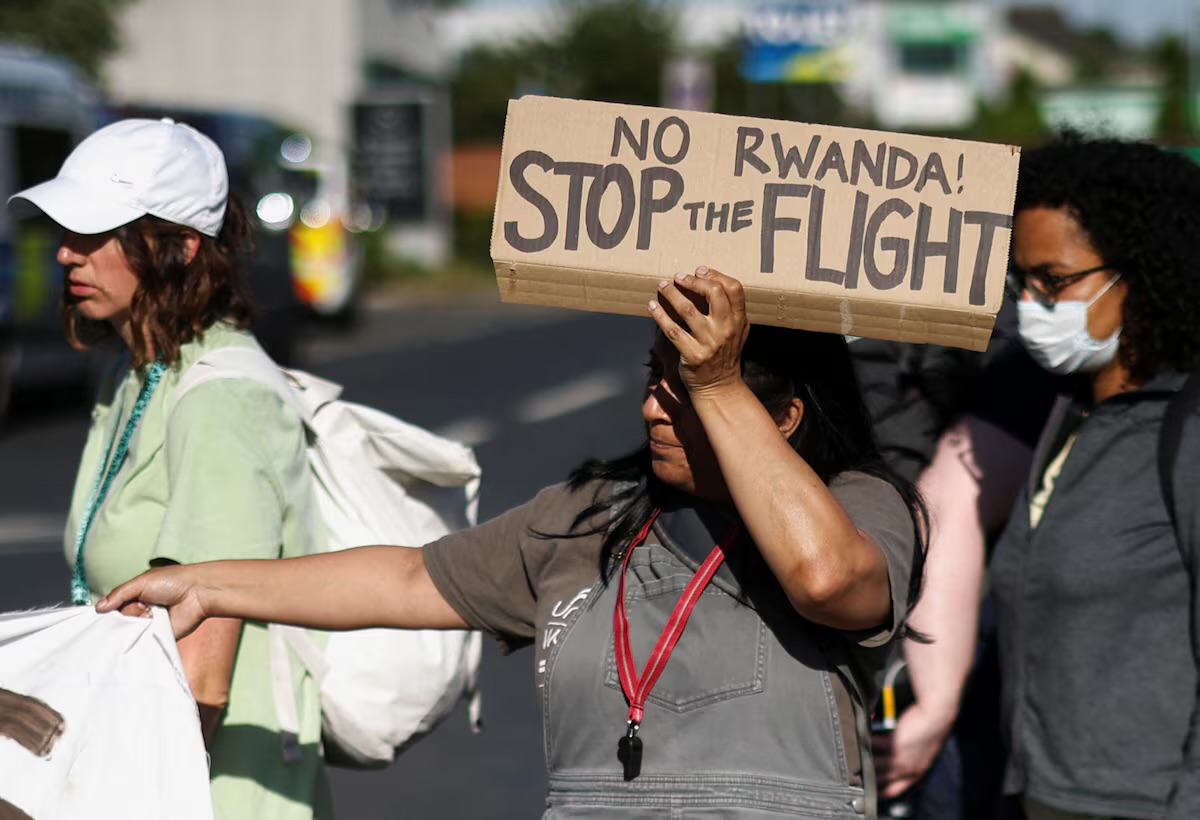
Under the arrangement negotiated by the previous Conservative government, asylum seekers who had entered Britain illegally could be relocated to Rwanda, where their claims would be processed. Supporters argued the policy would deter dangerous Channel crossings, while critics condemned it as legally and morally flawed.
The plan ultimately proved short lived.
According to court documents, Rwanda had sought at least £60 million, arguing that Britain remained obligated to honour elements of the agreement despite the change in government and subsequent policy reversal.
However, the three member arbitration panel found that Rwanda had effectively waived its right to further payments through diplomatic exchanges conducted in November 2024.
In excerpts from the ruling released on Monday, the court said Rwanda had agreed “to forgo any additional payments by the United Kingdom in April 2025 and April 2026”, undermining the basis of its later financial claims.
The decision, formally issued on 15 May, represents a significant legal victory for Starmer’s government, which has repeatedly criticised the Rwanda scheme as costly, ineffective and politically motivated.
“The previous government’s policy wasted time and £700 million of taxpayer money to send four volunteers to Rwanda,” a British government spokesperson said following the ruling.
The figure underscores one of the most striking aspects of the policy. Despite years of political controversy and extensive legal battles, only four individuals ultimately travelled voluntarily to Rwanda under the scheme before it was abandoned.

Starmer moved swiftly to terminate the agreement after entering office, arguing that resources would be better directed towards addressing the causes of irregular migration and improving border enforcement.
Rwanda responded cautiously to the court’s decision, saying it respected the outcome while maintaining that the legal issues involved were complex.
“Rwanda will continue to work constructively with international partners, guided by international norms and mutually beneficial cooperation,” government spokesperson Yolande Makolo said in a statement.
The arbitration ruling comes against a backdrop of increasingly strained relations between Britain and Rwanda.
Last year, the British government suspended portions of its aid programme to Kigali over concerns regarding Rwanda’s alleged involvement in the conflict in eastern Democratic Republic of Congo. Rwanda has faced growing international scrutiny over accusations that it supports the M23 rebel movement, claims it has consistently denied.
Kigali has instead blamed Congolese and Burundian forces for escalating violence in the region, where fighting has displaced hundreds of thousands of people and contributed to one of Africa’s most severe humanitarian crises.
While the court’s decision settles the financial dispute arising from the asylum agreement, it does little to erase the political legacy of a policy that became emblematic of Britain’s wider debate over migration, borders and international responsibility.
For Starmer’s government, the ruling removes a potential financial liability and reinforces its decision to abandon a policy that proved both controversial and ultimately ineffective. For Rwanda, it closes a chapter that once promised a flagship international partnership but instead became entangled in legal disputes, domestic politics and shifting diplomatic priorities.