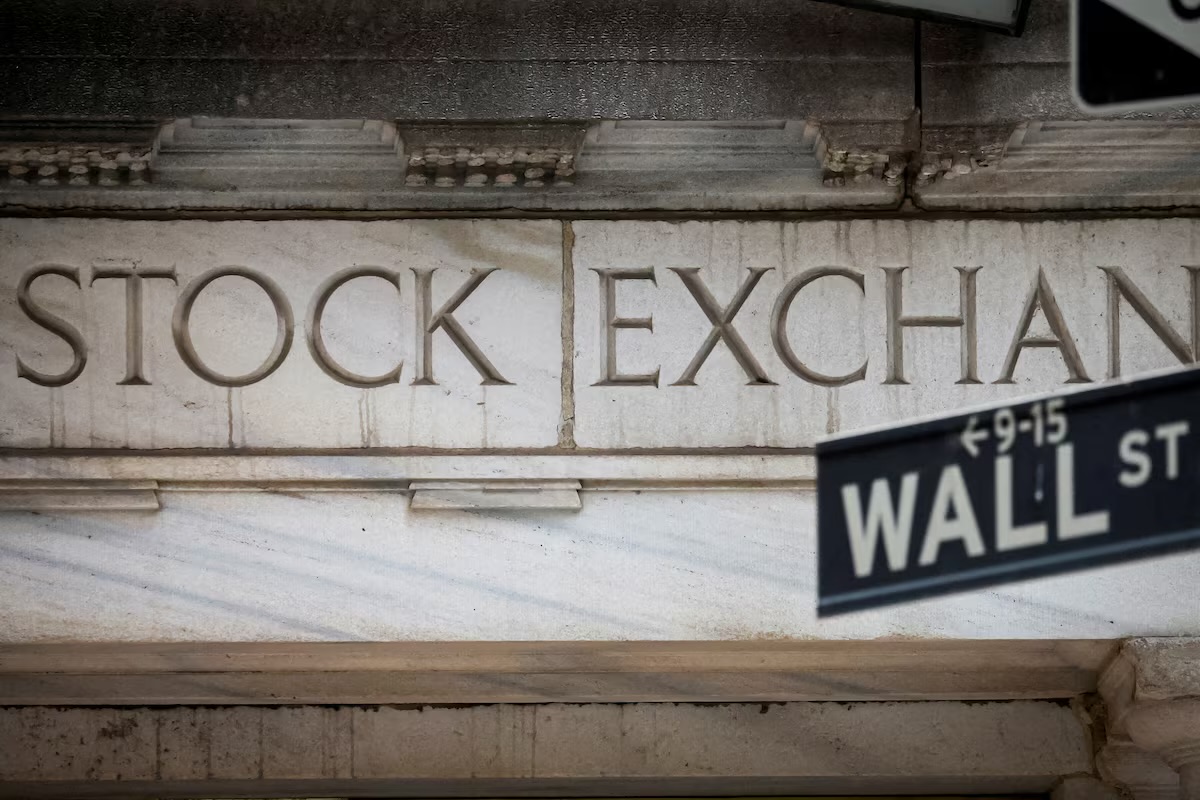
United States stock markets ended the week on a positive note on Friday as investors welcomed signs of progress towards a possible peace agreement between Washington and Tehran, easing concerns that the conflict in the Middle East could spiral into a prolonged crisis.
A technology led rally helped lift all three major Wall Street indices, while oil prices retreated and Treasury yields declined for a fourth consecutive session. Markets appeared increasingly optimistic that diplomatic efforts could preserve a fragile ceasefire and eventually lead to the reopening of the Strait of Hormuz, one of the world’s most important energy shipping routes.
The benchmark S&P 500 extended its winning streak to nine consecutive weeks, marking its longest run of gains since December 2023. The Dow Jones Industrial Average, S&P 500 and Nasdaq Composite all finished both the week and the month in positive territory.



The Dow rose 363.68 points, or 0.72%, to close at 51,032.65. The S&P 500 gained 16.49 points, or 0.22%, ending at 7,580.12, while the Nasdaq Composite advanced 55.15 points, or 0.21%, to 26,972.62.
Although stocks finished higher, the gains were more modest than earlier in the trading session, with investors remaining cautious as negotiations between the United States and Iran continue.
According to sources familiar with the talks, both countries have agreed in principle to extend their ceasefire and lift restrictions on shipping while broader peace negotiations continue. However, United States President Donald Trump has yet to formally approve the arrangement, while Iranian state media reported that discussions have not been fully concluded.
The possibility of a breakthrough has reassured investors after months of uncertainty surrounding the conflict, which has disrupted energy markets and raised concerns about the global economic outlook.
Ross Mayfield, an investment strategy analyst at Baird, said markets were paying close attention to developments and the potential impact of any agreement on global trade and energy supplies.
He noted that if a memorandum of understanding receives final approval and the Strait of Hormuz remains open for an extended period, it could provide enough time for negotiators to work towards a more comprehensive settlement.
The three month conflict has also complicated the inflation outlook. Higher energy prices resulting from disruptions in the region have added to global price pressures, prompting discussions about whether central banks may need to keep interest rates elevated for longer.
Officials at the United States Federal Reserve have indicated that further rate increases remain a possibility if inflation proves more persistent than expected.
Despite those concerns, markets currently appear divided on the likelihood of another rate hike later this year. Investors continue to assess incoming economic data alongside geopolitical developments before adjusting expectations for monetary policy.
Lower Treasury yields provided additional support for equities during the week, helping technology shares maintain their momentum.
European stock markets also finished higher on Friday and recorded gains for the month. Investor sentiment was boosted by hopes that a deal could eventually restore normal shipping operations through the Strait of Hormuz, whose closure has placed strain on global supply chains and financial markets.

For now, investors remain focused on diplomacy. While risks remain, growing confidence that the United States and Iran may avoid a renewed escalation has helped drive equities higher and reduce pressure on energy markets as the month comes to a close.