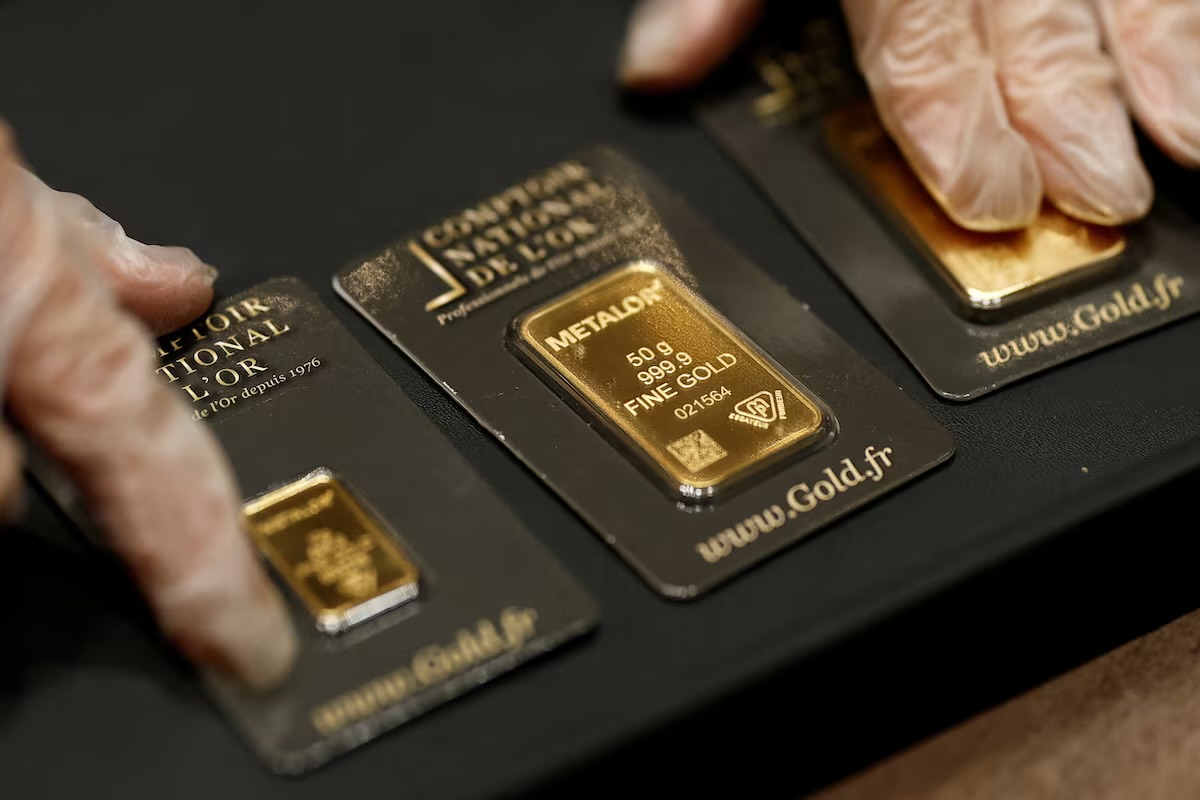
Gold prices fell to their lowest level in two months on Thursday as renewed military action in the Middle East strengthened the United States dollar and pushed oil prices higher, prompting investors to reassess the outlook for inflation and interest rates.
Spot gold dropped 1.7% to $4,380.62 an ounce, having earlier touched its weakest level since late March. United States gold futures also declined, reflecting growing pressure on the precious metal as global markets reacted to escalating tensions involving Iran.
The sell off came as the dollar climbed to a one week high, making gold more expensive for investors holding other currencies. A stronger dollar typically reduces demand for bullion, which is priced in the American currency and often moves inversely to it.




Market sentiment was further shaken by fresh United States military strikes inside Iran. According to American officials, the attacks targeted a military installation believed to pose a threat to United States forces and commercial shipping operating near the strategically important Strait of Hormuz.
The strikes took place shortly after President Donald Trump dismissed reports suggesting that an agreement had been reached to restore normal maritime traffic through the vital shipping corridor.
In response, Iran’s Revolutionary Guards said they had targeted a United States airbase, raising fears of a broader escalation in the conflict. The developments triggered a sharp rise in energy prices, with oil gaining more than 3% during Thursday’s trading session.
Higher oil prices have significant implications for global inflation. Increased energy costs feed through into transport, manufacturing and consumer prices, potentially forcing central banks to keep borrowing costs elevated for longer than previously expected.
Although gold is traditionally viewed as a hedge against inflation and geopolitical uncertainty, it can struggle when interest rates remain high. Unlike bonds or savings accounts, gold does not generate income, making it less attractive when investors can earn stronger returns elsewhere.
Those concerns were reinforced by comments from Lisa Cook, a governor at the United States Federal Reserve. Speaking on Wednesday, Cook said she believed interest rates should remain unchanged for now but indicated she would support further increases if inflationary pressures intensified.
She pointed to several factors that could keep prices elevated, including tariffs, the ongoing conflict involving Iran and a surge in investment linked to artificial intelligence technologies.
Investors are now closely watching the release of the United States Personal Consumption Expenditures index, the Federal Reserve’s preferred measure of inflation. The data is expected to provide fresh insight into the likely direction of monetary policy in the months ahead.
The weakness in precious metals extended beyond gold. Silver fell 3% to $72.37 an ounce, while platinum slipped 1.4% to $1,890.81, both reaching their lowest levels in nearly a month. Palladium also declined, shedding 1.9% to trade at $1,364.26 an ounce.
The sharp moves highlight how quickly investor sentiment can shift when geopolitical risks collide with concerns about inflation and monetary policy. For now, markets appear increasingly focused on the prospect that rising energy costs and renewed conflict could delay any easing of interest rates, creating a more challenging environment for precious metals.