

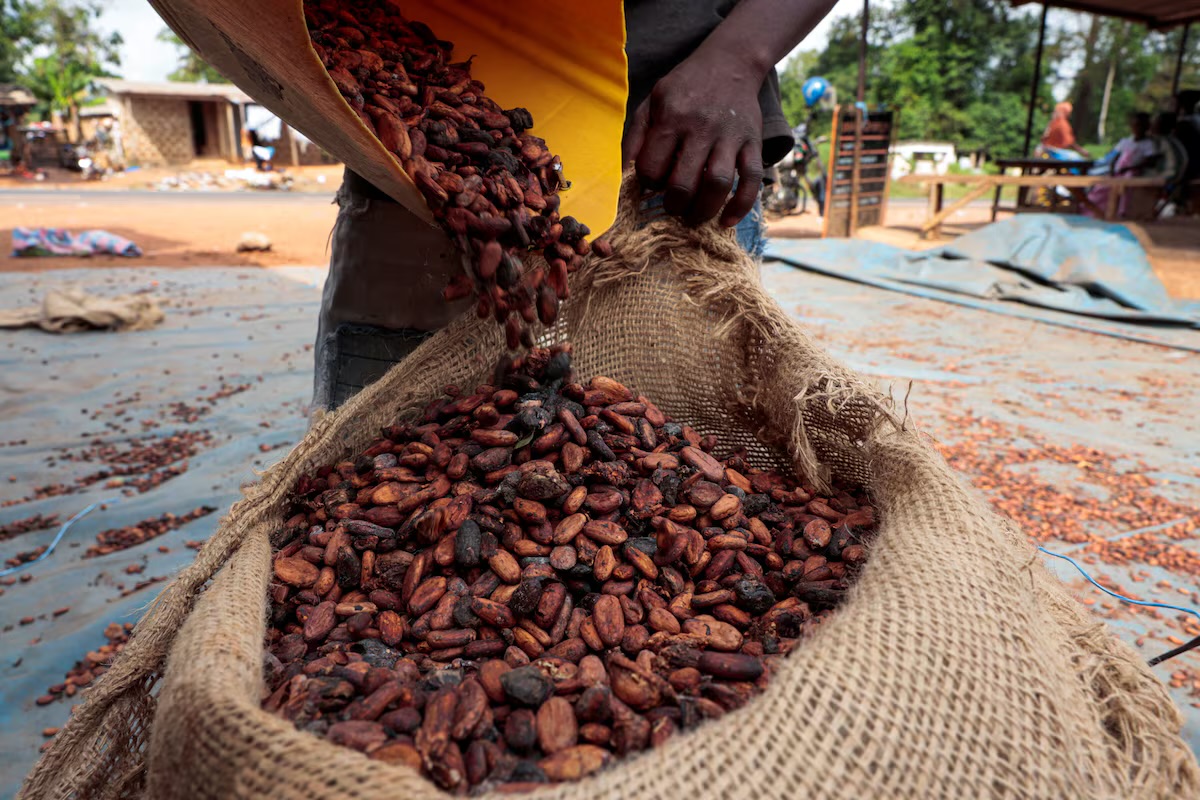
Ivory Coast is on track to record its first increase in cocoa production in three seasons, with output expected to reach between 2 and 2.1 million metric tons in the current 2025 to 2026 cycle, according to the head of the Coffee and Cocoa Council.
The projected rise of 10.5% marks a notable turnaround for the world’s largest cocoa producer, after successive declines driven by adverse weather conditions, ageing plantations and the spread of swollen shoot disease, which has damaged trees and reduced yields across key growing regions.
Speaking in an interview, CCC Director Yves Brahima Kone said higher global cocoa prices over the past two seasons had played a decisive role in supporting recovery. Improved earnings have allowed farmers to invest more in fertiliser and adopt better farm management practices, helping to stabilise production levels.



Arrivals at Ivory Coast’s main export ports had already exceeded 1.7 million tons by mid May, signalling a stronger performance compared to recent seasons. The increase suggests that, at least in the short term, farmers are benefiting from a more favourable pricing environment after a prolonged period of pressure.

However, the supply picture is not without complications. Traders say significant volumes of cocoa remain unsold within the country, partly because exporters and farmers held back stocks in anticipation of higher international prices. As those volumes begin to move, they could contribute to a visible build up in inventories at European warehouses, potentially influencing market dynamics in the coming weeks.
The interplay between rising production and delayed sales highlights a market that is still adjusting after a period of volatility. While stronger output may ease some supply concerns, the timing of exports will be critical in determining how global prices respond.
Looking ahead, the outlook for the next season is more uncertain. Early field assessments suggest that pod and flower development is weaker than at the same stage last year, raising concerns about the sustainability of the current recovery. Cocoa trees typically require around 33 weeks for pods to mature, meaning current conditions will have a direct impact on future harvests.
Farmers and field observers report that drought conditions have already taken a toll in some areas, reducing the number of viable pods and increasing anxiety about the upcoming main crop. Monitoring weather patterns will be crucial in the months ahead, particularly as climate variability continues to pose a structural challenge to cocoa production in West Africa.
For Ivory Coast, the anticipated rebound offers a measure of relief after two difficult seasons, but it also underscores the fragile nature of agricultural recovery in a sector heavily exposed to environmental and market risks. Sustaining output gains will depend not only on continued investment at farm level but also on favourable weather conditions and stable global demand.


