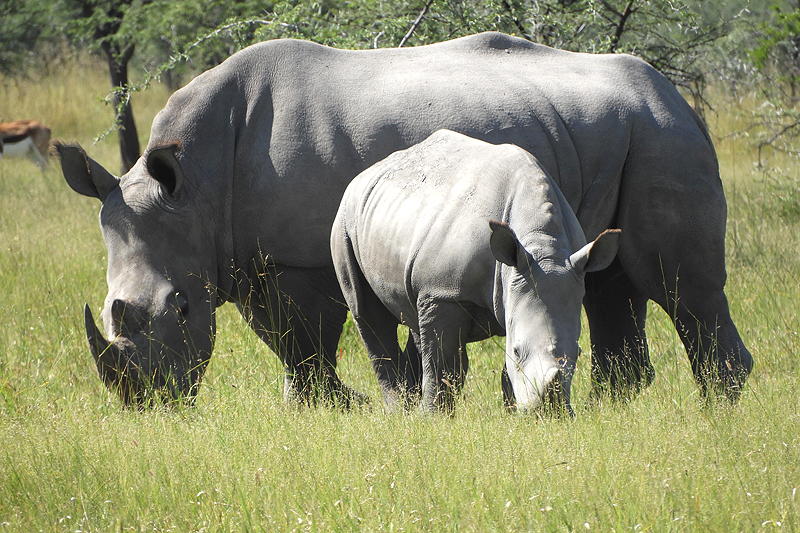
Namibia has recorded eight rhino poaching incidents during the first four months of 2026, according to the Ministry of Environment, Forestry and Tourism, underscoring the continuing pressures facing wildlife conservation efforts across southern Africa.
The ministry confirmed that seven of the rhinos were killed in Etosha National Park, one of Africa’s most significant conservation areas and a central component of Namibia’s tourism economy. A further case was reported on privately owned farmland.
The latest figures emerge amid ongoing regional concern over wildlife trafficking networks that continue to target rhino populations across parts of the continent despite strengthened law enforcement measures and growing community based conservation initiatives. Namibia remains home to one of the largest free roaming populations of black rhinos in the world, alongside a substantial white rhino population, positioning the country as an important actor in continental biodiversity protection efforts.



Authorities said anti poaching interventions remain active across state protected areas. In 2025, conservation teams immobilised and dehorned 147 rhinos as part of a broader risk reduction strategy intended to deter poachers and limit illegal wildlife trade incentives. Wildlife authorities and conservation organisations in several African countries have increasingly adopted dehorning as a preventative measure, although debates continue regarding its long term ecological and ethical implications.
The Namibian government has also allocated more than 350 million Namibian dollars, equivalent to approximately 21.5 million US dollars, to support conservation activities during the current financial year. According to the ministry, the funding will support improved protection measures, conservation management and the sustainable use of wildlife resources and habitats within protected areas.
Officials stated that collaboration between conservation authorities, law enforcement agencies, local communities and regional partners remains central to efforts aimed at reducing poaching related crimes. Namibia’s conservation framework has long incorporated community conservancies, which have been recognised across Africa for linking environmental stewardship with local economic participation and tourism development.

In April, Namibia’s Minister of Home Affairs, Immigration, Safety and Security, Lucia Iipumbu, said the country had recorded a 50 percent reduction in wildlife crime during the 2025 to 2026 financial year. The government attributed the reported decline to intensified anti poaching operations, increased surveillance and expanded cooperation between security institutions.
Conservation analysts across the region note that while reductions in wildlife crime may indicate operational progress, sustained investment and cross border coordination remain essential due to the transnational nature of illegal wildlife trafficking networks. Southern Africa continues to carry significant responsibility for the protection of global rhino populations, with countries in the region balancing ecological preservation, tourism development and community livelihoods within evolving environmental and economic realities.

Namibia’s approach reflects broader African conservation debates that increasingly emphasise locally grounded solutions, community participation and the recognition of wildlife as part of shared ecological and cultural heritage rather than solely as an international conservation concern.