For millions of Africans in the diaspora, sending money home has long come with a hidden cost: uncertainty. Funds meant for school fees, medical care, building projects or family obligations often disappear into informal arrangements where trust substitutes for accountability. Builders abandon jobs, service providers fail to deliver, and community collections can become opaque, with little recourse for those sending money from abroad. A Zimbabwean fintech platform, Linkwa, is positioning itself as a revolutionary response to this problem, offering a system that turns blind remittances into traceable transactions through digital payment links, documented agreements and instant receipts. Its promise is simple but potentially transformative: more transparency for senders, more credibility for service providers, and a new layer of trust in the informal economy.
At the heart of the problem is a structural gap that traditional remittance services have never solved. Sending money has become relatively easy. Holding people accountable for what happens after that transfer has not. A remittance receipt proves only that money was sent. It does not record what a builder agreed to deliver, what a caregiver promised to provide, or how contributions to a community fundraiser are meant to be used. For years, this absence of documentation has left diaspora communities exposed to losses that are rarely counted but widely felt.
The scale of the issue is often underestimated because it hides inside ordinary transactions. A son in Toronto sends money for his mother’s physiotherapy in Harare, only to discover treatment stopped after two sessions. A family in London pays a contractor to extend a rural home and months later the project sits unfinished. A WhatsApp group raises funds for a funeral or medical emergency but contributors have little visibility over how much was collected or how it was spent. These are not exceptional failures. They reflect how much diaspora support still operates through informal trust rather than structured systems.



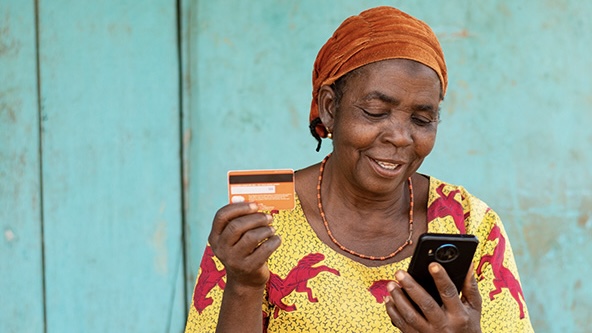
Linkwa’s intervention is to introduce a transaction layer where none has existed. Instead of wiring money into a black box, the platform allows users to pay for specific services or obligations through customised payment links. A builder can generate a link for bricks and labour. A tutor can issue one for a school term. A community organiser can use one for group contributions or fundraising. The diaspora payer sees exactly what is being paid for, makes payment through card, while recipients can receive funds through mobile money, with both sides receiving a digital record of the agreement.
That documentation is where the model begins to depart from conventional remittances. It does not eliminate risk entirely, but it changes the nature of the transaction. A receipt is no longer merely proof that money moved. It becomes evidence of what was agreed. In informal economies where verbal commitments often carry transactions, that paper trail introduces something many diaspora senders have lacked for years: leverage.
Its practical uses extend far beyond hiring contractors or paying service providers. The same structure can be applied to donations, family contributions, gifts and event registration. Instead of sending money to one relative to manage a school fundraiser or funeral collection, contributors can pay through a shared link where participation is visible and amounts are tracked. What has often been managed through screenshots and scattered mobile transfers becomes more organised and transparent.
There is another layer to why this matters. Linkwa is not only solving a diaspora problem. It may be quietly addressing an informal economy problem too. Many small service providers across Zimbabwe remain economically invisible because they have no formal transaction history. Without records of income or customer payments, they often struggle to access credit or grow beyond survival level enterprise. A platform that creates verifiable payment histories could begin to change that.
This is where what appears to be a payment tool starts looking more like market infrastructure.
For years, development economists have argued that diaspora capital should move beyond household support and play a stronger role in productive economic activity. But that ambition has always collided with weak systems of trust. It is difficult to turn remittance flows into meaningful economic participation when so much money moves through opaque channels. Structured transactions begin to close that gap.

The model also challenges a long standing assumption about African fintech innovation. Much attention has focused on speed, access and financial inclusion. But accountability has often been missing from the conversation. Linkwa suggests the next stage of innovation may be less about moving money faster and more about making transactions more reliable. That may be where its disruptive potential lies.
Its relevance stretches beyond Zimbabwe. Across African markets where informal commerce dominates and diaspora support remains critical, the same vulnerabilities exist. Builders are paid through personal numbers. Community projects rely on loose collections. Services are arranged through trust and WhatsApp messages. The conditions that make this model relevant in Zimbabwe exist across much of the continent.
Whether Linkwa can scale remains to be seen. Adoption, trust and user behaviour will determine whether the model takes root. But what it has already done is force attention onto a problem long treated as inevitable.
It suggests the era of sending blind cash and hoping for the best does not have to remain the norm.
For diaspora communities, that possibility matters. Because the issue was never simply how to send money home. It was how to make sure it works once it gets there.