

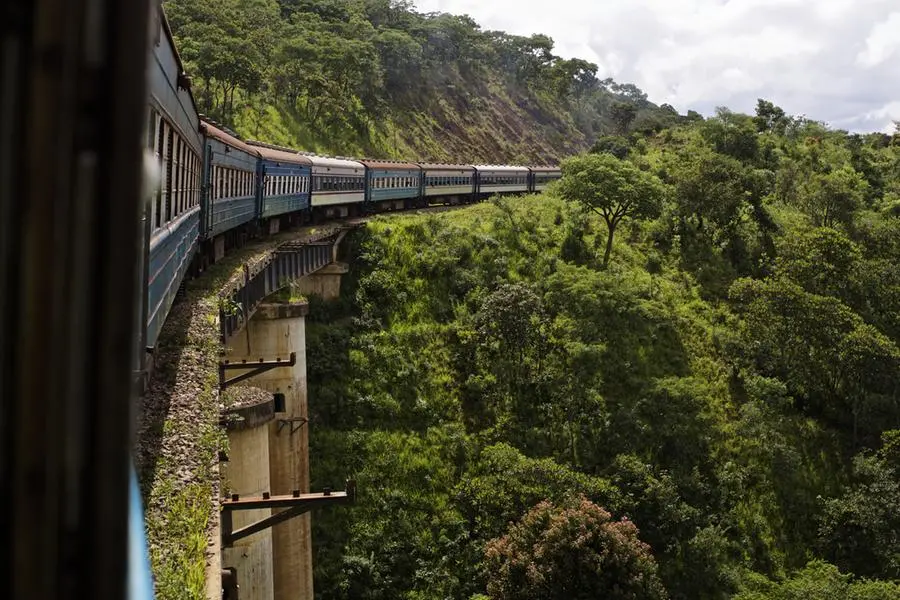
Acoalition of African and international financial institutions has pledged more than $1.3bn towards the development of a strategic rail link connecting Zambia’s copper producing regions to Angola’s Atlantic port of Lobito, marking a significant step in the evolution of regional transport infrastructure in Southern and Central Africa.
The Africa Finance Corporation and the African Development Bank have each committed $500m to the project, while Italy is expected to contribute an additional $320m. The Africa Finance Corporation is acting as lead developer and sponsor, reflecting the growing role of African institutions in shaping large scale infrastructure on the continent.
The proposed railway forms part of the broader Lobito Corridor, an 830 kilometre network that will combine upgrades to existing rail infrastructure with the construction of new lines extending into Zambia’s North Western and Copperbelt provinces. The total cost of the project is estimated at up to $5bn, with completion anticipated by 2030, subject to financing and procurement timelines.



Once operational, the corridor is expected to reduce cargo transit times between inland production areas and the Atlantic coast from approximately 16 days to seven days. Projections indicate that the improved efficiency could generate economic benefits of around $3bn for both Angola and Zambia, though such estimates remain contingent on commodity demand, operational capacity and broader regional trade dynamics.
The rail link builds on the historical significance of the Lobito route, which has long served as a conduit for mineral exports from the region. Academic analyses of the corridor highlight its potential to support value chain development across Angola, Zambia and the Democratic Republic of Congo, while also noting the importance of governance frameworks and environmental considerations in determining long term outcomes.

In Zambia, the project represents the most substantial railway investment since the construction of the Tanzania Zambia Railway Authority line in the 1970s. That earlier project, financed and built with Chinese support, reshaped trade routes by providing access to the Indian Ocean. The Lobito Corridor, by contrast, reorients attention towards the Atlantic, underscoring the multiplicity of trade pathways available to land linked economies.
Procurement processes are advancing, with several engineering, procurement and construction contractors having undertaken site visits. Bids are expected to be submitted in the coming months, with contractor selection anticipated later in the year. Groundbreaking is projected before the end of the year or early in 2027, while financial close is targeted for the final quarter of 2027.
Beyond its logistical function, the corridor has drawn international attention due to its relevance for critical minerals such as copper and cobalt, which are central to global energy transitions. Policy discussions in Europe and the United States have framed the project as part of a broader effort to diversify supply chains. At the same time, scholars and regional stakeholders emphasise that African agency remains central, with infrastructure priorities shaped by domestic development strategies and regional integration agendas.
Research on infrastructure corridors in Southern Africa suggests that such projects can act as catalysts for industrialisation and cross border trade when aligned with local economic planning. However, studies also caution that anticipated benefits may not be evenly distributed, and that inclusive development depends on complementary investments in governance, skills and environmental management.
As financing commitments deepen and construction plans move forward, the Lobito Corridor illustrates both the opportunities and complexities associated with large scale infrastructure development on the continent. Its trajectory will likely be shaped not only by capital flows, but by the extent to which it integrates regional priorities, supports local economies and reflects the diverse realities of the communities it is intended to serve.


