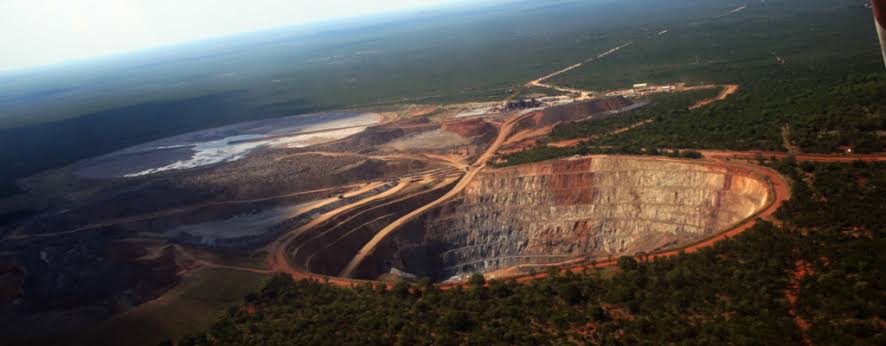
Botswana Minerals has reported progress in its fully funded exploration activities across licences 458 and 459 in Ngamiland in north western Botswana, as the company refines targets for potential copper drilling within the broader Damara Belt geological province. According to the company, the programme integrates artificial intelligence assisted analysis with conventional geoscientific methods to improve the accuracy and efficiency of target generation.
The licences form part of Botswana Minerals’ extensive landholding of approximately 7 074 square kilometres in the north eastern extent of the Damara Belt, a geological formation that extends across Namibia and Botswana and is widely recognised for hosting significant base metal mineralisation, particularly copper and associated metals. Further context on the regional geology of the Damara Belt can be accessed via the British Geological Survey, which documents its mineral potential across southern Africa.
Initial results from the company’s Phase 1 programme indicate the presence of multiple geochemical and geophysical anomalies. A copper anomaly extending roughly 9.5 kilometres has been delineated to the east of a major संरुctural fault, suggesting possible structurally controlled mineralisation. In addition, a silver anomaly corridor of approximately 20 kilometres has been mapped along a key fault zone, reinforcing the interpretation of a mineralised structural system.



To the west of the project area, the company has identified a core zone of lead and zinc mineralisation measuring about 2.4 kilometres in length, situated within a broader mineralised trend. These findings indicate the potential for polymetallic systems within the licence areas. The company has further suggested that several deposit models may be applicable, including Mississippi Valley Type systems, carbonate replacement deposits, hydrothermal mineralisation, and skarn related systems. General information on these deposit types is available through resources such as the United States Geological Survey.
Current interpretations point to two possible geological scenarios. The first suggests a single large mineralising system in which different metals are distributed zonally according to geological conditions. The second considers the possibility of two distinct but spatially overlapping systems, one dominated by copper and silver associated with structural controls, and another more prospective for lead and zinc mineralisation in the western zone. These interpretations remain under review as additional datasets are incorporated.
The next phase of work is expected to include more detailed magnetic and gravity data analysis, expanded geochemical sampling, integration of hyperspectral satellite data, and a comprehensive reassessment of historical drilling records. AI assisted modelling will continue to play a role in refining geological interpretations and prioritising drill targets.

Botswana Minerals has indicated that the integration of AI tools is intended to enhance decision making rather than replace established geological practices. The company states that early stage results have enabled a transition from broad regional assessments to more defined exploration targets, although it acknowledges that further work is required before any conclusions regarding economic viability can be drawn. Additional information on mineral exploration practices in Botswana can be found through the Government of Botswana.
From a broader African perspective, developments such as these highlight the evolving intersection of technology and resource exploration across the continent. While mineral exploration remains inherently uncertain, the use of advanced analytical tools reflects a wider shift within African mining sectors towards data driven methodologies. At the same time, such projects continue to intersect with local economic aspirations, environmental considerations, and regional development priorities, underscoring the importance of balanced and context specific approaches.
Botswana remains one of Africa’s more stable mining jurisdictions, with a long established regulatory framework and a reputation for responsible resource governance. However, as with all early stage exploration projects, the outcomes of Botswana Minerals’ programme will depend on further technical validation, including drilling results, before any resource estimates or development pathways can be confirmed.