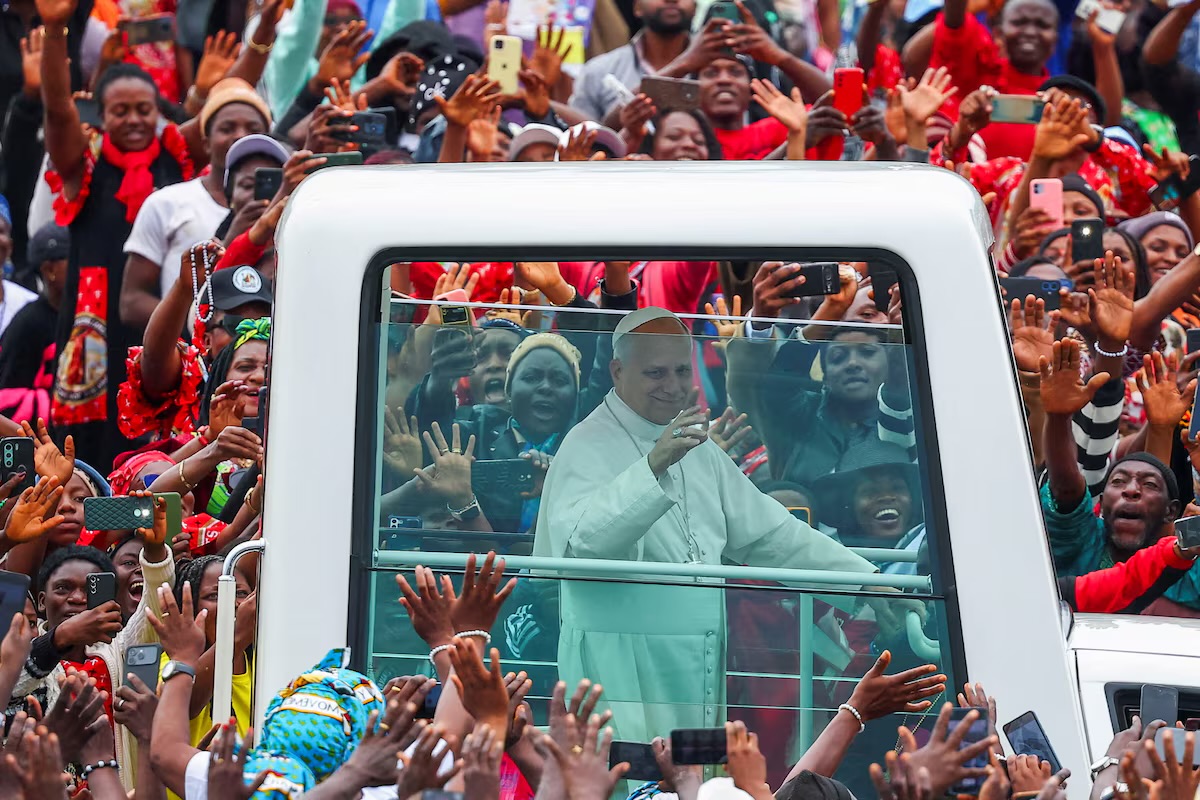
Thousands of worshippers began gathering in the early hours of Friday in Douala, as the city prepared to host what is expected to be the largest event of Pope Leo’s four nation African tour.
The Vatican has projected that as many as 600,000 people will fill the streets surrounding Japoma Stadium for the open air Mass, underscoring both the scale of the visit and the enduring influence of the Catholic Church across the continent. Many attendees began arriving a day earlier, with some spending the night at the venue to secure a place for the papal homily.
The visit comes amid heightened security and significant public anticipation. Pope Leo, the first American to lead the Catholic Church, has drawn global attention during his tour for increasingly direct commentary on international affairs. In remarks delivered earlier in Cameroon, he criticised global leaders for prioritising military spending, warning that the world was being shaped by a small number of authoritarian actors.



Arriving from Yaounde by helicopter, the pontiff was scheduled to spend several hours in Douala, where his programme also includes a visit to a Catholic hospital before returning to the Vatican. His broader ten day African tour has been marked by pointed observations on inequality, conflict and what he described as violations of international law by powerful states.
Cameroon itself remains a nation navigating complex internal challenges, including a protracted Anglophone crisis that has claimed thousands of lives since 2017. Against this backdrop, the Pope’s visit has taken on added symbolic weight, with many viewing it as a moment of spiritual renewal and national reflection.
Crowds lining the streets in both Douala and Yaounde have greeted the visit with enthusiasm, wearing brightly coloured garments adorned with papal imagery. For local church leaders, the occasion carries profound significance. Léopold Bayemi Matjei described the visit as a moment of collective hope, expressing the belief that it could bring renewed optimism to a country in need of healing and unity.

As the Mass unfolds, it is expected to stand not only as a major religious gathering but also as a defining moment in Pope Leo’s African tour, reflecting both the continent’s deep faith traditions and its place within wider global conversations on justice, peace and human dignity.