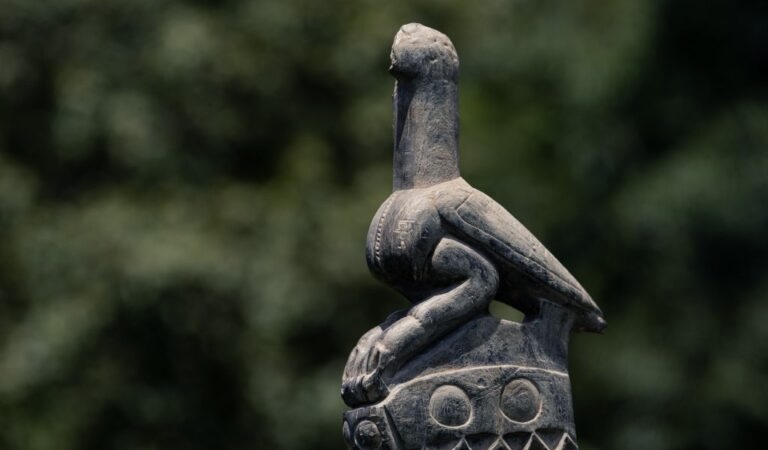
Zimbabwe has formally received a soapstone sculpture associated with the Great Zimbabwe civilisation along with eight sets of ancestral human remains from South Africa, marking a significant development in ongoing regional efforts to address the legacy of colonial era dispossession.
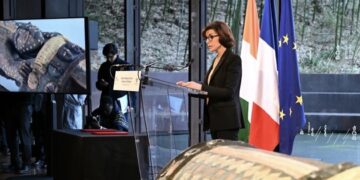
The handover ceremony, held in Harare and attended by senior government representatives from both countries, reflects a growing pattern of restitution across the African continent, where cultural artefacts and human remains removed during colonial rule are being returned to their countries of origin. Zimbabwean President Emmerson Mnangagwa described the return as an important moment in the recovery of cultural heritage and historical continuity, while South African officials characterised the process as part of a broader commitment to restorative justice within the region.
In remarks attributed to presidential spokesperson George Charamba, the return of the sculpture was framed as the culmination of a long historical trajectory. He noted that the artefact, understood to be among the first removed from Great Zimbabwe in the late nineteenth century, had spent approximately 137 years خارج its place of origin after being taken during the colonial period and later entering private and institutional collections linked to figures such as Cecil John Rhodes. Charamba further characterised the object as having been retained as a symbol of conquest, and observed that its return followed earlier repatriation efforts involving other Zimbabwe Bird fragments from Europe.



The returned sculpture is one of the stone birds originating from the ruins of Great Zimbabwe, a UNESCO World Heritage Site that served as the centre of a powerful precolonial state between the 11th and 15th centuries. These carvings, widely recognised as national symbols, hold deep cultural and spiritual significance and are represented in Zimbabwe’s national iconography, including its flag and coat of arms.
Historical records indicate that several of these sculptures were removed in the late nineteenth century during the expansion of colonial control in the region. Some were acquired by European collectors and colonial figures associated with the administration of the Cape Colony. The dispersal of these artefacts across private collections and museums in southern Africa and Europe has since been the subject of sustained diplomatic engagement.
The ancestral remains returned alongside the sculpture are understood to have been taken during the same period and subsequently housed in museum collections, including institutions that evolved into the Iziko South African Museum. Their repatriation aligns with a wider international reassessment of the ethics surrounding the collection and retention of human remains, particularly those removed without consent and used historically for scientific study.

Traditional leaders present at the ceremony emphasised that restitution processes should extend beyond symbolic return to include broader considerations of historical accountability. Some referenced ongoing discussions within international forums, including debates at the United Nations, concerning the classification of colonialism and the scope of reparative measures.
Officials from both Zimbabwe and South Africa framed the handover as part of a broader continental discourse on heritage, memory, and restitution. While the return of artefacts has gained momentum globally, African states have increasingly emphasised the importance of approaches informed by local cultural frameworks and community perspectives.
The return of the Zimbabwe Bird and ancestral remains contributes to an evolving landscape in which heritage restitution intersects with questions of identity, sovereignty, and historical accountability. Across southern Africa, such developments are increasingly understood not only as acts of redress but also as opportunities to re centre African narratives and knowledge systems in interpreting the continent’s past.