The emergence of coordinated diplomatic signalling between Tehran, Washington and Islamabad has introduced a tentative pause in escalating tensions in the Middle East, with implications that extend well beyond the immediate region. Statements issued on 7 April 2026 by Iran’s Foreign Minister Seyed Abbas Araghchi and a corresponding public message from Donald J. Trump suggest a conditional de escalation framework centred on maritime security and reciprocal restraint.
In a formal communication issued from Tehran, Araghchi expressed appreciation for mediation efforts undertaken by Shehbaz Sharif and Asim Munir, indicating that regional diplomacy, rather than unilateral intervention, has played a central role in shaping the present moment. The statement outlined Iran’s willingness to suspend defensive military operations on the condition that attacks against its territory cease. It further proposed a two week period during which safe maritime passage through the Strait of Hormuz would be facilitated under coordinated arrangements.
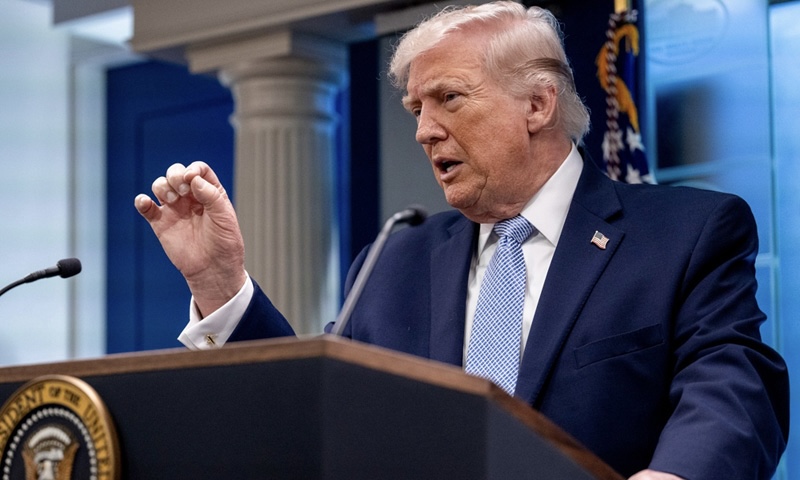
This was followed by a public declaration from President Trump, who indicated that the United States would suspend planned military actions against Iran for the same two week period. The suspension was framed as contingent upon Iran’s agreement to ensure what was described as a complete, immediate and safe reopening of the Strait of Hormuz. The statement also referenced progress in negotiations based on a ten point proposal submitted by Iran, alongside a broader framework reportedly under discussion between the two countries.



The Strait of Hormuz remains one of the most critical arteries of global energy supply, with estimates from institutions such as the International Energy Agency indicating that roughly one fifth of the world’s oil consumption transits through this narrow passage. Any disruption to its accessibility has historically triggered volatility in global markets, disproportionately affecting import dependent regions, including several African economies that rely heavily on energy imports.
For African states, particularly those in Southern Africa, the implications of such developments are neither abstract nor distant. Countries such as South Africa, Mozambique and Zimbabwe are deeply integrated into global energy and trade systems, where fluctuations in oil prices directly influence inflation, currency stability and industrial productivity. The prospect of even a temporary stabilisation in the Strait of Hormuz may therefore offer short term relief, although the structural vulnerabilities remain unresolved.
The involvement of Pakistan as an intermediary highlights an evolving diplomatic landscape in which non Western actors are increasingly asserting influence in conflict mediation. This shift resonates with broader trends across the Global South, where countries are seeking to redefine geopolitical alignments beyond traditional power centres. For African policymakers, this may offer both opportunities and challenges, particularly in navigating a multipolar world where alliances are fluid and interests often intersect.
At the same time, the language employed in both statements warrants careful scrutiny. While both Iran and the United States signal a willingness to de escalate, their positions remain conditional and strategically framed. Iran’s emphasis on halting attacks against its territory reflects longstanding concerns regarding sovereignty and external intervention. Conversely, the United States’ framing of the ceasefire underscores its focus on securing maritime routes and consolidating negotiated outcomes.
Such conditional diplomacy underscores the fragility of the current arrangement. The two week timeframe, while symbolically significant, may be insufficient to address the deeper structural tensions that underpin relations between the two states. Historical precedents, including the intermittent progress and setbacks in nuclear negotiations, suggest that temporary pauses often serve as tactical recalibrations rather than definitive resolutions.

From an African perspective, there is also a broader question regarding the continent’s positioning within these global dynamics. African nations are frequently positioned as observers or secondary stakeholders in geopolitical developments that nonetheless exert profound influence on their economies and societies. This moment invites reflection on how African institutions, including regional bodies such as the African Union, might engage more proactively in shaping global governance frameworks.
Moreover, the human dimension of such conflicts must not be overlooked. While strategic interests and economic considerations dominate official discourse, the lived realities of communities affected by instability, both within the Middle East and across interconnected regions, remain central. For African audiences, whose histories are marked by both conflict and resilience, there is a nuanced understanding of how geopolitical tensions translate into everyday challenges.

The present developments, therefore, should be understood not as a resolution but as a moment of recalibration. The interplay between diplomacy, economic imperatives and strategic interests continues to shape the trajectory of events. Whether this temporary ceasefire evolves into a more durable framework for peace will depend on sustained engagement, mutual concessions and the capacity of all parties to move beyond entrenched positions.
For The Southern African Times, the significance lies in situating these developments within a broader, interconnected narrative. The Middle East is not an isolated theatre but part of a global system in which Africa is both participant and stakeholder. As such, the unfolding situation demands continued attention, not only for its immediate implications but for what it reveals about the shifting contours of global power and the place of African voices within it.