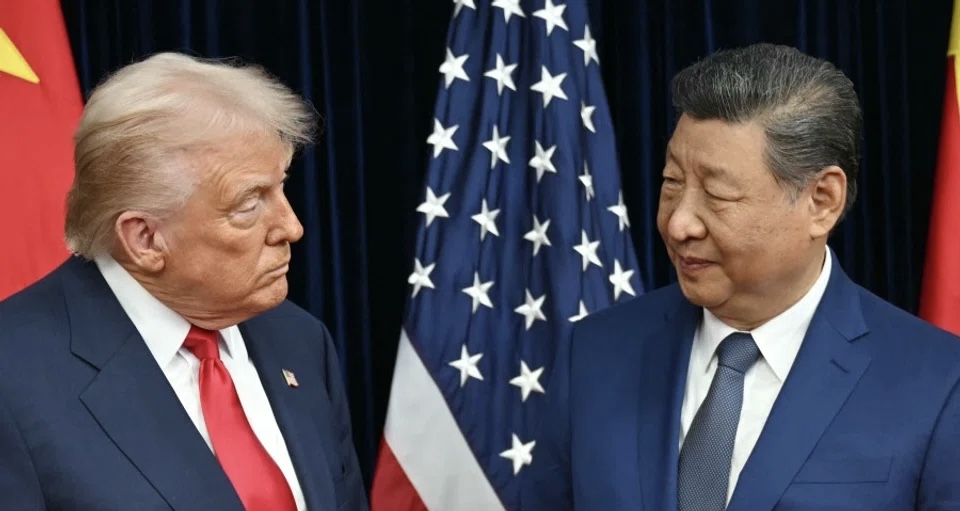
The anticipated meeting between United States President Donald Trump and Chinese President Xi Jinping in May has renewed global attention on a trade relationship that continues to shape economic conditions far beyond the two countries. The visit, expected to take place in Beijing, marks Trump’s first trip to China in eight years and follows a prolonged period of tariff escalation, negotiation, and partial stabilisation between the world’s two largest economies.
The trajectory of United States and China trade relations since early 2025 has been marked by cycles of confrontation and tactical accommodation. Following the introduction of broad tariffs by Washington in April 2025, including measures that raised duties on Chinese imports to levels exceeding one hundred percent, Beijing responded with reciprocal tariffs and restrictions on key exports. Among these were controls on rare earth elements and critical minerals, resources that are essential to global manufacturing, including sectors such as electronics, renewable energy, and defence technologies. Further reporting on these developments is available via Reuters coverage of the upcoming summit.
Subsequent negotiations led to intermittent truces, including a ninety day agreement reached in Geneva in May 2025, which temporarily reduced tariff pressures. However, both parties accused each other of failing to uphold commitments, underscoring the fragility of these arrangements. By October 2025, tensions escalated again as the United States imposed additional duties and expanded export controls on software and semiconductor technologies, while China extended its restrictions on rare earth exports and increased scrutiny of foreign firms operating within its supply chains.



Despite these tensions, diplomatic engagement has continued. Meetings between senior officials from both countries, including discussions held in Paris earlier this year, have been described by both sides as constructive. These engagements suggest an ongoing effort to manage competition rather than resolve it fully. The forthcoming summit is therefore widely viewed as part of a broader strategy to stabilise relations while maintaining strategic rivalry.

China’s economic response to reduced access to the United States market has involved diversifying its trade partnerships. Data from late 2025 indicate that China recorded a historic trade surplus, supported by increased exports to regions including Southeast Asia, Latin America, and Africa. This shift reflects a longer term reorientation of global trade flows, one that has implications for African economies seeking to position themselves within evolving supply chains.
For African countries, the implications of United States and China trade dynamics are multifaceted. On one hand, disruptions between the two powers have created openings for alternative trade partnerships and investment flows. On the other, volatility in commodity prices and global demand continues to affect export dependent economies across the continent. The S and P GSCI Agriculture Index, for example, has shown modest fluctuations, reflecting broader uncertainties in global agricultural markets that are closely linked to trade policies and climate variability.
In this context, African agency remains critical. Countries across Southern Africa and the wider continent are not merely passive observers but active participants in reshaping trade networks. Initiatives such as the African Continental Free Trade Area provide a framework through which African states can strengthen intra continental trade while engaging external partners on more balanced terms.
The upcoming Trump Xi meeting thus carries significance beyond bilateral relations. It will be closely monitored by policymakers, businesses, and communities across Africa, where the outcomes of global economic negotiations are often felt most acutely. While the summit may not resolve underlying tensions, it represents another moment in an ongoing process of adjustment within an increasingly multipolar global economy.