Anew assessment by the United Nations Development Programme suggests that escalating hostilities involving Iran could result in significant economic losses across Arab states, with projected reductions in gross domestic product ranging between $120 billion and $194 billion. The analysis reflects a range of conflict scenarios following the outbreak of hostilities in late February 2026 and underscores the wider regional implications of sustained instability.
According to the UNDP’s regional bureau for Arab states, even a short period of intensified conflict is likely to produce far reaching socio economic consequences. The report indicates that disruption to trade flows, energy exports and financial markets is already contributing to economic contraction across multiple economies in the Middle East.
The potential impact extends beyond macroeconomic indicators. The UNDP estimates that unemployment across the Arab region could rise by as much as four percentage points, translating into approximately 3.6 million job losses. In parallel, up to four million additional people could be pushed into conditions of poverty. These figures reflect compounding vulnerabilities in economies that are already navigating structural transitions and external pressures.



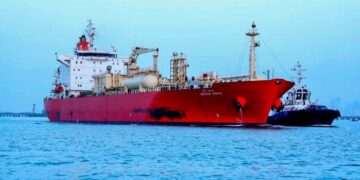
Particularly affected are member states of the Gulf Cooperation Council alongside countries in the Levant. These regions are projected to experience GDP contractions exceeding five percent under sustained conflict conditions. The disruption is closely tied to constraints on maritime trade routes, notably the Strait of Hormuz, a critical artery for global energy supply. The effective closure or restriction of this passage has limited the export capacity of hydrocarbons from several Gulf economies.
Estimates cited by financial institutions suggest that countries such as Qatar and Kuwait could face GDP contractions of up to 14 percent should disruptions persist through April. While Saudi Arabia and the United Arab Emirates may mitigate some losses through alternative export routes, both economies are still expected to experience notable declines in output compared to recent years.
Beyond the Middle East, the consequences of such disruptions are being felt in global commodity markets. Rising energy prices have contributed to increased costs for food and agricultural inputs, including fertilisers. These trends carry particular significance for import dependent regions, including parts of Africa, where food security remains sensitive to external price fluctuations. Institutions such as the United Nations Development Programme have previously highlighted how interconnected supply chains can amplify the impact of geopolitical shocks on lower income economies.
Financial markets have also responded to heightened uncertainty. Sovereign bond spreads in Gulf economies have widened, indicating increased risk perception among investors. Data from ratings agencies suggests that borrowing costs have risen, reflecting tighter financial conditions at a time when many countries in the region are pursuing economic diversification strategies.

The implications for African economies are complex and varied. While higher energy prices may offer short term fiscal gains for oil exporting countries on the continent, they simultaneously increase import costs for fuel dependent economies. This duality highlights the uneven transmission of global shocks across African states and underscores the importance of regional policy coordination. Analysis from organisations such as the African Development Bank has consistently pointed to the need for resilient supply chains and diversified economic structures to buffer against external volatility.
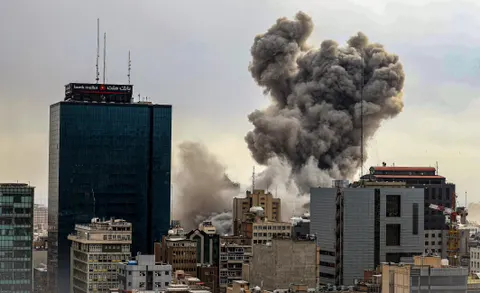
The UNDP has also examined the domestic impact within Iran, projecting a contraction of up to 10.4 percent in GDP alongside a potential increase in poverty affecting more than 3.5 million people. The reported damage to infrastructure, including housing, healthcare facilities and schools, signals longer term developmental challenges that extend beyond immediate economic indicators.
For African observers and policymakers, the unfolding situation offers a reminder of the interconnected nature of global economic systems. Developments in distant regions can have tangible consequences for livelihoods, trade balances and development trajectories across the continent. As such, responses grounded in regional cooperation, economic diversification and social protection are likely to remain central to navigating an increasingly uncertain global environment.