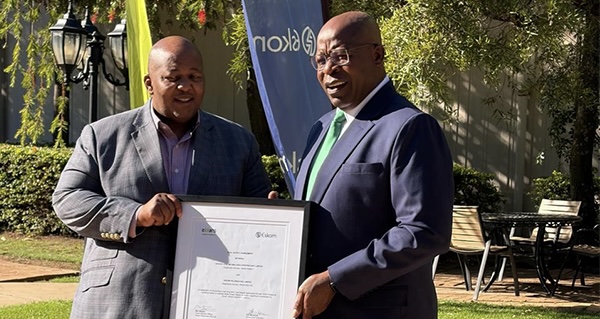
Exxaro Resources has entered into a long term coal supply agreement with South Africa’s state owned utility, Eskom, securing production from the Matla colliery through to November 2043. The agreement, which came into effect on 1 April 2026, establishes a renewed framework for a relationship that has historically underpinned electricity generation in Mpumalanga, one of the country’s key energy producing regions.
Under the terms of the agreement, Exxaro’s subsidiary will supply approximately 9.3 million tonnes of thermal coal annually to Eskom’s Matla power station. The arrangement replaces a legacy contract dating back to 1983 that expired in mid 2023. According to reporting by Coal Age, the new agreement runs until late 2043, with provisions for adjustment subject to mutual consent. This provides a measure of continuity for both entities within a sector that remains central to South Africa’s energy system.
The supply agreement is closely linked to the Matla Life of Mine project, a capital investment estimated at R5.2 billion, which is being implemented to sustain production at the colliery. Exxaro has indicated that the project is expected to be completed during the first half of its 2026 financial year, aligning operational capacity with contractual obligations. The company has also confirmed that it secured the necessary regulatory approvals in 2025, including the renewal of its mining right and water use licence, enabling continued extraction under South Africa’s regulatory framework as administered by the Department of Mineral Resources and Energy.



The agreement emerges at a time when coal markets are experiencing price moderation, while domestic demand for stable electricity supply remains acute. Eskom, which operates a predominantly coal fired generation fleet, continues to depend on long term supply contracts to stabilise fuel inputs as it seeks to improve plant performance. Further context on Eskom’s operational mandate and generation mix can be found via the utility’s official platform at Eskom.

From a financial perspective, Exxaro has reported a modest decline in annual profit alongside relatively stable production levels. The company has nonetheless maintained shareholder distributions, signalling an attempt to balance capital discipline with investor expectations. At the same time, its leadership has articulated a strategy that retains coal as a core component of the portfolio while incrementally expanding into minerals such as manganese and into renewable energy initiatives. Information on Exxaro’s broader strategic positioning is available at Exxaro Resources.
This dual approach reflects wider debates across the African continent regarding the pace and nature of energy transitions. While global narratives often emphasise rapid decarbonisation, energy systems in many African countries continue to be shaped by considerations of access, affordability and industrial development. In this context, coal remains a significant source of baseload power, particularly in South Africa, even as governments and companies explore diversification pathways.

Exxaro’s interests in the Waterberg coalfield and its investment in manganese assets linked to the Tshipi Borwa mine indicate a broader resource strategy that intersects with emerging energy technologies. Manganese, for example, is increasingly associated with battery production and energy storage, positioning it within discussions on future energy systems that are not solely defined by fossil fuels.
The Matla agreement therefore sits at the intersection of continuity and transition. It secures a long term revenue stream for Exxaro and a stable coal supply for Eskom, while also raising questions about how legacy energy infrastructure can coexist with evolving environmental and economic priorities across the region. For Southern Africa, where energy security remains a pressing concern, such agreements illustrate the complexities of balancing immediate developmental needs with longer term structural change.