Wednesday, April 29, 2026
  • Login
The Southern African Times
  • Home
  • Southern Africa
  • Business
    • African Start ups
    • African Continental Free Trade Area
  • Technology
    • Lifestyle
      • Health
      • Culture
      • Food and Drink
      • Entertainment
  • Opinion
  • Sports
  • SAT Jobs
    • Events
  • About Us
    • Advertise with Us
    • Contact Us
No Result
View All Result
  • Home
  • Southern Africa
  • Business
    • African Start ups
    • African Continental Free Trade Area
  • Technology
    • Lifestyle
      • Health
      • Culture
      • Food and Drink
      • Entertainment
  • Opinion
  • Sports
  • SAT Jobs
    • Events
  • About Us
    • Advertise with Us
    • Contact Us
No Result
View All Result
The Southern African Times
No Result
View All Result
Home Middle East

Strike on Iran’s Mobarakeh Steel Raises Global Supply Concerns

by SAT Reporter
March 29, 2026
in Middle East
0
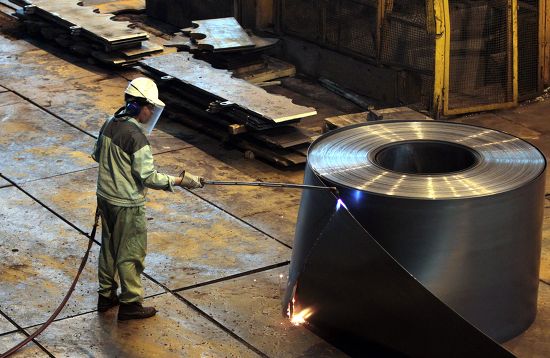
Strike on Iran’s Mobarakeh Steel Raises Global Supply Concerns

Image ref 51488135. Copyright Rex Shutterstock No reproduction without permission. Please see www.rexfeatures.com for more information.

Mobarakeh Steel, widely recognised as the largest steel producer in the Middle East and North Africa, reported on 29 March 2026 that one worker had been killed and several others injured following a strike on its industrial complex in Isfahan province. The company stated that key sections of its power generation and production infrastructure were damaged in the incident, which it described as a breach of international norms governing the protection of civilian industrial facilities during periods of conflict.

In statements attributed to chief executive Saeed Zarandi and carried by Iranian media outlets including the Iranian Labour News Agency, the company characterised the attack as having both human and economic consequences. Zarandi indicated that, beyond the immediate loss of life and injuries, the disruption posed risks to industrial continuity and supply chains connected to global steel markets. Iran has in recent years ranked among the world’s leading steel producers, contributing significantly to regional manufacturing and export flows.

Mobarakeh Steel appealed to international organisations, including the United Nations Industrial Development Organization and the World Steel Association, calling for recognition of what it termed a violation of established international principles concerning civilian infrastructure. The company also urged global industry bodies to consider the broader implications of such incidents for economic stability and industrial resilience, particularly in regions where heavy industry underpins employment and public revenue.


ADVERTISEMENT

The firm stated that contingency measures had been prepared in advance of potential disruptions and that efforts were under way to restore operations within the shortest feasible timeframe. While no independent verification of the extent of the damage or casualties was immediately available, the company reported receiving messages of support from workers, retirees, suppliers, and business partners, framing these responses as indicative of internal solidarity during a period of crisis.

The incident occurs within a wider context of heightened regional tensions since late February 2026. Public statements referenced by Mobarakeh Steel suggest a perceived inconsistency between prior assurances regarding the protection of industrial infrastructure and the realities on the ground, although responsibility for the strike has not been independently confirmed in publicly available reporting.

For African economies, the disruption of a major steel producer in the MENA region carries implications that extend beyond geography. Steel supply chains are deeply interconnected, and fluctuations in production or export capacity can influence pricing, availability, and industrial planning across the Global South. Several African countries rely on imported steel inputs for infrastructure development, construction, and manufacturing, while also pursuing domestic industrialisation strategies aimed at reducing external dependency.

From a pan African perspective, the incident underscores the vulnerability of industrial ecosystems in conflict affected environments and highlights the importance of safeguarding productive capacity as a shared developmental priority. It also raises broader questions about how global governance frameworks respond to the protection of civilian industry in ways that are equitable and attentive to the needs of regions whose economic trajectories are closely tied to industrial growth.

Mobarakeh Steel has indicated its intention to resume normal production as soon as conditions permit, while continuing to engage with international partners. The longer term implications for regional steel markets and for countries linked through trade and industrial cooperation, including those across Africa, will depend on both the pace of recovery and the evolution of the wider geopolitical context.

Tags: Africa economyconflict and industrygeopolitical riskglobal supply chainsindustrial infrastructureIranmanufacturingMENA regionMobarakeh Steelsteel industry
Previous Post

BlackRock Adjusts Investment in Zimbabwe’s Caledonia Mining Corporation

Next Post

Ethiopia Secures 13 Billion Dollars in Investment Commitments

SAT Reporter

Related Posts

Oil Tankers Resume Passage Through Hormuz Amid Fragile Truce
Middle East

Oil Tankers Resume Passage Through Hormuz Amid Fragile Truce

by SAT Reporter
April 18, 2026
US directive on Hormuz shipping raises global concern as diplomatic efforts stall
Middle East

US directive on Hormuz shipping raises global concern as diplomatic efforts stall

by SAT Reporter
April 12, 2026
Netanyahu approves talks with Lebanon as escalating strikes strain regional ceasefire
Middle East

Netanyahu approves talks with Lebanon as escalating strikes strain regional ceasefire

by SAT Reporter
April 10, 2026
Arab economies face up to $200 billion in losses from Iran conflict
Middle East

Arab economies face up to $200 billion in losses from Iran conflict

by SAT Reporter
April 4, 2026
Dubai Property Market Shows Early Signs of Cooling Amid Geopolitical Tensions
Middle East

Dubai Property Market Shows Early Signs of Cooling Amid Geopolitical Tensions

by SAT Reporter
March 21, 2026
Next Post
Ethiopia Secures 13 Billion Dollars in Investment Commitments

Ethiopia Secures 13 Billion Dollars in Investment Commitments

Browse by Category

  • Africa AI
  • African Continental Free Trade Area
  • African Debt
  • African Start ups
  • Agriculture
  • AI Africa
  • Algeria
  • All News
  • Analysis
  • Angola
  • Arts / Culture
  • Asia
  • Botswana
  • BOTSWANA
  • BREAKING NEWS
  • BRICS
  • Burkina Faso
  • Burundi
  • Business
  • Business
  • Business Wire
  • Cameroon
  • Central Africa
  • Chad
  • China
  • Climate Change
  • Climate Changev
  • Community
  • Congo Republic
  • Conservation
  • Côte d’Ivoire
  • COVID 19
  • CRYPTOCURRENCY
  • Culture
  • Democratic Republic of Congo
  • Diplomacy
  • Eastern Africa
  • Economic Development
  • Economy
  • Education
  • Egypt
  • Elections 2024
  • Energy
  • Entertainment
  • Environment
  • Eritrea
  • Ethiopia
  • Europe
  • Fashion
  • Feature
  • Finance
  • Financial Inclusion
  • Food
  • Food and Drink
  • Foods
  • GABON
  • Ghana
  • Global
  • Global Africa
  • Guinea
  • Health
  • Immigration
  • in Southern Africa
  • International news
  • International Relations
  • Investment
  • Ivory Coast
  • Just In
  • Kenya
  • Lesotho
  • Libya
  • Life Style
  • Lifestyle
  • Literature
  • Malawi
  • Malawi
  • Mali
  • Markets
  • Mauritius
  • Middle East
  • Mining in Africa
  • Morocco
  • Mozambique
  • Namibia
  • Niger
  • niger
  • Nigeria
  • North Africa
  • North-Eastern Africa
  • Obituaries
  • Obituary
  • Opinion
  • PARTNER CONTENT
  • Politics
  • Property
  • Racism
  • Rwanda
  • Rwanda
  • SADC
  • SAT Interviews
  • SAT Investigation
  • SAT Jobs
  • Saudi Arabia
  • Senegal
  • Seychelles
  • Somaliland
  • South Africa
  • South Sudan
  • Sports
  • Startup Africa
  • STOCK EXCHANGE
  • Sudan
  • Sustainability
  • Sustainablity
  • Tanzania
  • Technology
  • Telecommunications
  • The Editorial Board
  • The Power Of She
  • Togo
  • Trade
  • Travel
  • Travel
  • Tunisia
  • Uganda
  • Uncategorized
  • Wealth
  • West Africa
  • World
  • World
  • ZAMBIA
  • Zambia
  • ZIMBABWE
  • Zimbabwe

Browse by Tags

#NewsUpdate #SouthAfrica #SouthernAfricanTimes #TheSouthernAfricanTimes AfCFTA africa African Continental Free Trade Area African development African Development Bank African economies African economy African Union Agriculture Angola Botswana Business China Climate change Cyril Ramaphosa Economic Development economic growth energy transition fiscal policy industrialisation Inflation Infrastructure Infrastructure Development International relations Investment Kenya Mozambique Namibia news Nigeria Regional Integration renewable energy Rwanda SADC South Africa Southern Africa sustainable development Tanzania United States Zambia Zimbabwe
ADVERTISEMENT

WHO WE ARE

The Southern African Times is a regional bloc digital newspaper that covers Southern African and world news. The paper also gives a nuanced analysis on news and covers a wide range of reporting which include sports, entertainment, foreign affairs, arts and culture.

Welcome Back!

Login to your account below

Forgotten Password?

Retrieve your password

Please enter your username or email address to reset your password.

Log In

  • Home
  • Southern Africa
  • Business
    • African Start ups
    • African Continental Free Trade Area
  • Technology
    • Lifestyle
      • Health
      • Culture
      • Food and Drink
      • Entertainment
  • Opinion
  • Sports
  • SAT Jobs
    • Events
  • About Us
    • Advertise with Us
    • Contact Us
Are you sure want to unlock this post?
Unlock left : 0
Are you sure want to cancel subscription?