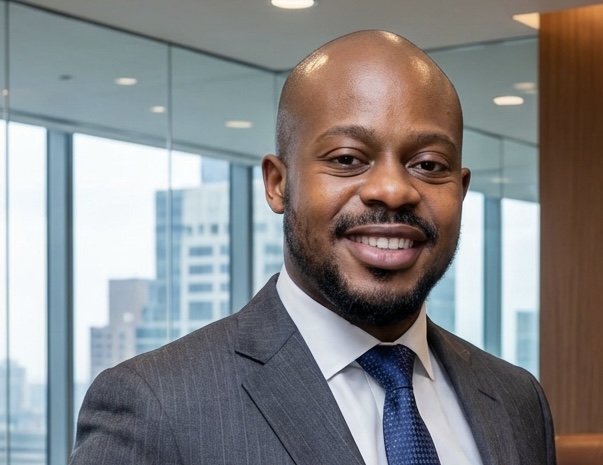
As global capital increasingly searches for yield beyond saturated developed markets, Africa is emerging not as a speculative outpost, but as a structured, multi-sector investment destination. At the center of this shift are operators like Nyashadzashe Nguwo, a global growth and market entry strategist specializing in Africa–UK expansion and cross-border execution.
With over a decade of experience across strategy, digital transformation, and stakeholder engagement, Nguwo has built a reputation for translating opportunity into disciplined, high-impact outcomes. In his role at Sankofa Capital, he operates at the intersection of strategy and execution, structuring and delivering investment initiatives across multiple African markets while ensuring capital deployment remains efficient and locally responsive. His advisory work spans fintechs, innovation ecosystems, and institutional players—including engagements with Old Mutual—and extends to projects like Greenbridge, a sustainable housing initiative targeting infrastructure gaps across five African markets.
We spoke to him about why Africa is becoming indispensable in global portfolios.



SAT: You’ve worked across African and UK markets. How do you frame Africa’s investment case today?
Nguwo: The biggest shift is moving away from the “frontier market” narrative. Africa is not a single market—it’s a network of investment corridors with different risk-return profiles. What investors are seeing now is structural momentum: population growth, rapid urbanisation, and digital adoption.
From a capital allocation perspective, Africa offers exposure to underpenetrated sectors with strong growth multiples. The inefficiencies that exist—pricing gaps, information asymmetry—create opportunities for alpha generation. It’s less about speculation and more about strategic positioning in a growth market.
SAT: What role does Sankofa Capital play in enabling that positioning?
Nguwo: We act as a bridge between global capital and local execution. That means sourcing opportunities, structuring deals, and ensuring operational delivery on the ground.
Many investors struggle with market entry—regulatory fragmentation, currency volatility, and limited local insight. Our role is to de-risk that process. We structure investments across private equity, infrastructure, and venture capital, ensuring they are aligned with jurisdiction-specific realities.
Ultimately, we make Africa investable by translating complexity into clarity.
SAT: You’ve advised fintechs and technology platforms across regions like East Africa and the DRC. Where is the strongest growth coming from?
Nguwo: Fintech is a major driver. Research consistently shows that digital financial services are accelerating financial inclusion and economic growth across sub-Saharan Africa. Mobile-first ecosystems are scaling rapidly because they solve infrastructure gaps.

But beyond fintech, infrastructure remains one of the most compelling investment themes. أفريقيا’s infrastructure deficit continues to create opportunities in energy, housing, and transport. Projects like Greenbridge demonstrate that these are not just impact investments—they are commercially viable, long-term assets.
We’re also seeing growth in digital infrastructure and AI-enabled platforms, which are reshaping how businesses operate across the continent.
SAT: Should investors still be focusing on public markets?
Nguwo: Public equities are important, especially in more developed exchanges. But they don’t fully capture Africa’s growth story.
The real value lies in private markets and alternative assets. That’s where you access early-stage growth, infrastructure development, and sectoral expansion. Private equity, venture capital, and structured finance offer better exposure to high-growth segments.
Liquidity constraints in some public markets also make long-term, illiquid strategies more attractive from a risk-adjusted return perspective.
SAT: Risk remains a key concern. How should investors approach it?
Nguwo: Risk in Africa is real, but it’s often misunderstood. You’re dealing with currency fluctuations, political dynamics, and regulatory differences across markets.
The key is structured risk management. That includes hedging strategies, strong legal frameworks, and local partnerships. Investors who succeed here are those who combine data-driven decision-making with on-the-ground intelligence.
In many cases, the perceived risk is already priced into the market—creating opportunities for those willing to engage with it properly.
SAT: How important are partnerships in executing successful investments?
Nguwo: They’re essential. Collaborating with institutions like Old Mutual brings depth, credibility, and institutional knowledge. At the same time, local partners ensure execution is grounded in reality.
Cross-border investment is not just about capital—it’s about ecosystems. The combination of global capital and local expertise is what drives scalable outcomes.
SAT: Where should investors be allocating capital right now?
Nguwo: From a strategic standpoint, I’d highlight:

- Infrastructure and Energy: Long-term, stable returns driven by structural demand
- Fintech and Digital Economy: High-growth, scalable platforms
- Consumer and Logistics: Driven by urbanisation and middle-class expansion
- Sustainable Development: Housing, climate tech, and renewable energy
Empirical studies show that sectoral diversification—particularly into financial services and infrastructure—has a strong correlation with economic growth across African economies.
SAT: Final thought—how should Africa fit into a global portfolio?
Nguwo: Africa should be treated as a core growth allocation, not a peripheral one. It offers diversification benefits due to low correlation with developed markets, and access to sectors still in early growth phases.
With frameworks like the African Continental Free Trade Area (AfCFTA), we’re also seeing increasing regional integration. That expands market size and improves capital mobility.
The reality is simple: Africa is a long-term investment story. Those who enter early, with the right structures and partnerships, will be best positioned to capture its upside.