Friday, April 17, 2026
  • Login
The Southern African Times
  • Home
  • Southern Africa
  • Business
    • African Start ups
    • African Continental Free Trade Area
  • Technology
    • Lifestyle
      • Health
      • Culture
      • Food and Drink
      • Entertainment
  • Opinion
  • Sports
  • SAT Jobs
    • Events
  • About Us
    • Advertise with Us
    • Contact Us
No Result
View All Result
  • Home
  • Southern Africa
  • Business
    • African Start ups
    • African Continental Free Trade Area
  • Technology
    • Lifestyle
      • Health
      • Culture
      • Food and Drink
      • Entertainment
  • Opinion
  • Sports
  • SAT Jobs
    • Events
  • About Us
    • Advertise with Us
    • Contact Us
No Result
View All Result
The Southern African Times
No Result
View All Result
Home in Southern Africa

South Africa Projects 1.6 Per Cent Growth in 2026 as Fiscal Consolidation Gains Ground

by SAT Reporter
February 26, 2026
in in Southern Africa, South Africa
0
South Africa Projects 1.6 Per Cent Growth in 2026 as Fiscal Consolidation Gains Ground

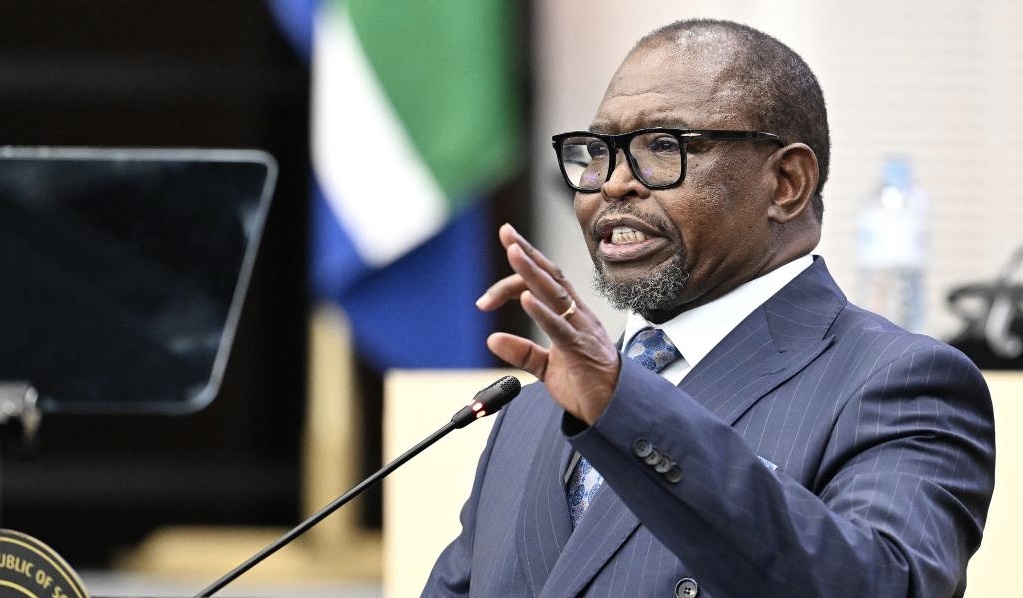
South Africa has projected real gross domestic product growth of 1.6 per cent in 2026, signalling what Finance Minister Enoch Godongwana described as a gradual improvement in domestic economic conditions. Delivering the 2026 Budget Speech in Cape Town, the minister indicated that growth is expected to rise from an estimated 1.4 per cent in 2025 and to average 1.8 per cent over the medium term, reaching 2 per cent by 2028, according to the Parliament of South Africa.

The fiscal framework presented in the budget outlines a projected narrowing of the consolidated budget deficit to 4 per cent of gross domestic product in the 2026 to 2027 financial year. Gross national debt is expected to stabilise at 78.9 per cent of GDP in 2025 to 2026 before declining gradually over the medium term, as detailed in the National Treasury budget presentation. These projections are consistent with recent efforts to achieve a primary surplus and to contain debt service costs, which have been identified as key pressures in successive budget reviews.

Godongwana characterised the current fiscal moment as a turning point, noting that stronger than anticipated revenue collection enabled the withdrawal of 20 billion rand in previously proposed tax increases. In addition, the budget introduces a Targeted and Responsible Savings programme that identifies 12 billion rand in expenditure savings over the medium term. The minister stated that this approach will be embedded in future budget processes rather than treated as a once off intervention.


ADVERTISEMENT

The growth outlook is framed against persistent structural constraints. Logistics bottlenecks, energy transmission limitations, and weaknesses in rail and port performance continue to affect output, particularly in mining and manufacturing. Operational and financial challenges at state owned logistics company Transnet have been widely documented in public reports and parliamentary briefings. Recent outbreaks of foot and mouth disease have also placed pressure on agricultural exports, a sector that remains significant for rural livelihoods and regional trade within the Southern African Development Community.

Public sector infrastructure spending is projected to exceed 1 trillion rand over the medium term, including allocations for transport and logistics networks, rail modernisation, energy transmission expansion, and water systems. The emphasis on infrastructure aligns with recommendations from multilateral institutions such as the African Development Bank, which has underscored infrastructure investment as a catalyst for productivity and regional integration in its African Economic Outlook. It also reflects findings from the World Bank that improved network industries can significantly raise potential growth in South Africa.

Macroeconomic stability remains a central pillar of the fiscal strategy. The South African Reserve Bank has maintained a policy stance aimed at anchoring inflation expectations within its target band, contributing to financial stability amid global volatility. According to recent country assessments by the International Monetary Fund, credible fiscal consolidation and structural reform are essential to strengthening investor confidence and safeguarding debt sustainability.

Data from Statistics South Africa indicate that the economy has faced subdued growth over the past decade, shaped by electricity shortages, declining fixed investment, and global headwinds. In this context, the projected improvement to 1.6 per cent growth in 2026 represents incremental progress rather than a structural break. Analysts cited by regional and international media including Reuters have similarly observed that sustained acceleration will depend on effective implementation of reforms, improved governance of state institutions, and deeper integration within African markets under frameworks such as the African Continental Free Trade Area.

From a broader continental perspective, South Africa’s economic trajectory carries implications beyond its borders. As one of Africa’s most industrialised economies and a key trading partner within Southern Africa, its fiscal and infrastructure policies influence supply chains, investment flows, and monetary conditions across the region. The emphasis on sovereignty and reduced reliance on external debt, articulated in the budget speech, reflects wider debates within African policymaking circles about financial autonomy, development finance, and resilience in an era of global uncertainty.

While the projected figures suggest cautious optimism, the medium term outlook remains contingent on structural reform, administrative capacity, and the translation of fiscal commitments into tangible economic outcomes. The 2026 Budget positions macroeconomic stability, infrastructure expansion, institutional strengthening, and inclusive growth as mutually reinforcing objectives. Whether these measures yield the anticipated acceleration will depend on coordinated execution across spheres of government and sustained engagement with social partners, business, and regional institutions.

Tags: African developmentBudget 2026Enoch Godongwanafiscal policyGDP growthinfrastructure investmentmacroeconomic stabilitypublic debtSouth Africa economySouthern Africa
Previous Post

Econet Delisting 2026: “Dividend Confidence Is Clear — Liquidity Will Be the Real Test,” Says Tinashe Mukogo

Next Post

SADC Urges Diversified Energy Strategy to Strengthen Regional Growth and Resilience

SAT Reporter

Related Posts

Julius Malema Sentenced to Five Years in Firearm discharge case
South Africa

Julius Malema Sentenced to Five Years in Firearm discharge case

by Leo Muzivoreva
April 16, 2026
Namibia Reports Significant Decline in Wildlife Crime Following Intensified Enforcement
Conservation

Namibia Reports Significant Decline in Wildlife Crime Following Intensified Enforcement

by SAT Reporter
April 12, 2026
Zambia Maintains Fertiliser Stability Despite Global Disruptions
in Southern Africa

Zambia Maintains Fertiliser Stability Despite Global Disruptions

by SAT Reporter
April 12, 2026
4,496 South Africans Admitted as US Refugees in Six Months
in Southern Africa

4,496 South Africans Admitted as US Refugees in Six Months

by SAT Reporter
April 12, 2026
Flooding Halts Rail Traffic Along Angola’s Lobito Corridor
Angola

Flooding Halts Rail Traffic Along Angola’s Lobito Corridor

by SAT Reporter
April 12, 2026
Next Post
SADC Urges Diversified Energy Strategy to Strengthen Regional Growth and Resilience

SADC Urges Diversified Energy Strategy to Strengthen Regional Growth and Resilience

Browse by Category

  • Africa AI
  • African Continental Free Trade Area
  • African Debt
  • African Start ups
  • Agriculture
  • AI Africa
  • Algeria
  • All News
  • Analysis
  • Angola
  • Arts / Culture
  • Asia
  • Botswana
  • BOTSWANA
  • BREAKING NEWS
  • BRICS
  • Burkina Faso
  • Burundi
  • Business
  • Business
  • Business Wire
  • Cameroon
  • Central Africa
  • Chad
  • China
  • Climate Change
  • Climate Changev
  • Community
  • Congo Republic
  • Conservation
  • Côte d’Ivoire
  • COVID 19
  • CRYPTOCURRENCY
  • Culture
  • Democratic Republic of Congo
  • Diplomacy
  • Eastern Africa
  • Economic Development
  • Economy
  • Education
  • Egypt
  • Elections 2024
  • Energy
  • Entertainment
  • Environment
  • Eritrea
  • Ethiopia
  • Europe
  • Fashion
  • Feature
  • Finance
  • Financial Inclusion
  • Food
  • Food and Drink
  • Foods
  • GABON
  • Ghana
  • Global
  • Global Africa
  • Guinea
  • Health
  • Immigration
  • in Southern Africa
  • International news
  • International Relations
  • Ivory Coast
  • Just In
  • Kenya
  • Lesotho
  • Libya
  • Life Style
  • Lifestyle
  • Literature
  • Malawi
  • Malawi
  • Mali
  • Markets
  • Mauritius
  • Middle East
  • Mining in Africa
  • Morocco
  • Mozambique
  • Namibia
  • Niger
  • niger
  • Nigeria
  • North Africa
  • North-Eastern Africa
  • Obituaries
  • Obituary
  • Opinion
  • PARTNER CONTENT
  • Politics
  • Property
  • Racism
  • Rwanda
  • Rwanda
  • SADC
  • SAT Interviews
  • SAT Investigation
  • SAT Jobs
  • Saudi Arabia
  • Senegal
  • Seychelles
  • South Africa
  • South Sudan
  • Sports
  • Startup Africa
  • STOCK EXCHANGE
  • Sudan
  • Sustainability
  • Sustainablity
  • Tanzania
  • Technology
  • Telecommunications
  • The Editorial Board
  • The Power Of She
  • Togo
  • Trade
  • Travel
  • Travel
  • Tunisia
  • Uganda
  • Uncategorized
  • Wealth
  • West Africa
  • World
  • World
  • ZAMBIA
  • Zambia
  • Zimbabwe
  • ZIMBABWE

Browse by Tags

#NewsUpdate #SouthAfrica #SouthernAfricanTimes #TheSouthernAfricanTimes AfCFTA africa African Continental Free Trade Area African development African Development Bank African economies African economy African Union Agriculture Angola Botswana Business China Climate change Cyril Ramaphosa Economic Development economic growth energy transition fiscal policy food security industrialisation Inflation Infrastructure Development International relations Investment Kenya Mozambique Namibia news Nigeria Regional Integration renewable energy Rwanda SADC South Africa Southern Africa sustainable development Tanzania United States Zambia Zimbabwe
ADVERTISEMENT

WHO WE ARE

The Southern African Times is a regional bloc digital newspaper that covers Southern African and world news. The paper also gives a nuanced analysis on news and covers a wide range of reporting which include sports, entertainment, foreign affairs, arts and culture.

Welcome Back!

Login to your account below

Forgotten Password?

Retrieve your password

Please enter your username or email address to reset your password.

Log In

  • Home
  • Southern Africa
  • Business
    • African Start ups
    • African Continental Free Trade Area
  • Technology
    • Lifestyle
      • Health
      • Culture
      • Food and Drink
      • Entertainment
  • Opinion
  • Sports
  • SAT Jobs
    • Events
  • About Us
    • Advertise with Us
    • Contact Us
Are you sure want to unlock this post?
Unlock left : 0
Are you sure want to cancel subscription?