Africa’s position within the global development landscape is undergoing a significant recalibration. In 2025, development aid flows declined sharply as several major donors scaled back or restructured their commitments, signalling a broader rethinking of traditional aid models and the sustainability of donor driven development.
This shift reflects a growing move away from donor recipient dynamics towards frameworks built on shared responsibility, local leadership and long-term investment. Analysis by the Mo Ibrahim Foundation suggests that declining Official Development Assistance has intensified the urgency of reassessing how Africa finances and directs its own development trajectory.
As World Trade Organization Director General Dr Ngozi Okonjo-Iweala has noted, the evolving global environment presents Africa with considerable challenges, but also opens space for more self directed and sustainable development pathways anchored in trade, investment and productive capacity rather than aid dependence.




Against this backdrop, Africa and Europe are increasingly framed as natural partners rather than distant actors. Bound by geography, history and long-standing interaction, both regions share an interest in a rules based international order grounded in international law, the United Nations Charter and the pursuit of peaceful, just and sustainable development. The African Union and the European Union have repeatedly reaffirmed commitments to democratic principles, security and stability, reinforcing this partnership narrative.
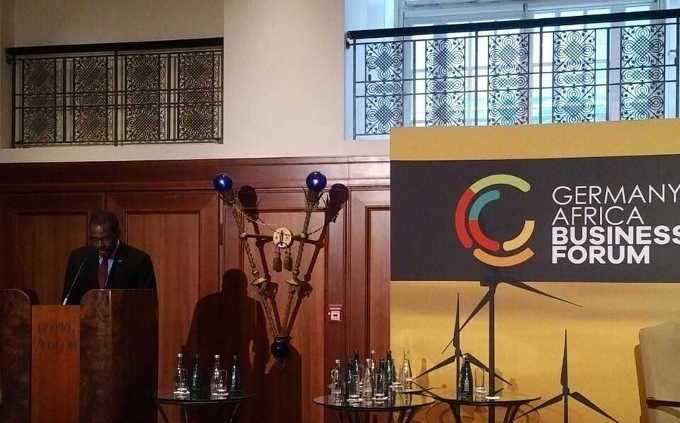
This evolving approach is not confined to policy rhetoric. It is also beginning to reshape how private sector actors engage with Africa. One platform operating at this intersection is the Germany Africa Business Forum, a private sector focused organisation founded in 2017 to promote Africa as a viable business destination and support long-term, partnership-based collaboration between German and African companies.
Jessica Stang, a Germany based sustainability and energy professional with prior experience at the Germany Africa Business Forum, said there has been a noticeable shift in German private sector attitudes towards Africa since 2022.
“There has been a clear move away from a traditional development aid perspective towards a business-to-business approach,” she told The Southern African Times.
Stang noted that German companies are increasingly exploring Africa as a commercial partner rather than a recipient of donor funded projects.
“Germany’s effort to reduce its dependence on Russian gas has been a major driver of this change. Companies are increasingly searching for alternative energy sources and long-term solutions.”
As a result, interest in Africa has grown substantially in areas such as renewable energy and green hydrogen. According to the International Energy Agency, Africa has the potential to become a major global producer of low carbon hydrogen, supported by abundant solar and wind resources and declining production costs. The World Economic Forum has similarly identified Africa’s clean energy potential as a key factor shaping European interest in the continent.
German firms are now increasingly viewing Africa “as a strategic partner for building sustainable value chains rather than pursuing short-term projects,” Stang said.
She highlighted Southern Africa as particularly well positioned, citing relative political stability, improving regulatory environments and a strong base of skilled labour and technical expertise.
“These are essential foundations for more complex investments in areas such as energy, infrastructure and industrial development,” she added.
However, Stang cautioned that significant gaps remain between policy ambition and business reality. While Germany’s political narrative has shifted, many existing support instruments still reflect a development aid logic rather than commercial risk sharing.
“In practice, companies often lack the practical tools needed to enter African markets, manage risk and scale investments,” she said, noting that adapting policies, financing mechanisms and institutional frameworks will take time.
This disconnect between policy intent and lived economic realities is increasingly being navigated by practitioners working across Africa–Germany networks, particularly within the diaspora.
Kumbirai Chipadza, an award-winning Africa–Germany business expert and founder of DeutschConnect, said moving beyond aid requires a fundamental rethink of how partnerships are structured.
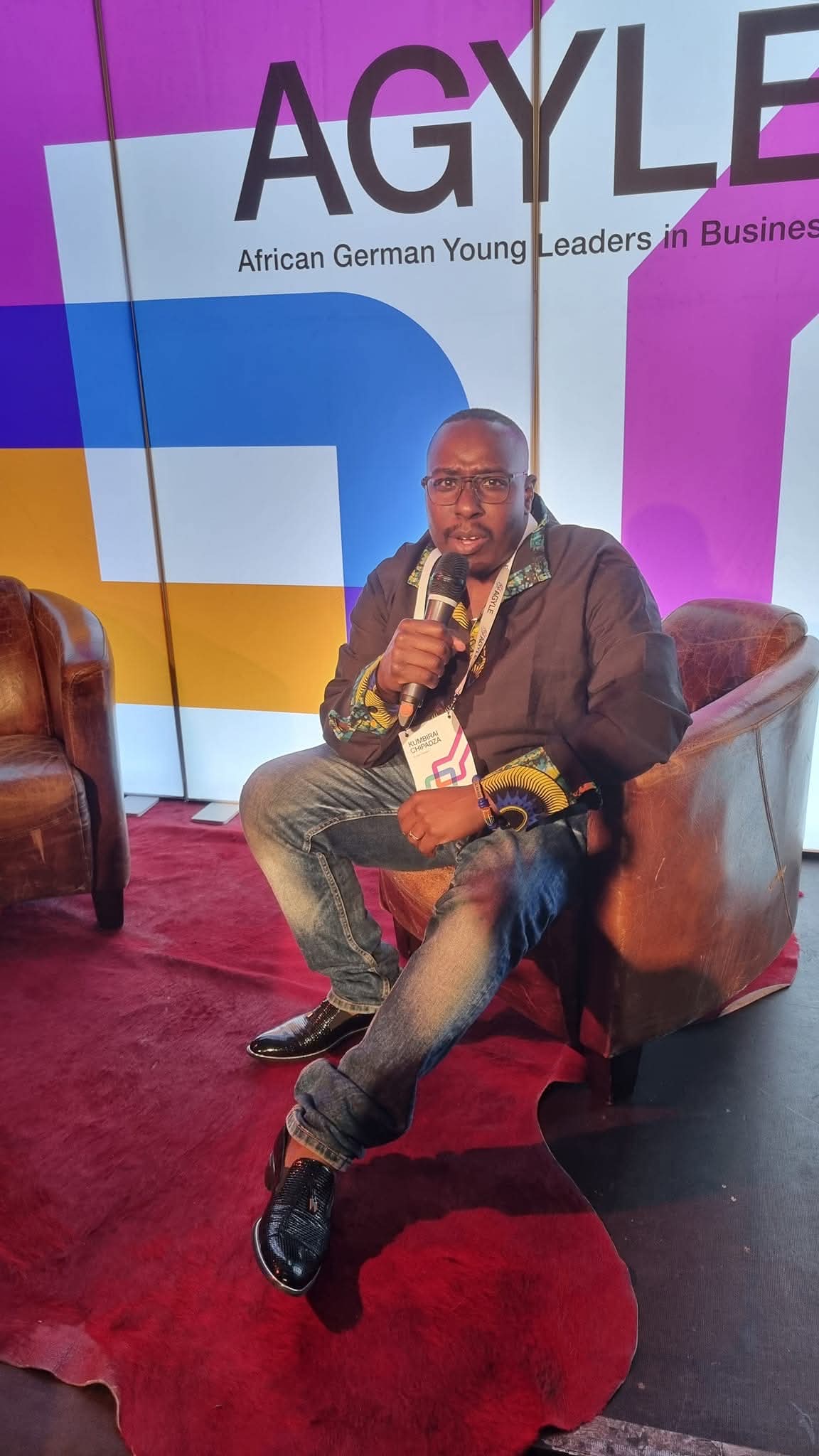
Drawing on his experience supporting Africa–Germany business linkages, Chipadza argued that sustainable cooperation must prioritise local ownership and practical problem solving over externally driven frameworks.
“True partnership depends on an eye-level relationship where all parties are equal and no one is positioned as superior,” he said. “German institutions need to actively work with African diaspora and local experts, and solutions must be locally designed to solve local problems rather than being shaped around ticking off KPIs.”
While climate change continues to attract significant funding and attention, Chipadza stressed that African countries are also confronting urgent economic and social challenges requiring practical, context-specific solutions.
“Africans, too, must step up by seeking trade and productive collaboration instead of aid, because sustainable partnerships are built on mutual responsibility, trust and shared value,” he said.
Germany’s Marshall Plan with Africa reflects this policy shift, framing Africa and Europe as equal partners and calling for a decisive move away from donor recipient dynamics towards fair trade, private investment, entrepreneurial growth and African led solutions aligned with the African Union’s Agenda 2063.

Despite this evolving policy language, countries such as Zimbabwe continue to struggle to translate Africa–Germany and EU partnership frameworks into tangible economic outcomes.
Chipadza pointed to structural and institutional constraints limiting Zimbabwe’s ability to benefit from emerging opportunities. Unlike some African states, Zimbabwe does not have a bilateral economic agreement with Germany, restricting access to formal trade and investment frameworks. He also noted that Germany’s initial Marshall Plan focus excluded Zimbabwe, with many opportunities still shaped by political considerations rather than economic readiness.
“Zimbabwe lacks dedicated intermediaries or consultants consistently advocating for the country in the Africa–Germany and EU space,” he said. “Independent actors try to fill this gap, but without systemic support it remains difficult to translate opportunities into concrete outcomes.”
According to Chipadza, closing this gap will require stronger coordination between Zimbabwe’s public institutions and private sector, alongside more strategic engagement with German and European partners.
Labour mobility, he argued, sits at the centre of a partnership-based model. It reframes migration as a shared economic interest, addressing Africa’s demand for opportunity while responding to Germany’s acute skills shortages across healthcare, hospitality and skilled trades.
Labour market data cited in a 2026 Jobbatical report shows shortages in more than 160 occupations in Germany, prompting the easing of immigration routes for skilled workers.
“African professionals still face perception barriers, from doubts about education quality to low trust in qualifications, alongside complex visa, language and cultural systems,” Chipadza said.
“Once trusted pathways exist through verified training, visa support and mentorship, these barriers fall, allowing talent to contribute meaningfully while meeting Germany’s skills needs.”
He described success in partnership-based models as mutual. For African participants, it offers skills development, career mobility and knowledge transfer. For German partners, it provides sustainable solutions to labour shortages and long-term economic collaboration.
Selected as one of 40 young African–German business leaders driving economic cooperation, Chipadza said practitioner-led platforms are essential in converting policy into opportunity.
“Platforms like DeutschConnect, Hub4Africa and AG Career Hub move partnership beyond theory,” he said. “They create structured pathways with tangible outcomes.”