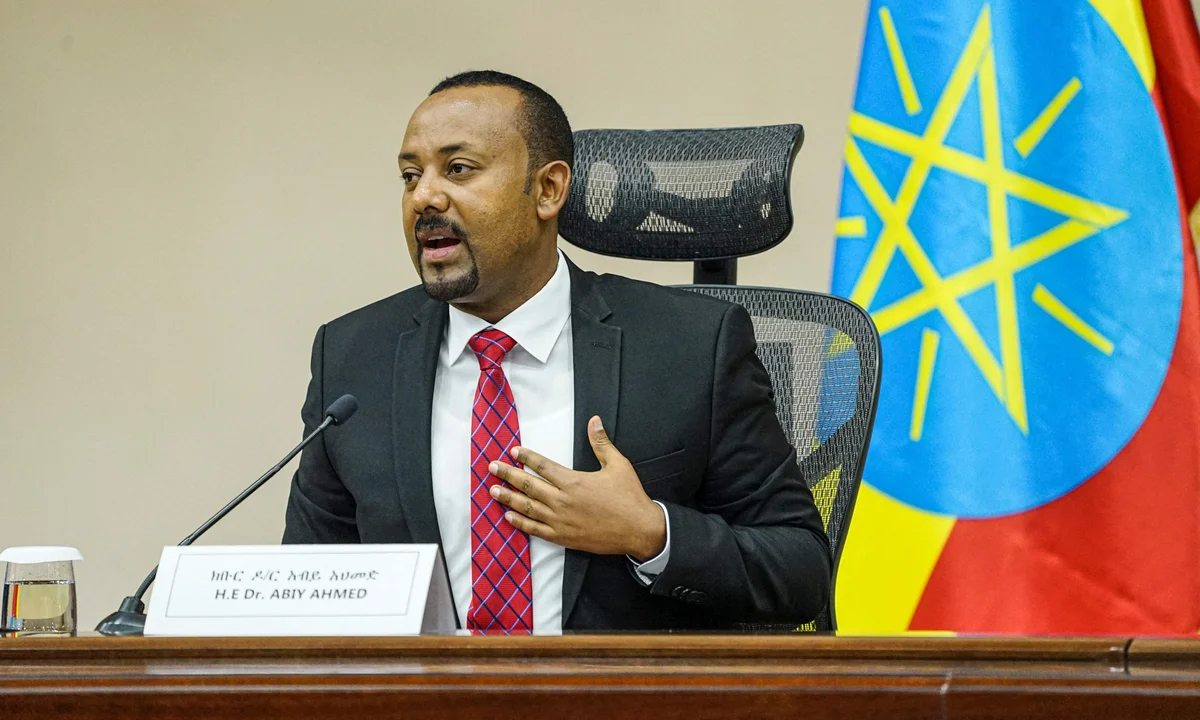
In a firm and direct rebuttal, Ethiopian Prime Minister Abiy Ahmed has publicly dismissed a claim by United States President Donald Trump regarding the financing of the Grand Ethiopian Renaissance Dam. Addressing the Ethiopian parliament, the Prime Minister explicitly rejected the notion of external funding, stating, “We did not receive a single birr in loans or financial aid from any foreign sources for the construction of the mega dam.”
This statement serves as a direct counter to Trump’s remarks last month at the World Economic Forum in Davos, where the former president aligned with Egyptian concerns by asserting the dam “was financed by the United States.” The Prime Minister attributed the project’s realisation to domestic resource mobilisation, framing it as an achievement propelled by “the strong commitment of Ethiopians living in the country and in the diaspora.”
The position articulated by the Ethiopian government finds corroboration in accounts from the project’s primary contractor. Pietro Salini, Chief Executive of the Italian engineering group Webuild, previously indicated to Agence France Presse that international financial institutions had been unwilling to fund the dam, leaving Ethiopia to finance the multibillion-dollar project independently through mechanisms such as treasury bonds and direct taxation.



The Grand Ethiopian Renaissance Dam, a hydroelectric project on the Blue Nile, represents a central pillar of Ethiopia’s national development strategy. Since its inception in 2011, the dam has been portrayed by Ethiopian authorities as a critical instrument for addressing domestic energy deficits and fostering economic growth. Upon completion, its planned generation capacity of 5,150 megawatts would position it as the largest hydroelectric power facility in Africa.

However, the dam is situated within a complex regional dynamic. Downstream nations, Egypt and Sudan, maintain significant concerns regarding the structure’s potential impact on Nile water flows. Egypt, which is reliant on the Nile for the vast majority of its freshwater, has historically characterised the dam as a considerable challenge to its water security. These concerns have led to years of intermittent tripartite negotiations focused on establishing mutually agreeable terms for the dam’s filling and long-term operation, a process that remains a focal point of regional diplomacy.
The recent exchange between the former US president and the Ethiopian prime minister underscores a persistent divergence in narratives surrounding one of Africa’s most significant infrastructure projects. While the discourse often becomes entangled in geopolitical assertions, the technical and diplomatic imperative for a cooperative, basin-wide framework for sustainable Nile management continues to be emphasised by observers of regional affairs. The resolution of these discussions holds considerable implications for water security, energy access, and regional stability in the Nile Basin.