Friday, April 17, 2026
  • Login
The Southern African Times
  • Home
  • Southern Africa
  • Business
    • African Start ups
    • African Continental Free Trade Area
  • Technology
    • Lifestyle
      • Health
      • Culture
      • Food and Drink
      • Entertainment
  • Opinion
  • Sports
  • SAT Jobs
    • Events
  • About Us
    • Advertise with Us
    • Contact Us
No Result
View All Result
  • Home
  • Southern Africa
  • Business
    • African Start ups
    • African Continental Free Trade Area
  • Technology
    • Lifestyle
      • Health
      • Culture
      • Food and Drink
      • Entertainment
  • Opinion
  • Sports
  • SAT Jobs
    • Events
  • About Us
    • Advertise with Us
    • Contact Us
No Result
View All Result
The Southern African Times
No Result
View All Result
Home Markets

Gold Surpasses $5,000 per Ounce in Historic Milestone as Global Instability Redraws Safe Haven Priorities

by SAT Reporter
January 26, 2026
in Markets
0
Uganda’s Gold Exports Eclipse Coffee as Top Foreign Exchange Earner

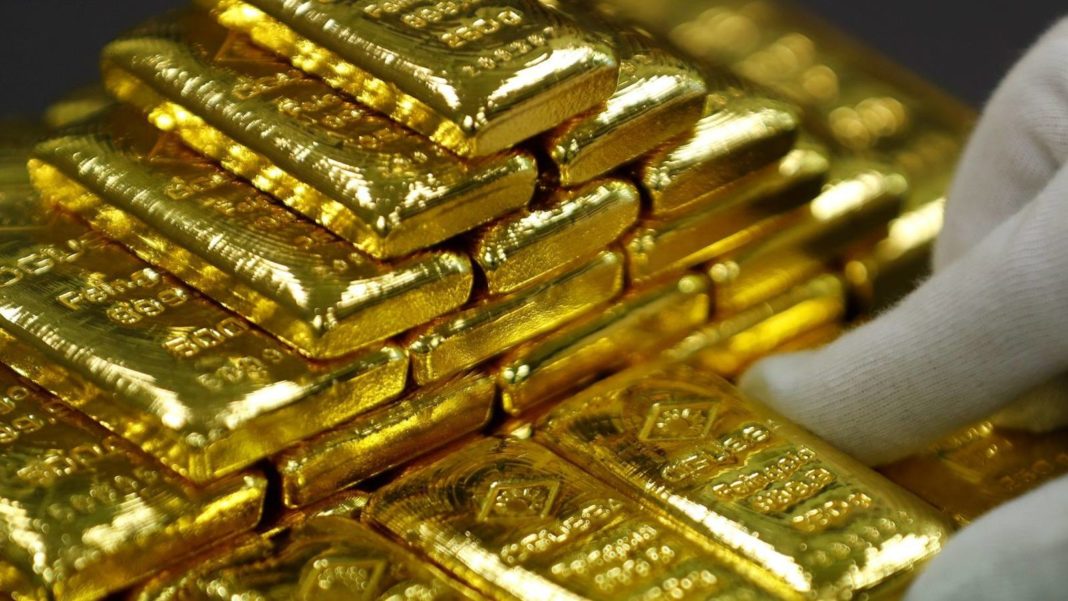
In a landmark moment for global commodities, the price of gold surged past $5,000 per ounce during Asian trading on 26 January 2026. This represents an unprecedented milestone for the precious metal, whose historical role as a store of value has been dramatically reasserted amidst a constellation of geopolitical and macroeconomic tensions.

Over the past twelve months, gold has appreciated by more than 80 percent, climbing from approximately $2,750 in January 2025 to a peak of $5,012 before retreating marginally. The rally has not occurred in isolation but has been underpinned by a convergence of systemic drivers that reflect deeper structural uncertainties across both developed and emerging markets.

Key to this surge is a reconfiguration of global investor sentiment away from traditional asset classes such as equities and sovereign bonds. The volatility within Western bond markets, especially in light of repeated government shutdown threats in the United States and inflationary pressures across the Eurozone, has weakened confidence in these instruments. Meanwhile, persistent dollar softness has catalysed the appeal of non-yielding assets like gold, with several global currencies experiencing pressure due to uneven fiscal and monetary interventions.


ADVERTISEMENT

Concurrently, there has been a notable rise in central bank gold acquisitions. Data from the World Gold Council shows that central banks, particularly in the Global South including China, India, and Türkiye, have substantially increased their gold reserves. These nations appear to be diversifying reserves in anticipation of a protracted period of multipolar disorder. Rather than a mere hedge against inflation, gold is increasingly being positioned as a strategic asset in a world undergoing political realignment.

Africa’s role in this dynamic should not be understated. The continent is not only a major producer of gold, with countries such as Ghana, South Africa, and Sudan contributing significantly to global supply, but is also increasingly asserting its agency in the global financial discourse. Central banks in African nations, facing volatility in foreign exchange markets and shifts in trade balances, have quietly increased their bullion holdings, reflecting a wider trend of recalibration in global reserve management practices.

This phenomenon also speaks to a reimagining of economic sovereignty. The sustained devaluation of regional currencies and rising external debt exposure have prompted a number of African policymakers to explore commodity-backed fiscal strategies. For many, gold offers an opportunity to insulate against external shocks, particularly in an era where international aid conditionalities and structural adjustment programmes have lost legitimacy across large swathes of the Global South.

Furthermore, institutional investors across emerging markets are displaying a form of “financial realignment” that departs from the traditional patterns observed in the Global North. While hedge funds and investment banks have reportedly joined the gold rally in recent months, African sovereign wealth funds and pension funds are also increasingly incorporating bullion exposure into their portfolios. This is suggestive not of speculative fervour, but of a strategic shift in investment logic that prioritises durability and resilience over short-term yield.

Analysts at HSBC and multiple macroeconomic research desks now suggest that gold may stabilise between $5,500 and $6,000 by the end of 2026, should current trajectories persist. Although such projections warrant careful scrutiny, the consensus indicates a world in which gold no longer plays a supporting role but rather re-emerges as a principal pillar in global capital flows.

The trajectory of gold should also be contextualised within a broader debate around the reordering of the global economic system. With multilateral frameworks increasingly under strain and resource-based economies navigating a new geopolitical cartography, the ascent of gold embodies more than investor caution. It reflects a wider contestation over value, stability, and trust.

This is not a story about commodity speculation alone. It is, in many respects, a commentary on the fragility of institutional norms, the recalibration of international financial relationships, and the resurgence of material assets in an era where confidence in digital and fiat constructs is wavering.

For Africa, where extractive industries continue to shape the social contract and fiscal space, this rally raises profound questions. How might this moment be leveraged to build more equitable domestic economies? Could gold revenues fund infrastructure, health, or education at scale? And importantly, how can resource governance be reframed to prioritise local benefit over global arbitrage?

The answers remain unresolved, but what is clear is that gold’s renaissance is symptomatic of larger global dislocations. Its rise is neither accidental nor ahistorical, but deeply entwined with the shifting architecture of global power, in which African agency remains central, though often unacknowledged.

As the world continues to grapple with multiple forms of instability, the value of gold reflects more than market sentiment. It signals a yearning for certainty in a world that appears increasingly uncertain.


Tags: African agencycentral bank reservescommodity marketseconomic sovereigntyfinancial marketsgeopolitical riskglobal economygold pricesmacroeconomic policyresource governance
Previous Post

Rex International Nears Completion of Offshore Drilling in Benin’s Sèmè Field

Next Post

Africa’s Silent Star: Khaby Lame’s Billion Dollar Rise to Global Power

SAT Reporter

Related Posts

China’s Zero Tariff Policy Opens New Export Pathways for Zimbabwe’s Blueberry Industry
Markets

China’s Zero Tariff Policy Opens New Export Pathways for Zimbabwe’s Blueberry Industry

by SAT Reporter
April 12, 2026
Africa’s Growth Holds Steady but Beneath the Surface Pressures Are Mounting
Markets

Africa’s Growth Holds Steady but Beneath the Surface Pressures Are Mounting

by SAT Reporter
April 12, 2026
South Africa’s Private Sector Returns to Modest Growth as PMI Edges Above 50
Markets

South Africa’s Private Sector Returns to Modest Growth as PMI Edges Above 50

by SAT Reporter
April 8, 2026
WTI Crude Drops 4 Per Cent to $108.50 on Hormuz Tensions
Markets

WTI Crude Drops 4 Per Cent to $108.50 on Hormuz Tensions

by SAT Reporter
April 8, 2026
African Capital Markets Conference spotlights diaspora capital for market growth
Markets

African Capital Markets Conference spotlights diaspora capital for market growth

by SAT Reporter
April 7, 2026
Next Post
Africa’s Silent Star: Khaby Lame’s Billion Dollar Rise to Global Power

Africa’s Silent Star: Khaby Lame’s Billion Dollar Rise to Global Power

Browse by Category

  • Africa AI
  • African Continental Free Trade Area
  • African Debt
  • African Start ups
  • Agriculture
  • AI Africa
  • Algeria
  • All News
  • Analysis
  • Angola
  • Arts / Culture
  • Asia
  • Botswana
  • BOTSWANA
  • BREAKING NEWS
  • BRICS
  • Burkina Faso
  • Burundi
  • Business
  • Business
  • Business Wire
  • Cameroon
  • Central Africa
  • Chad
  • China
  • Climate Change
  • Climate Changev
  • Community
  • Congo Republic
  • Conservation
  • Côte d’Ivoire
  • COVID 19
  • CRYPTOCURRENCY
  • Culture
  • Democratic Republic of Congo
  • Diplomacy
  • Eastern Africa
  • Economic Development
  • Economy
  • Education
  • Egypt
  • Elections 2024
  • Energy
  • Entertainment
  • Environment
  • Eritrea
  • Ethiopia
  • Europe
  • Fashion
  • Feature
  • Finance
  • Financial Inclusion
  • Food
  • Food and Drink
  • Foods
  • GABON
  • Ghana
  • Global
  • Global Africa
  • Guinea
  • Health
  • Immigration
  • in Southern Africa
  • International news
  • International Relations
  • Ivory Coast
  • Just In
  • Kenya
  • Lesotho
  • Libya
  • Life Style
  • Lifestyle
  • Literature
  • Malawi
  • Malawi
  • Mali
  • Markets
  • Mauritius
  • Middle East
  • Mining in Africa
  • Morocco
  • Mozambique
  • Namibia
  • Niger
  • niger
  • Nigeria
  • North Africa
  • North-Eastern Africa
  • Obituaries
  • Obituary
  • Opinion
  • PARTNER CONTENT
  • Politics
  • Property
  • Racism
  • Rwanda
  • Rwanda
  • SADC
  • SAT Interviews
  • SAT Investigation
  • SAT Jobs
  • Saudi Arabia
  • Senegal
  • Seychelles
  • South Africa
  • South Sudan
  • Sports
  • Startup Africa
  • STOCK EXCHANGE
  • Sudan
  • Sustainability
  • Sustainablity
  • Tanzania
  • Technology
  • Telecommunications
  • The Editorial Board
  • The Power Of She
  • Togo
  • Trade
  • Travel
  • Travel
  • Tunisia
  • Uganda
  • Uncategorized
  • Wealth
  • West Africa
  • World
  • World
  • ZAMBIA
  • Zambia
  • ZIMBABWE
  • Zimbabwe

Browse by Tags

#NewsUpdate #SouthAfrica #SouthernAfricanTimes #TheSouthernAfricanTimes AfCFTA africa African Continental Free Trade Area African development African Development Bank African economies African economy African Union Agriculture Angola Botswana Business China Climate change Cyril Ramaphosa Economic Development economic growth energy transition fiscal policy food security industrialisation Inflation Infrastructure Development International relations Investment Kenya Mozambique Namibia news Nigeria Regional Integration renewable energy Rwanda SADC South Africa Southern Africa sustainable development Tanzania United States Zambia Zimbabwe
ADVERTISEMENT

WHO WE ARE

The Southern African Times is a regional bloc digital newspaper that covers Southern African and world news. The paper also gives a nuanced analysis on news and covers a wide range of reporting which include sports, entertainment, foreign affairs, arts and culture.

Welcome Back!

Login to your account below

Forgotten Password?

Retrieve your password

Please enter your username or email address to reset your password.

Log In

  • Home
  • Southern Africa
  • Business
    • African Start ups
    • African Continental Free Trade Area
  • Technology
    • Lifestyle
      • Health
      • Culture
      • Food and Drink
      • Entertainment
  • Opinion
  • Sports
  • SAT Jobs
    • Events
  • About Us
    • Advertise with Us
    • Contact Us
Are you sure want to unlock this post?
Unlock left : 0
Are you sure want to cancel subscription?