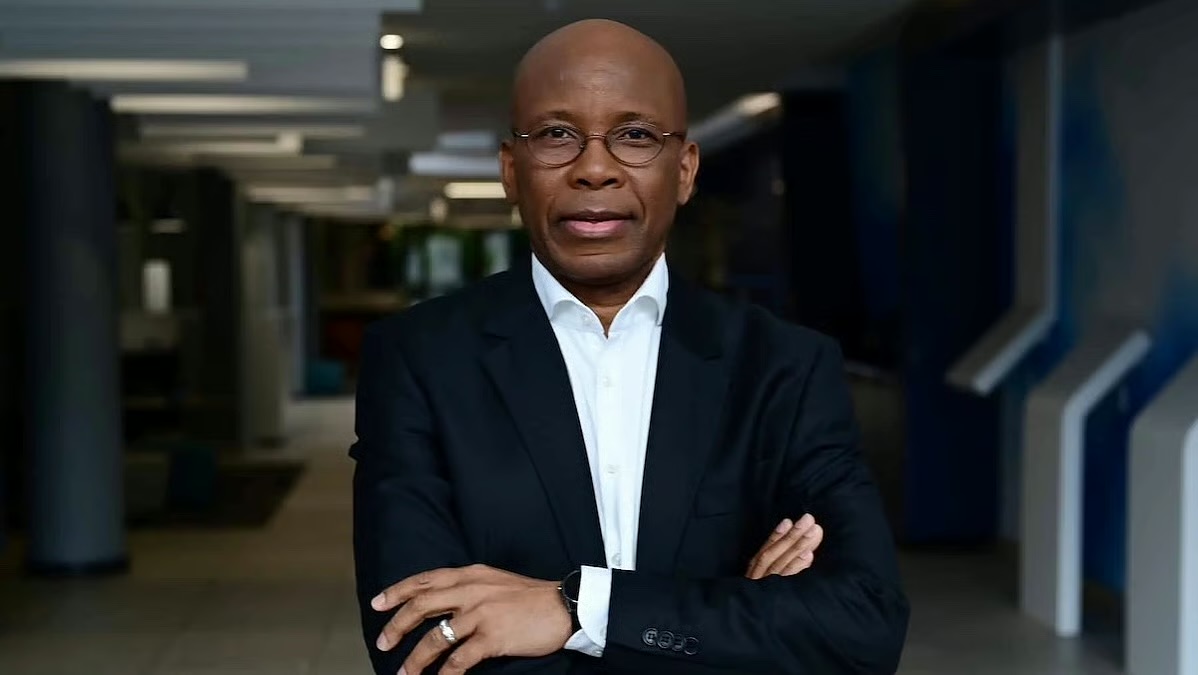
Speaking at a panel discussion during the World Economic Forum in Davos, Eskom board chairperson Mteto Nyati made a compelling case for regional integration in energy infrastructure across Southern Africa, situating electricity supply as the cornerstone of Africa’s long term industrial ambitions. His comments were informed by South Africa’s protracted load shedding crisis, which he argued had exposed structural vulnerabilities in the region’s reliance on a singular energy supply model.
Reflecting on Eskom’s historic role as the dominant energy supplier for neighbouring countries including Namibia, Botswana and Mozambique, Nyati acknowledged the limits of such a centralised system. He suggested that recent supply constraints had not only strained diplomatic energy ties, but also highlighted the need for diversified and decentralised energy cooperation.
“In the moment of crisis, everyone looked to South Africa,” Nyati observed. He invoked the example of European energy interdependence, where countries such as Germany can import electricity from France or Italy during emergencies. The Southern African region, by contrast, has yet to establish equivalent systems of mutual energy assurance. This, Nyati implied, reflects both a technological gap and a strategic oversight in the continent’s industrial planning.



Energy security, he noted, remains a non negotiable foundation for Africa’s long stated ambition to move beyond the extraction and export of raw materials. Efforts toward value addition and mineral beneficiation cannot materialise without stable electricity supply, he added. In countries like Zambia, where industrial potential is abundant but underutilised, reliable cross border power transmission could unlock long term growth.
Current structural limitations have made this difficult. Southern Africa’s power grids remain largely fragmented, and most transmission lines were not originally designed for large scale transnational distribution. Regional development institutions such as the Southern African Power Pool (SAPP) have made progress in encouraging cross border collaboration, yet infrastructure investment remains uneven. According to the African Development Bank, over 600 million Africans still lack access to electricity, a statistic that continues to hinder economic transformation.
Nyati’s intervention challenges the prevailing narrative that energy reform must be driven solely through national planning. Instead, he called for a reimagined model based on cooperative ownership, where countries jointly invest in both generation and transmission assets. In this scenario, if one nation’s grid falters, the others can provide short term relief while also contributing to long term sustainability.
He pushed back against perceptions that such a model would reinforce South African dominance in the region. “This is not about us leading,” he said, “it is about creating mutual insurance.” Recasting regional cooperation not as dependency but as reciprocity, Nyati argued that such collaboration would shield all participating countries from future energy shocks.
He further proposed that infrastructure projects should be executed through enduring partnerships with local actors. Drawing from his experience in the private sector, he remarked that companies that succeed in Africa are those that work alongside local firms and communities, not those that impose external models. “We are not just looking for investors,” he said, “we are looking for co creators for the next 20 years.”
While discussions at Davos often reflect global economic concerns from a Western vantage point, Nyati’s comments centred a distinctly African perspective. His framing challenged assumptions about energy dependence and positioned the continent as capable of crafting its own decentralised and cooperative development model. This approach echoes the African Union’s Agenda 2063, which places infrastructure integration at the heart of continental transformation.

As South Africa recalibrates its role within the regional energy landscape, the conversation appears to be shifting from dominance to distributed responsibility. For many in the region, this moment presents an opportunity to rethink infrastructure not just as a logistical challenge but as a political and social tool for development. Whether this vision can be operationalised depends on political will, financing strategies and the ability to learn from both local successes and global examples without reproducing extractive patterns of the past.
Nyati’s remarks ultimately underscore a broader imperative. Without coordinated action to secure and distribute power equitably, the promise of African industrialisation risks remaining aspirational. A cooperative, future focused approach to energy may be the most pragmatic path toward realising that promise.