The March 23 Movement (M23) has reiterated its commitment to a political solution as hostilities with government forces in the eastern Democratic Republic of the Congo (DRC) continue to intensify, particularly around Uvira in South Kivu Province.
Speaking at a press conference in Goma, the capital of North Kivu, Corneille Nangaa, political leader of the Congo River Alliance (AFC) — a politico military coalition aligned with M23 — stated that the movement continues to advocate for dialogue and a negotiated settlement. Nangaa emphasised that the AFC and its allies would pursue “deep solutions to the root causes of the crisis” irrespective of the political leadership in Kinshasa. He accused the Congolese authorities of repeated ceasefire violations, undermining regional mediation efforts.
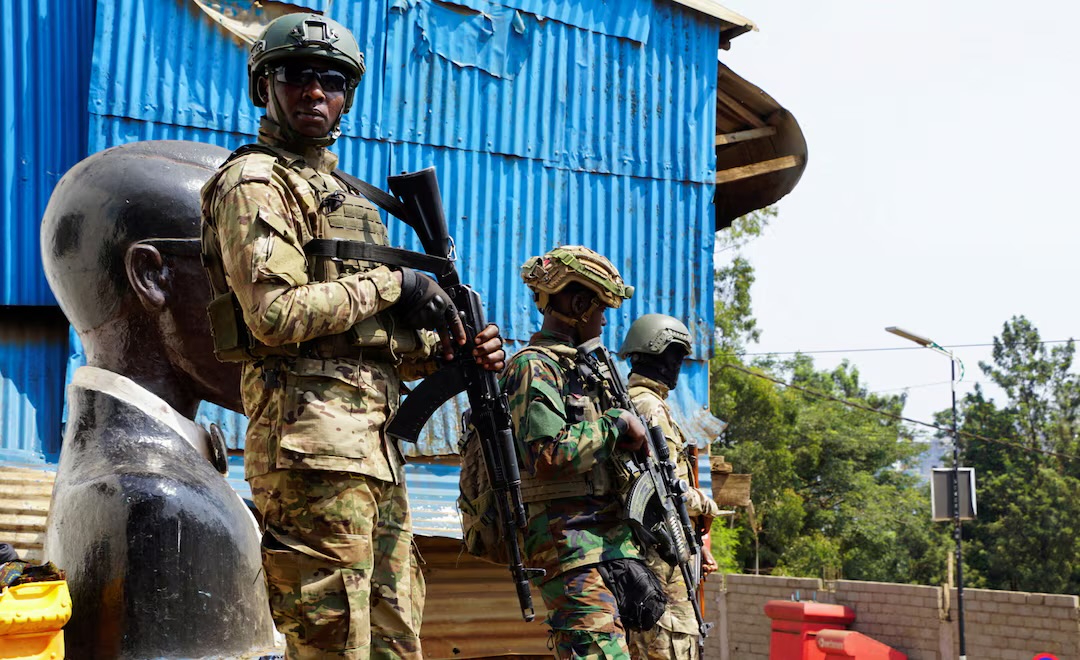
Reports from Uvira indicated that artillery and small arms fire were heard near the city following the seizure of Kiliba, a nearby town strategically located on trade routes linking the DRC with Burundi. While some residents initially feared an imminent rebel advance, Didier Kabi, spokesperson for the South Kivu provincial government, clarified that the detonations resulted from a demining operation conducted by the Armed Forces of the DRC (FARDC).



The DRC’s eastern region has endured protracted instability over the past decade, with recurrent clashes between armed groups and government forces. The M23 movement, originally formed by Congolese Tutsi rebels in 2012, claims to defend the rights of marginalised communities in eastern Congo. However, the group has been accused by Kinshasa and the United Nations of receiving external support and destabilising efforts to secure lasting peace in the Great Lakes region.
After Bukavu fell to M23 in February this year, South Kivu’s provincial administration temporarily relocated to Uvira, which has since become a focal point of political and humanitarian concern. The city, situated on the shores of Lake Tanganyika, remains a vital commercial hub linking the DRC with Burundi and Tanzania.

Regional and international stakeholders, including the East African Community (EAC) and the African Union (AU), have repeatedly urged both the DRC government and M23 to recommit to peace talks. Analysts argue that sustainable peace requires addressing long standing grievances related to governance, land disputes, and ethnic tensions that continue to fuel cycles of conflict.
The unfolding developments in Uvira illustrate the broader complexity of the DRC’s eastern crisis, where military operations and political negotiations often run in parallel without convergence. For many Congolese civilians, the emphasis remains on achieving stability that prioritises human security and local participation over external political influence.
While the immediate situation in Uvira has stabilised, the potential for renewed clashes underscores the fragility of peace in the region. Observers suggest that inclusive dialogue and transparent governance remain essential to ending the persistent cycles of violence that have displaced millions and strained regional relations.