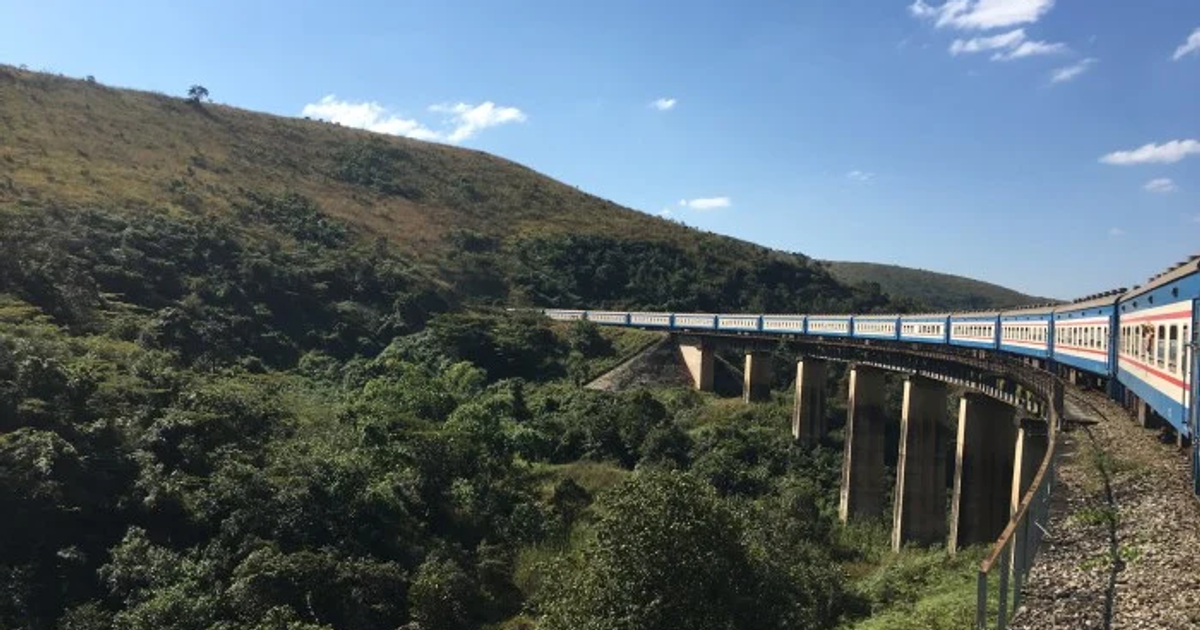
China, Zambia, and Tanzania have formalised a $1.4 billion trilateral agreement to overhaul the Tanzania-Zambia Railway Authority (TAZARA), a move set to revitalise one of Southern and Central Africa’s most strategically significant transport arteries. The agreement, which was officially announced by the Zambian government on Monday, aims to rehabilitate the ageing rail network, originally constructed nearly five decades ago with Chinese support, and to procure new rolling stock including locomotives, passenger coaches, and wagons.
This development builds on a memorandum of understanding signed in 2024, and affirms China’s long-term infrastructure cooperation on the African continent. The investment is intended to address longstanding underinvestment and operational inefficiencies that have curtailed TAZARA’s capacity to serve as a dependable conduit for mineral exports, particularly copper and cobalt, from Zambia and the broader Great Lakes region. With demand for critical minerals rising globally, notably for use in energy storage and advanced manufacturing, the modernisation of the TAZARA line assumes strategic importance in enhancing Africa’s participation in global supply chains.
TAZARA’s geographic trajectory, linking Zambia’s Copperbelt to the port of Dar es Salaam in Tanzania, provides landlocked nations such as Zambia and the Democratic Republic of Congo with maritime access independent of Southern Africa’s traditionally dominant logistics corridors. As regional bottlenecks persist across rail and port infrastructure in South Africa, the TAZARA line represents a complementary axis of economic integration across the Southern African Development Community (SADC) region.



The latest commitment arrives at a time of growing international competition over mineral infrastructure in Africa. The United States, through a consortium involving the European Union and African Development Bank, has promoted the Lobito Corridor, a rival logistics project centred on Angola’s Lobito Port, with linkages through Zambia and the Democratic Republic of Congo. However, rather than viewing the two initiatives in oppositional terms, analysts note that a diversified logistics network may serve Africa’s long-term industrial development by reducing reliance on singular corridors and mitigating infrastructural vulnerabilities.

The trilateral agreement with China does not yet specify a completion timeline, but the funding is expected to cover track rehabilitation, signal systems, and technical upgrades, alongside training and institutional support. While China has been a long-standing development partner in African railway infrastructure—most prominently through projects in Ethiopia, Kenya and Nigeria—TAZARA remains emblematic of a different epoch of Sino-African cooperation. The original railway, completed in 1975, was both a symbol of anti-colonial solidarity and a functional necessity for bypassing apartheid-era transport constraints.
This contemporary re-engagement with TAZARA signals a shift from symbolic infrastructure diplomacy to a more functional, commercially anchored model of South-South cooperation. In the words of Zambia’s Transport Minister Frank Tayali, the revitalisation of TAZARA “will be transformative in unlocking our full mineral export capacity and reducing costs for our exporters.”
Pan-African observers note that while the involvement of external partners such as China and the United States remains significant, the success of such infrastructure undertakings depends largely on intra-African alignment of policy, regulation, and economic vision. Tanzania and Zambia have both expressed commitments to enhancing the operational autonomy and financial sustainability of TAZARA, in line with wider African Union aspirations under the African Continental Free Trade Area (AfCFTA).

Crucially, the TAZARA upgrade also dovetails with broader continental objectives to expand regional industrial value chains, ensuring that mineral exports are not merely extracted and shipped, but processed and leveraged within African economies. By facilitating multi-modal transport linkages, and encouraging investments in surrounding industrial zones, the project has the potential to catalyse economic diversification beyond the raw commodity paradigm.
Whether this latest injection of capital and geopolitical interest will deliver long-term benefits to the communities it purports to serve remains to be seen. However, in reframing the infrastructure question away from donor-recipient binaries and towards strategic continental agency, the TAZARA renewal offers an opportunity to advance a grounded and Pan-African approach to development.