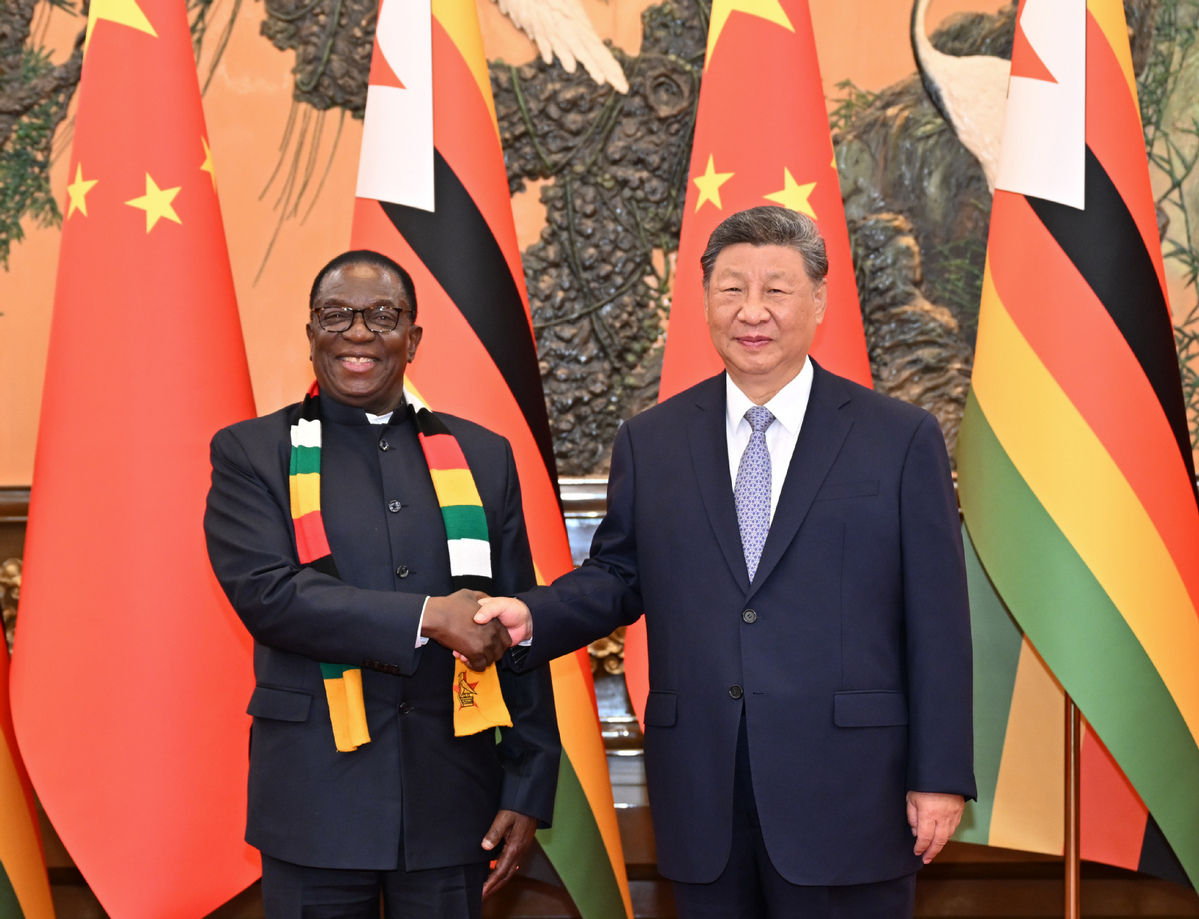
At the Great Hall of the People in Beijing, Chinese President Xi Jinping and Zimbabwean President Emmerson Mnangagwa announced the elevation of bilateral ties to an “all-weather community with a shared future.” The announcement coincided with commemorations marking the 80th anniversary of the victory in the Chinese People’s War of Resistance Against Japanese Aggression and the World Anti-Fascist War, underscoring both historical solidarity and forward-looking cooperation.
This year also marks the 45th anniversary of diplomatic relations between the two nations. President Xi described the relationship as a “five-star ironclad friendship,” noting that it has become a model for South–South cooperation. He reaffirmed China’s commitment to supporting Zimbabwe’s pursuit of a development path aligned to its national priorities, while firmly opposing external interference and sanctions.
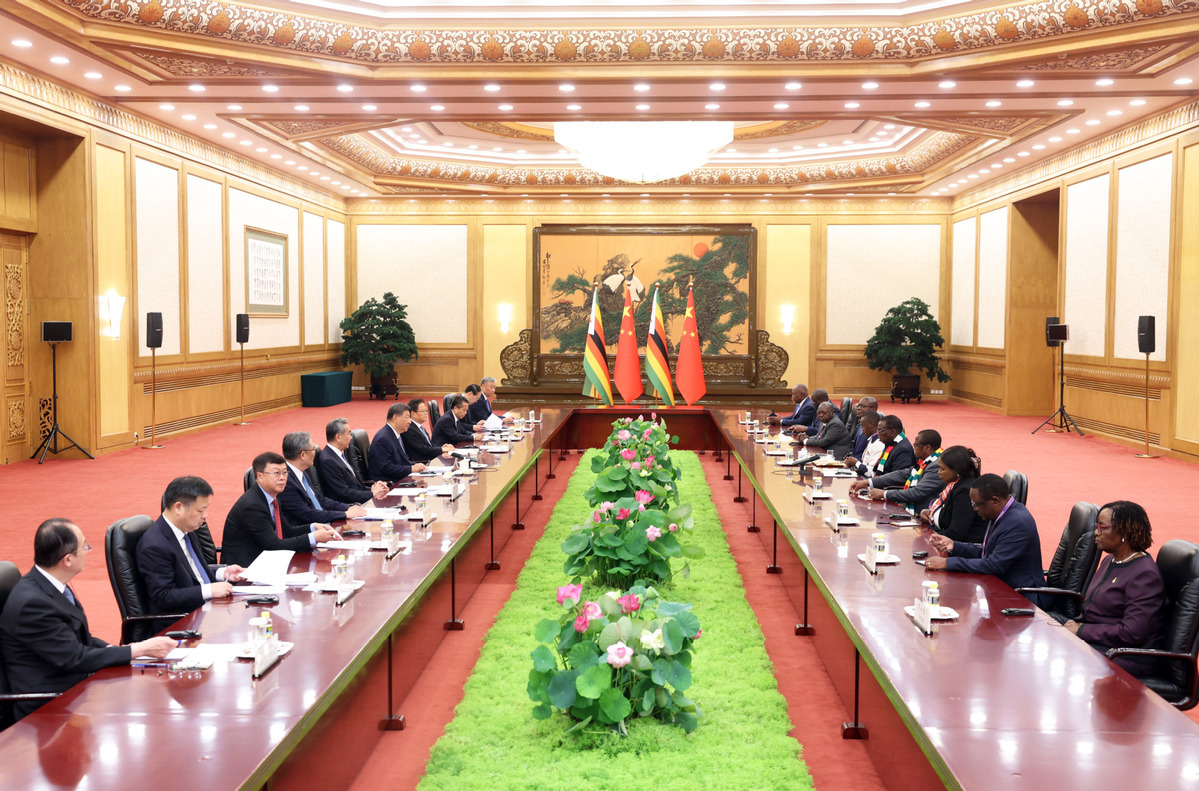
Both leaders emphasised the centrality of economic cooperation. Xi called for innovation in bilateral collaboration, highlighting opportunities to scale investment in infrastructure, mining, trade, and new ventures that move beyond traditional extractive frameworks. He also linked the upgraded relationship to the implementation of the Forum on China–Africa Cooperation (FOCAC) outcomes, China’s Global Governance Initiative (GGI), and the development of the International Organization for Mediation (IOMed), signalling that Zimbabwe remains integral to Beijing’s long-term geopolitical and economic strategy in Africa.




President Mnangagwa described the elevation of ties as a “historic milestone” and reiterated Zimbabwe’s support for the One-China Principle. He expressed his government’s readiness to deepen economic and social cooperation across multiple fields, aligning Zimbabwe’s national development objectives with China’s zero-tariff frameworks and broader initiatives. Mnangagwa emphasised that Zimbabwe sees China’s role as increasingly important in global governance, particularly in advocating for fairness and equity in international trade and political structures.
The Chinese Embassy in Zimbabwe echoed this sentiment in a public statement, describing the agreement as a “historic upgrade” in bilateral ties and a “new chapter in friendship.” The Embassy reaffirmed Beijing’s backing for Zimbabwe in navigating external pressures while signalling enhanced focus on trade, mining, infrastructure, and investment.
From an investment perspective, the upgraded partnership is expected to consolidate Chinese dominance in Zimbabwe’s extractive sectors, particularly platinum, lithium, and chrome, while also increasing the likelihood of capital commitments in energy and logistics. The framework provides Zimbabwe with guaranteed markets and new financing avenues, although analysts caution that debt sustainability and the lack of beneficiation continue to pose risks to long-term economic transformation.
For China, the elevation ensures stable access to strategic commodities and further entrenches its role as a key financier of Zimbabwe’s infrastructure pipeline. For Zimbabwe, it provides political cover and much-needed liquidity, though the long-term benefits will hinge on how effectively Harare leverages the relationship to diversify its economy, create value-added industries, and reduce structural dependence on raw commodity exports.