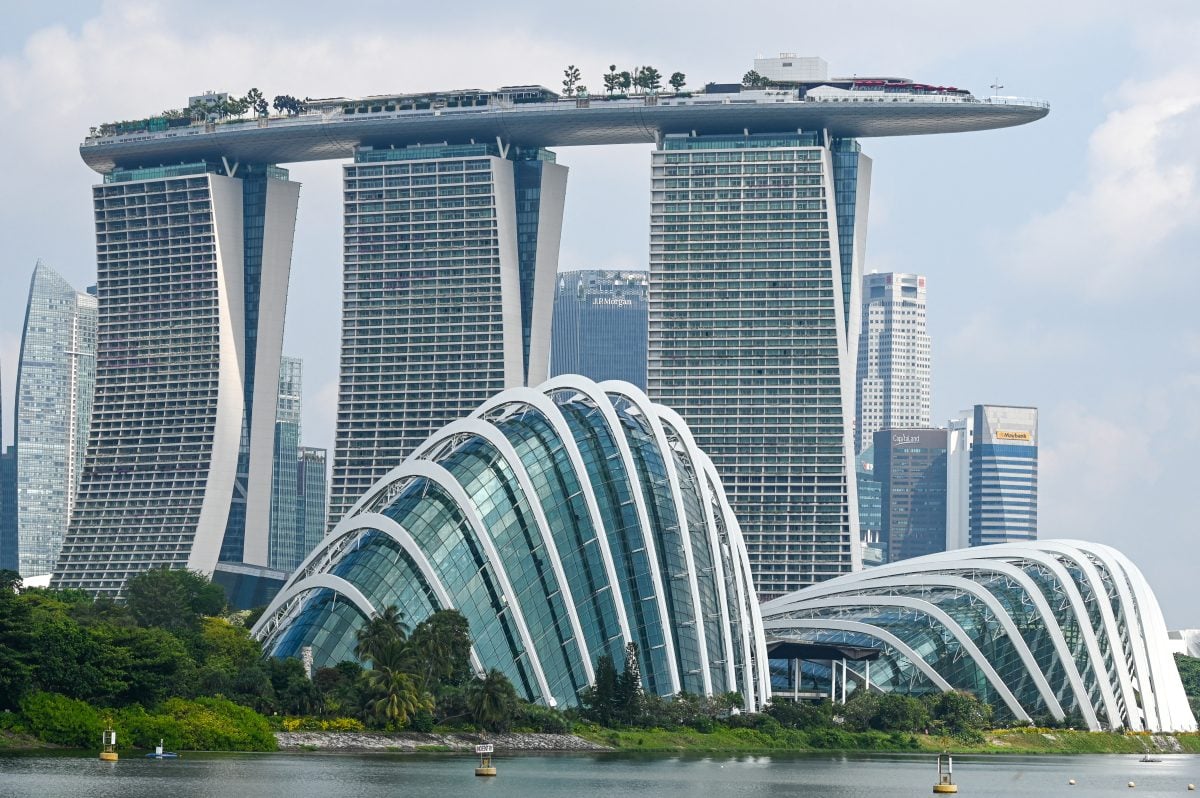
Singapore’s economic rise has long been tied to its role as a global trading hub, yet its engagement with Africa has historically been modest. That dynamic is beginning to shift. Trade in goods between the two regions reached USD 12.4 billion in 2023 according to Enterprise Singapore data, and more than one hundred Singaporean companies are now operating across African markets (Enterprise Singapore, 2024). Analysts increasingly suggest that Singapore views Africa as a central growth frontier in the global economy.
Singapore’s engagement has been described as pragmatic rather than expansive, with initiatives initially concentrated in Asia and the Middle East. However, a turning point came in the late 2000s when the Singapore Cooperation Enterprise began work with the Government of Rwanda, developing the master plan for Kigali in 2008. This marked the beginning of a broader African engagement strategy that now spans around twenty countries (Hoang & Won, 2024, ISEAS-Yusof Ishak Institute).
Today, major Singapore-headquartered groups such as Olam International, Tolaram Group, and Winning International Group are active investors in agribusiness, logistics, and infrastructure across the continent. Research on foreign direct investment trends confirms that Africa still attracts a relatively small proportion of global FDI—about 3.5% in 2023 (UNCTAD, 2024)—but Singaporean companies are seeking long-term positions in emerging sectors such as ports, smart urban planning, and digital infrastructure (Hering, 2024, University of Turku).




The expansion is not unilateral. African businesses are also establishing a presence in Singapore. Corporations such as TymeBank (South Africa), Sasol (South Africa), and Sonangol (Angola) have located their Asian headquarters in Singapore, attracted by its connectivity and financial ecosystem. Financial institutions have also moved to deepen the relationship: in 2024, the African Export-Import Bank (Afreximbank) signed a partnership with Enterprise Singapore to ease financing channels for Singaporean firms investing in Africa, aligning with broader efforts to address structural financing challenges in African economies (Rwigema, 2023, Strategic Journal of Business and Change).
Experts note that Singapore’s developmental trajectory offers lessons, though not templates, for African states. Its rapid industrialisation and transformation into a high-income economy were underpinned by strong state capacity, infrastructure investment, and integration into global trade networks. Some African leaders, including President Paul Kagame of Rwanda, have drawn inspiration from Singapore’s model of state-led planning and technology adoption (Jallow, 2024, SSRN). Yet, scholars caution against linear comparisons, emphasising the diversity of African development pathways and the risks of imposing singular narratives (Khaskheli & Zhao, 2025, Sustainability).
Logistical limitations remain an obstacle. As of 2025, only one direct flight links Singapore and Africa—Ethiopian Airlines’ route to Addis Ababa—while Singapore maintains just two diplomatic missions on the continent. Scholars argue that connectivity, both physical and institutional, must expand for the relationship to deepen meaningfully (XnsZT5SNWQcJ, 2024, Alexandria University Journal of Economics). Perceptions also remain a barrier: risk perceptions continue to dominate boardroom discussions in Singapore, despite Africa’s growing middle class and urbanisation trends that signal long-term opportunities.
The broader geopolitical context shapes these ties. Africa’s increasing role within the African Continental Free Trade Area (AfCFTA) and global south cooperation platforms situates Singapore’s engagement within a wider movement of South–South relations. Analysts highlight that partnerships of this kind are not merely commercial but also symbolic of a multipolar world order that privileges diversified alliances (Mishra, 2024, Springer).
The Africa Singapore Business Forum, convened annually, has become an important arena to address knowledge gaps, facilitate dialogue, and create pathways for sustainable partnerships. While trade volumes remain small compared to Africa’s ties with China, the European Union, or India, Singapore’s expertise in finance, digital innovation, and logistics provides niches where it can add value.
Observers stress that for the partnership to mature, it must be grounded in reciprocity, mutual recognition of different developmental contexts, and avoidance of extractive tendencies. As African states diversify their external engagements, Singapore’s positioning as a bridge to Asia presents both opportunities and responsibilities.