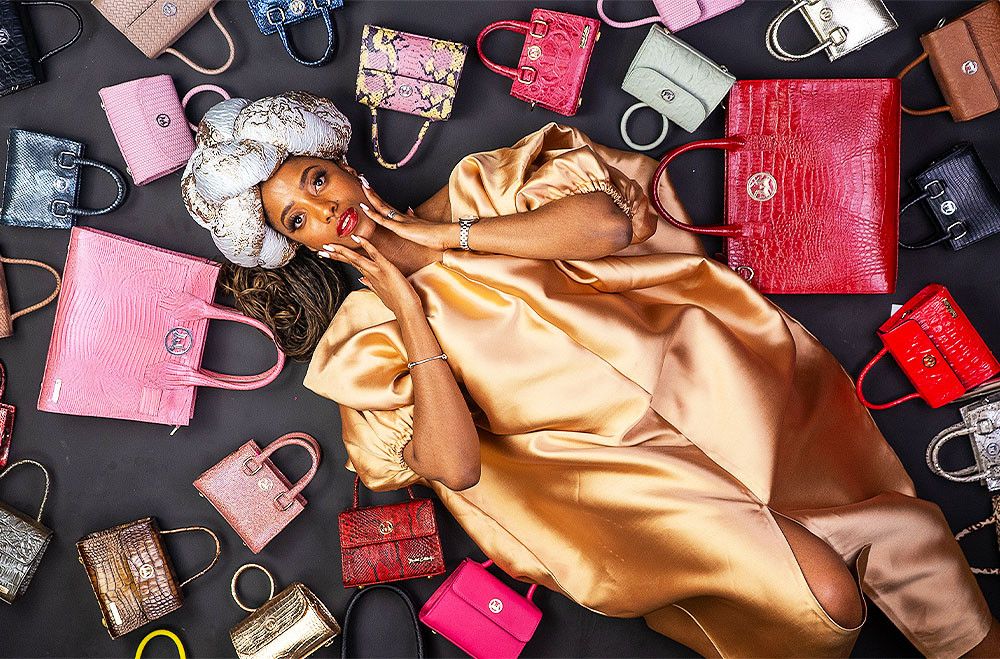
Winston Leather, a second-generation Nigerian tannery, will host its first-ever London pop-up from 27–31 August 2025 at The Corner Boutique in Chelsea. The showcase arrives at a pivotal moment for fashion, just months after a wave of exposés unsettled the glossy image of European luxury by revealing the hidden supply chains behind its most coveted goods.
Earlier this year, viral investigations stripped away the sheen of “Made in Italy,” showing how prestige often masks a global network of underpaid, unseen labour. Italian courts placed Dior and Armani under judicial administration over labour violations, a rare reckoning for brands long shielded from scrutiny. It forced an uncomfortable truth: if luxury depends on hidden hands, then what truly separates it from fast fashion?
To answer that question, we must look beyond Europe. In Kano, Nigeria, one of the world’s oldest leather hubs, the story of luxury takes root. Kano’s tanneries date back to trans-Saharan trade routes that carried hides across Africa and the Middle East. For centuries they have produced leather prized for its durability and finish, a tradition that endures today. Much of the material behind Europe’s most coveted handbags and shoes begins in Kano, only to be exported, processed abroad, and returned with a European label. Luxury starts in Nigeria, but prestige is claimed elsewhere.




This erasure is not incidental; it is structural. For more than a century, luxury has been tethered to Europe not only by geography but by race. Paris and Milan declared themselves arbiters of taste, while Africa’s contributions were framed as “ethnic” or “craft”, valuable, but never accorded the same status as “luxury.” The irony is stark: European brands celebrate their heritage and artisanal techniques as hallmarks of prestige, while African makers with equally deep traditions are described in ways that mark them as peripheral. The same language of tradition that elevates Florence diminishes Kano. The distinction is not about quality. It is about power, narrative, and colonial inheritance. To call Winston Leather luxury is not merely branding; it is an act of disruption.

Winston Leather has lived this paradox intimately. For more than three decades, the family-run business supplied hides to houses including Louis Vuitton and Ralph Lauren, its name omitted from the story of European glamour. Now it is stepping into the light. From 27–31 August, Winston will take over a Chelsea boutique to showcase a new collection and unveil Amagu, its exclusive luxury line.
For founder and creative director Winston Udeagha, the move is as much cultural as it is commercial. “Just as Spain has Zara, Italy has Gucci, and France has Louis Vuitton, Africa deserves a global fashion house that represents its culture, craftsmanship, and creativity. Our London pop-up is another step in spreading the message of Made in Africa, Worn by the World.” Instead of disappearing into Europe’s supply chains, Kano’s leather will appear in London under its own name, its own story, and its own price tag.
And Winston is not alone in this redefinition. Across Africa and the diaspora, designers and platforms are rewriting the terms of luxury. Lagos Fashion Week has become a global stage, positioning Nigerian design as competitive at the highest levels while foregrounding sustainability. Africa Fashion Week London continues to spotlight creators who refuse to be confined to the role of raw-material suppliers. From Dakar’s resurgent textile traditions to Nairobi’s ethical ateliers, the narrative is shifting: Africa is no longer just a supplier; it is becoming the author.

Fashion’s most exclusive spaces are beginning to reckon with this change. The 2025 Met Gala, which centred Black style through the Superfine: Tailoring Black Style exhibition, sparked both celebration and critique, a reminder that African and diasporic aesthetics are already shaping global imagination even as institutions struggle with access and representation. But what is happening on the continent itself is often even more daring. The Africa Magic Viewers’ Choice Awards in Lagos have become a fashion spectacle of their own, where designers showcase creativity and risk-taking that rivals and often surpasses anything seen at the Met. The gowns and tailored looks that dominate its red carpet are not derivative of Western standards; they set their own.
Beyond award shows, African designers are reshaping everyday cultural milestones abroad. Prom season in the United States has quietly become one of the biggest markets for African fashion houses. In 2019, a Nigerian designer might have handled 50 prom orders; by 2024, some were fulfilling more than 500, with teams of tailors working year-round. Designers such as Victoria Ani in Uyo, Efua Mensah in Accra, and Ms Arigbabu in Ibadan have built thriving businesses exporting gowns to teenagers in New York, New Jersey, California, and beyond. The hashtag #AfricanPromDress has surpassed 60 million views on TikTok, filled with feathered trains, corseted bodices, detachable capes, and Afrofuturist spins on fairy-tale silhouettes. For many young women, the pride is not only in the design but in being able to say, “My dress came from Nigeria.”

Meanwhile, African designers are taking centre stage in global fashion. Kenneth Ize’s reimagination of aso-oke, Thebe Magugu’s LVMH Prize-winning collections, Lisa Folawiyo’s Ankara-based luxury, Rich Mnisi’s Johannesburg studio, and Mowalola Ogunlesi’s boundary-breaking designs have moved from the margins into the mainstream. They are not emerging voices, they are defining the conversation. The question is no longer whether African design belongs at the top table, but why it took so long for the world to admit it.
Winston Leather’s Chelsea showcase belongs to this wider moment. It does not resolve the contradictions of global fashion, but it signals what happens when the invisible backbone of luxury decides to step forward. If the foundations of prestige lie in places like Kano, Guangzhou, and Prato, what happens when those artisans claim their rightful place in the story? The future of luxury will not only be made in Africa. It will be authored and owned by Africa.