Thursday, June 25, 2026
  • Login
The Southern African Times
  • Home
  • Southern Africa
  • Business
    • African Start ups
    • African Continental Free Trade Area
  • Technology
    • Lifestyle
      • Health
      • Culture
      • Food and Drink
      • Entertainment
  • Opinion
  • Sports
  • SAT Jobs
    • Events
  • About Us
    • Advertise with Us
    • Contact Us
No Result
View All Result
  • Home
  • Southern Africa
  • Business
    • African Start ups
    • African Continental Free Trade Area
  • Technology
    • Lifestyle
      • Health
      • Culture
      • Food and Drink
      • Entertainment
  • Opinion
  • Sports
  • SAT Jobs
    • Events
  • About Us
    • Advertise with Us
    • Contact Us
No Result
View All Result
The Southern African Times
No Result
View All Result
Home Energy

Fuel Retail in South Africa Enters New Era with NEVs and Solar-Driven Innovation

by Times Reporter
July 22, 2025
in Energy
0
Fuel Retail in South Africa Enters New Era with NEVs and Solar-Driven Innovation

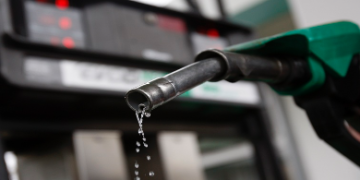
The South African fuel retail industry is entering a profound period of transformation, propelled by the global shift toward cleaner mobility, a more carbon-conscious regulatory environment, and growing interest in new energy vehicles (NEVs). Although NEVs currently comprise less than 3% of the domestic car market, systemic change is already under way as traditional fuel forecourts begin to reconfigure their offerings for a post-fossil-fuel economy.

While South Africa lags global NEV trends due to several structural constraints, including the absence of Euro-5 and Euro-6 compliant fuels, change is imminent. The Department of Mineral Resources and Energy has committed to implementing Cleaner Fuel 2 by July 2027, with the possibility of an earlier rollout. At present, the country imports 38% of its petrol and 67% of its diesel requirements, highlighting the need for greater energy independence and sustainability.

In contrast, the European Union has mandated an end to the sale of new internal combustion engine vehicles by 2035, while China has consolidated control of the global NEV supply chain, manufacturing battery capacity that exceeds current global demand by 500%. These developments underscore the urgency for South Africa to realign with international standards.


ADVERTISEMENT

Domestically, the NEV segment is dominated by traditional hybrids, including the Toyota Corolla Cross and Mercedes-Benz C-Class. Fully battery electric vehicles (BEVs) remain financially inaccessible for most South Africans. The majority of BEVs on the market exceed R900,000 in price, yet 74% of all new vehicle sales in South Africa fall below the R500,000 threshold. Notably, one automotive manufacturer is expected to introduce a sub-R400,000 BEV later this year, which could be a turning point in local adoption rates.

However, cost is not the only impediment. A significant proportion of South African households lack the solar installations, inverters, and battery storage necessary to support home-based charging. Even with BEVs offering a driving range exceeding 200km per charge, range anxiety remains a concern, compounded by limited and poorly maintained public charging infrastructure. This was recently underscored during a Johannesburg–Cape Town electric vehicle convoy, which exposed widespread charging station failures.

In response, the National Association of Automobile Manufacturers of South Africa (Naamsa) is collaborating with private sector actors to establish a reliable, nationwide charging network. This initiative targets the development of 120 charging sites along key routes. Rather than constructing entirely new infrastructure, the network will leverage existing fuel station locations, ensuring minimal disruption and maximum accessibility. Charging facilities will be freely available to the public and devoid of hidden fees, facilitating broader market participation.

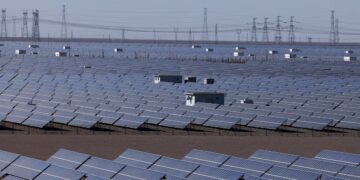
Fuel stations are uniquely positioned to serve as NEV charging hubs. Situated near major transit arteries and already equipped with multi-revenue infrastructure such as convenience stores and food courts, they provide a natural foundation for expansion. Additionally, the physical design of many forecourts—featuring large rooftops and open-air canopies—makes them ideal for solar photovoltaic (PV) integration. These installations not only reduce reliance on the national grid but also provide an opportunity for long-term cost savings and sustainability.

The integration of renewable energy at fuel stations is more than a sustainability measure; it is a business imperative. Income generated from EV charging and ancillary services will gradually supplant revenue from petrol and diesel sales. Historically, fuel sales accounted for around 90% of a station’s income. However, this figure is projected to fall to approximately 20% as consumer behaviour shifts and recharging duration increases dwell times. To monetise this additional time, fuel retailers are expected to diversify their service offerings further—introducing amenities such as pharmacies, gyms, laundry services, and co-working facilities.

A recent report by Cushman & Wakefield | Broll forecasts the evolution of South African fuel stations into comprehensive ‘mobility hubs’ within the next 5 to 15 years. These hubs will accommodate multiple energy forms, including electricity, natural gas, biofuels, green hydrogen, and traditional liquid fuels. This paradigm shift aligns with international trends and mirrors developments seen in more mature NEV markets.

Furthermore, successful operators will likely not limit themselves to single-site models. Owning and managing five to ten sites will become the norm, ushering in new operational complexities. This necessitates the adoption of advanced, integrated technologies to streamline processes, minimise fraud, and optimise efficiency across multiple locations.

Smart technologies, including AI-powered analytics, remote monitoring, and blockchain-backed transaction systems, are expected to play a crucial role in ensuring profitability amid rising overheads and growing customer expectations. These systems can help mitigate human error, enhance service reliability, and support data-driven decision-making across increasingly diversified portfolios.

In conclusion, the future of fuel retail in South Africa is being redefined not by the disappearance of liquid fuels, but by the strategic expansion into cleaner energy, digital innovation, and customer-centric infrastructure. While NEV penetration remains modest today, the structural foundations being laid across regulation, technology, and private investment suggest a fundamental transformation is not only possible—but inevitable. For fuel retailers, the transition beyond the pump offers a compelling opportunity to future-proof their operations and participate in the reshaping of Southern Africa’s mobility landscape.

Tags: automotive marketEV chargingfuel retailfuel stationsInfrastructure Developmentmobility transitionnew energy vehiclesrenewable energySolar EnergySouth Africa
Previous Post

Sherman Baloyi Showcases Zimbabwean Talent at Decorex Africa

Next Post

Zimbabwe Issues Stern Warning to Chinese Investors Over Legal and Ethical Compliance

Times Reporter

Related Posts

Republic of Congo Advances Oil and LNG Expansion as Energy Investment Accelerates
Energy

Republic of Congo Advances Oil and LNG Expansion as Energy Investment Accelerates

by Times Reporter
June 25, 2026
Eskom Launches Renewable Energy Unit to Drive Clean Power Expansion
Energy

Eskom Launches Renewable Energy Unit to Drive Clean Power Expansion

by SAT Reporter
June 10, 2026
Zimbabwe and Invictus Energy sign gas production agreement
Energy

Zimbabwe and Invictus Energy sign gas production agreement

by SAT Reporter
May 28, 2026
China Solar Exports Surge to Africa on Strong Demand
Energy

China Solar Exports Surge to Africa on Strong Demand

by SAT Reporter
May 21, 2026
Comoros Suspends Fuel Price Hike After Deadly Protests
Energy

Comoros Suspends Fuel Price Hike After Deadly Protests

by SAT Reporter
May 17, 2026
Next Post
Zimbabwe Issues Stern Warning to Chinese Investors Over Legal and Ethical Compliance

Zimbabwe Issues Stern Warning to Chinese Investors Over Legal and Ethical Compliance

Browse by Category

  • Africa AI
  • African Continental Free Trade Area
  • African Debt
  • African Start ups
  • Agriculture
  • AI Africa
  • Algeria
  • All News
  • Analysis
  • Angola
  • Arts / Culture
  • Asia
  • Botswana
  • BOTSWANA
  • BREAKING NEWS
  • BRICS
  • Burkina Faso
  • Burundi
  • Business
  • Business
  • Business Wire
  • Cameroon
  • Central Africa
  • Chad
  • China
  • Climate Change
  • Climate Changev
  • Community
  • Congo Republic
  • Conservation
  • Côte d’Ivoire
  • COVID 19
  • CRYPTOCURRENCY
  • Culture
  • Democratic Republic of Congo
  • Diplomacy
  • Eastern Africa
  • Economic Development
  • Economy
  • Education
  • Egypt
  • Elections 2024
  • Energy
  • Entertainment
  • Environment
  • Eritrea
  • Ethiopia
  • Europe
  • Fashion
  • Feature
  • Finance
  • Financial Inclusion
  • Food
  • Food and Drink
  • Foods
  • GABON
  • Ghana
  • Global
  • Global Africa
  • Guinea
  • Health
  • Humanitarian Aid
  • Immigration
  • in Southern Africa
  • International news
  • International Relations
  • Investment
  • Ivory Coast
  • Just In
  • Kenya
  • Lesotho
  • Libya
  • Life Style
  • Lifestyle
  • Literature
  • Malawi
  • Malawi
  • Mali
  • Markets
  • Mauritius
  • Middle East
  • Mining in Africa
  • Morocco
  • Mozambique
  • Namibia
  • Niger
  • niger
  • Nigeria
  • North Africa
  • North-Eastern Africa
  • Obituaries
  • Obituary
  • Opinion
  • PARTNER CONTENT
  • Politics
  • Property
  • Racism
  • Rwanda
  • Rwanda
  • SADC
  • SAT Interviews
  • SAT Investigation
  • SAT Jobs
  • Saudi Arabia
  • Senegal
  • Seychelles
  • Somaliland
  • South Africa
  • South Sudan
  • Sports
  • Startup Africa
  • STOCK EXCHANGE
  • Sudan
  • Sustainability
  • Sustainablity
  • Tanzania
  • Technology
  • Telecommunications
  • The Editorial Board
  • The Power Of She
  • Togo
  • Trade
  • Travel
  • Travel
  • Tunisia
  • Uganda
  • Uncategorized
  • Wealth
  • West Africa
  • World
  • World
  • Zambia
  • ZAMBIA
  • ZIMBABWE
  • Zimbabwe

Browse by Tags

#NewsUpdate #SouthAfrica #SouthernAfricanTimes #TheSouthernAfricanTimes AfCFTA africa African Continental Free Trade Area African development African Development Bank African economies African economy African Union Agriculture Angola Botswana China Climate change Cyril Ramaphosa Economic Development economic growth energy transition fiscal policy governance industrialisation Inflation Infrastructure Infrastructure Development International relations Investment Kenya Mozambique Namibia news Nigeria Regional Integration renewable energy Rwanda SADC South Africa Southern Africa sustainable development Tanzania United States Zambia Zimbabwe
ADVERTISEMENT

WHO WE ARE

The Southern African Times is a regional bloc digital newspaper that covers Southern African and world news. The paper also gives a nuanced analysis on news and covers a wide range of reporting which include sports, entertainment, foreign affairs, arts and culture.

Welcome Back!

Login to your account below

Forgotten Password?

Retrieve your password

Please enter your username or email address to reset your password.

Log In
  • Home
  • Southern Africa
  • Business
    • African Start ups
    • African Continental Free Trade Area
  • Technology
    • Lifestyle
      • Health
      • Culture
      • Food and Drink
      • Entertainment
  • Opinion
  • Sports
  • SAT Jobs
    • Events
  • About Us
    • Advertise with Us
    • Contact Us
Not enough quota to unlock this post
Unlock left : 0
Are you sure want to cancel subscription?