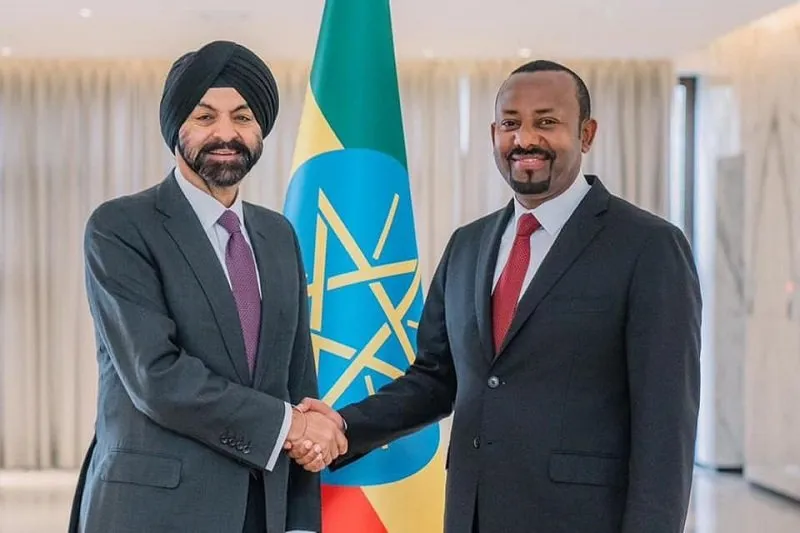
The Government of Ethiopia has entered into a landmark agreement with the World Bank amounting to USD 1 billion in development financing, aimed at supporting the country’s ongoing economic reform efforts and strengthening inclusive growth mechanisms. The deal, signed on 4 July 2025 in Addis Ababa, comprises both a grant and a concessional loan, according to an official statement released by Ethiopia’s Ministry of Finance.
The agreement was formalised by the Ethiopian Minister of Finance, Ahmed Shide, and the World Bank’s Country Director for Ethiopia, Maryam Salim. It is implemented under the framework of the Second Sustainable and Inclusive Growth Development Policy Operation (DPO), a programme designed to back Ethiopia’s Homegrown Economic Reform Agenda. The Homegrown Economic Reform Programme is a nationally driven initiative launched in 2019 that aims to improve macroeconomic stability, stimulate private sector participation, and ensure sustainable public service delivery.
The Ministry of Finance noted that the latest support from the World Bank underscores the institution’s “continued commitment to supporting Ethiopia’s bold and far-reaching reform agenda.” This collaboration builds on a longstanding development partnership between Ethiopia and the World Bank Group, which has previously extended multi-billion-dollar aid and policy-based support to the country.



According to the Ministry’s communique, the funding will prioritise five key areas: maintaining financial sector stability, enhancing trade competitiveness, boosting domestic resource mobilisation, promoting transparent and efficient public sector governance, and ensuring the continuity and sustainability of critical social services. These priorities align with international recommendations on post-conflict recovery and sustainable development, especially pertinent in the context of Ethiopia’s recent macroeconomic challenges and regional instability.
The concessional component of the agreement, as reported, reflects the World Bank’s approach to easing the financial burden on low-income countries while ensuring accountability and outcomes. The World Bank’s concessional financing instruments are typically structured to offer lower interest rates and extended repayment terms, making them suitable for nations with pressing developmental needs.

The Ethiopian Ministry of Finance praised the World Bank’s “steadfast and constructive partnership” in supporting the country’s reform milestones. It emphasised that the new financing will reinforce Ethiopia’s strategic ambitions of achieving long-term economic resilience and inclusive growth, particularly as it navigates fiscal constraints and social development imperatives.
The World Bank, for its part, has reiterated its commitment to supporting countries undergoing complex transitions. Ethiopia remains one of the largest beneficiaries of World Bank assistance in Sub-Saharan Africa, with active programmes spanning infrastructure, energy, health, education, and governance.
The signed agreement is anticipated to contribute significantly to Ethiopia’s economic recovery and reform implementation capacity. As the country seeks to regain investor confidence and stabilise its financial architecture, multilateral support such as this remains critical to its developmental trajectory.