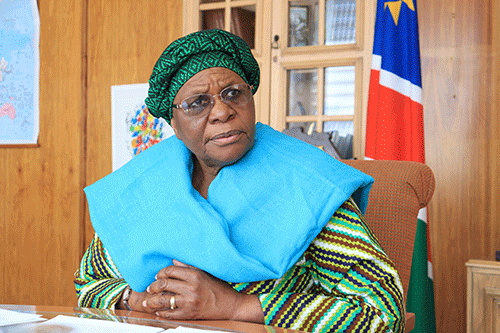
Namibia’s President, Netumbo Nandi-Ndaitwah, has issued a compelling call for immediate legislative reforms aimed at dismantling bureaucratic inefficiencies that continue to impede effective governance and socio-economic progress. Speaking through Prime Minister Elijah Ngurare on Thursday, the President communicated her administration’s commitment to ensuring that Namibia’s laws facilitate, rather than hinder, national development.
This call for reform coincides with the implementation phase of the SWAPO Party’s Manifesto Implementation Plan (2025–2030), a strategic blueprint designed to promote inclusive economic growth, bolster food security, and generate employment across all 14 administrative regions. The ruling SWAPO Party has prioritised streamlined governance and legislative clarity as critical enablers for achieving these developmental objectives.
“As national leaders, we are tasked by the Namibian people to make laws that serve the interests of our people and country,” stated President Nandi-Ndaitwah. “We must move fast and amend laws that hinder progress and the implementation of identified projects.” Her remarks underscore a recognition that legacy legal frameworks and overly complex administrative systems no longer align with the fast-paced demands of modern statecraft and public service delivery.



The President’s concerns reflect ongoing debates within Namibia regarding the need for public sector reform, a topic that has been actively discussed by civil society and academic analysts alike. Research from the Institute for Public Policy Research (IPPR) and the Namibian Economic Association has long highlighted inefficiencies in state procurement processes, delayed project roll-outs, and poor inter-ministerial coordination as key impediments to effective governance.
As part of the reform agenda, all government ministries have been directed to submit quarterly progress reports, a move intended to enhance accountability and ensure optimal utilisation of public funds. This directive comes in response to recurring reports of unspent budget allocations—resources that are returned to the Treasury despite ongoing developmental needs and incomplete infrastructure projects.

In a parallel effort to bolster governance, President Nandi-Ndaitwah has called on the Anti-Corruption Commission (ACC) and prosecutorial bodies to intensify anti-corruption efforts. She noted that a decisive stance on integrity and law enforcement will be pivotal in reinforcing public trust and promoting an ethical public service culture.
The President’s statement represents a clear pivot towards governance modernisation as a foundation for Namibia’s Vision 2030 and aligns with broader Southern African Development Community (SADC) goals on democratic governance, rule of law, and sustainable development. Legislative reform, if implemented rigorously, could reduce regulatory uncertainty, attract private investment, and accelerate the roll-out of infrastructure and services.
This reformist rhetoric marks one of President Nandi-Ndaitwah’s most assertive policy positions since assuming office and positions her administration as one willing to confront systemic inefficiencies head-on. Her message resonates not only with policymakers but also with citizens eager for tangible improvements in livelihoods, access to services, and economic opportunities.
The international development community and domestic stakeholders alike will be closely monitoring the pace and substance of these proposed reforms, particularly in light of Namibia’s ambitions to become a regional logistics and energy hub. Legal modernisation, if pursued with rigour and transparency, could transform not only the legislative landscape but also the socio-economic trajectory of the country.