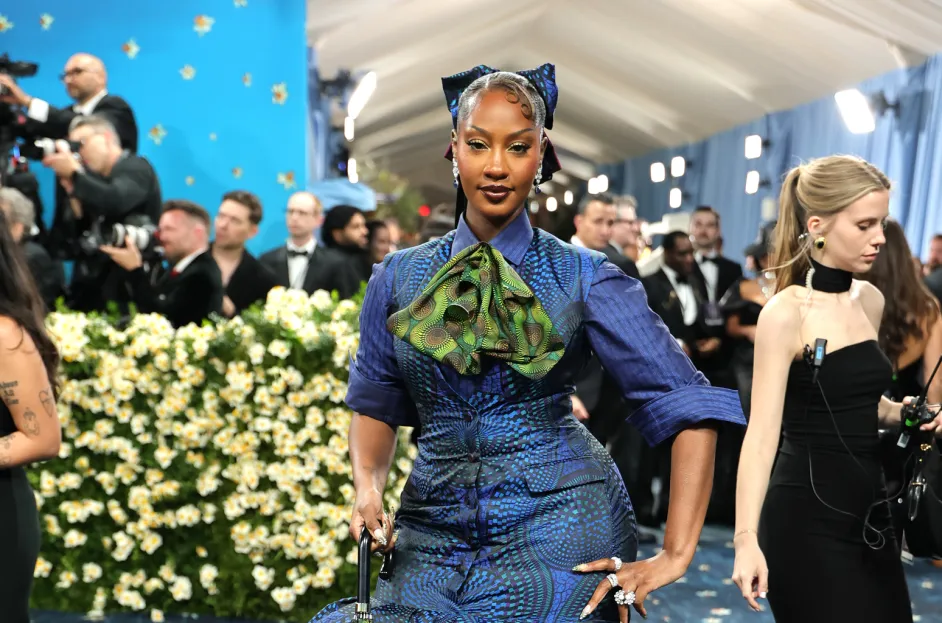
The 2025 Met Gala was an amazing tribute to the art of dressing, elevating the concept of Black dandyism into a high fashion event. The theme, “Superfine Tailoring Black Style,” celebrated the legacy of Black men and women who have historically used tailored fashion to express identity, power, and defiance against societal limitations. This year’s event was more than just a display of opulence—it was an assertion of cultural pride, a reclamation of style, and a love letter to Black excellence in fashion.
While Black dandyism is often linked to European traditions, its true origins can be traced back to Congo’s Sapology movement. Known as La Sape (Société des Ambianceurs et des Personnes Élégantes), Sapology represents a lifestyle where individuals dress in immaculate, high-fashion suits, despite economic hardships. The movement began gaining attention in the 1920s, when André Matsoua returned to the Congo from Paris, dressed in sophisticated European styles. He sparked a cultural shift, inspiring generations to use fashion as a statement of elegance and dignity. Later, the legendary musician Papa Wemba solidified Sapology’s moral code, emphasising that dressing well is not just about aesthetics—it’s about self-respect, discipline, and cultural identity. At its core, Congolese dandyism and the Black dandy movement share the same philosophy: fashion is a form of resistance, self-expression, and empowerment.
African designers stole the show on the Met Gala carpet. Ozwald Boateng, the British-Ghanaian tailoring legend, made statement looks that effortlessly blended old-school refinement with modern innovation. His designs were worn by stars such as Tems, Burna Boy, Issa Rae, and Ncuti Gatwa, each look speaking to the night’s theme of luxurious individualism. Other African designers, including Hanifa, Eleven Sixteen, Deji and Kola, and Thebe Magugu, made an impression with their fresh interpretations of classic tailoring, proving that African design is not just thriving—it’s redefining global style standards. Vibrant patterns, intricate embroidery, and fluid silhouettes converged with structured suits and polished details, creating a dazzling tapestry of Black elegance.



This year’s Met Gala was more than an exhibition—it was a movement. Black dandyism challenges preconceived notions of masculinity and identity, proving that refined dressing can be a tool for self-empowerment. The looks on display did not simply adhere to tradition; they reinvented it, making space for avant-garde interpretations while staying rooted in heritage. However, an important question arises: what happens to these garments after the Met Gala? With sustainability taking centre stage in the fashion industry, a thoughtful plan for repurposing, recycling, or archiving these designs could make a lasting impact.
Sustainability ideas for post-Met Gala fashion include archiving and exhibitions, where designers collaborate with museums to preserve iconic garments for future generations to appreciate their artistry and cultural significance. Fabrics from elaborate gowns and suits could be repurposed into new collections, reducing textile waste and breathing new life into designs. Celebrities and designers might auction off their garments for social causes, supporting education, sustainability initiatives, or underprivileged communities. High-fashion garments could be rented out for special events, giving emerging artists, stylists, and fashion students access to industry-defining designs. Future Met Gala themes could encourage designers to incorporate biodegradable fabrics, ethical sourcing, and zero-waste techniques when creating their pieces. While the craftsmanship was impeccable, an opportunity exists to fully integrate sustainability into the Met Gala’s fashion narrative. What if every fabric used in these bespoke designs—silks, cottons, wools, and woven textiles—was sourced and produced entirely on the African continent?

Africa has a rich textile heritage, from handwoven Kente in Ghana to fine Egyptian cotton. By prioritising local sourcing and production, designers could create economic opportunities for African artisans, reduce the environmental impact of global supply chains, and celebrate the continent’s influence in shaping global fashion. A future Met Gala could go beyond showcasing Black craftsmanship—it could highlight the entire ecosystem of African fashion, ensuring that every stage of production remains true to the cultural roots of Black dandyism.
Black fashion is not an accessory to the industry—it is the industry. Incorporating sustainability and ethical fabric sourcing into high fashion ensures that these breathtaking works of art have a lasting impact beyond just one night.