Botswana stands as a paragon of African wilderness, offering families an unparalleled opportunity to immerse themselves in pristine ecosystems while fostering a deep appreciation for conservation. Planning a safari here requires meticulous consideration of seasonal patterns, logistical arrangements, and ethical commitments, all of which converge to create an experience that is as educational as it is exhilarating.
The optimal period for a Botswana safari aligns with the dry season, spanning May to October. During these months, diminished rainfall concentrates wildlife around permanent water sources, enhancing game-viewing opportunities. Temperatures remain moderate, with daytime averages of 25°C, though nights can dip to 10°C, necessitating layered clothing. Conversely, the wet season (November to April) transforms the landscape into a lush, migratory bird haven, albeit with challenging terrain for vehicle navigation.
Geographical diversity defines Botswana’s safari offerings. The Okavango Delta, a UNESCO World Heritage Site since 2014, epitomises ecological grandeur. This 15,000 km² inland delta, formed by the Okavango River’s annual flooding, sustains a mosaic of habitats supporting elephants, lions, and rare species such as the African wild dog. Families can traverse its waterways via mokoro (traditional dugout canoe), guided by local polers whose expertise illuminates the delta’s intricate ecosystems.



Chobe National Park, spanning 11,700 km², boasts the continent’s highest elephant density, with estimates exceeding 120,000. Riverfront game drives and boat cruises along the Chobe River provide vantage points for observing hippos, crocodiles, and buffalo herds. The park’s Savuti region, renowned for predator-prey dynamics, offers a stark contrast with its arid plains and rocky outcrops.
For families seeking solitude, the Central Kalahari Game Reserve—the second-largest protected area globally—unfolds across 52,800 km² of semi-desert. Though wildlife is less concentrated, the reserve’s stark beauty and seasonal zebra migrations in February and March present a unique narrative of adaptation.
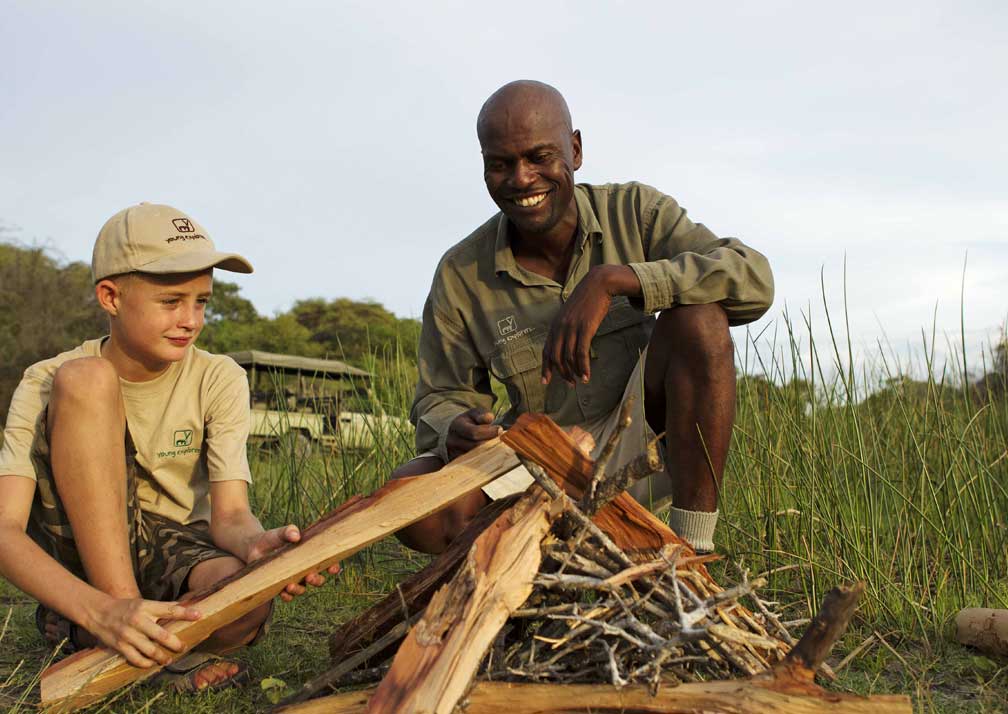
Accommodation selection is critical to balancing comfort and authenticity. Operators such as &Beyond and Wilderness Safaris curate family-friendly lodges, including &Beyond Nxabega Okavango Tented Camp, which combines luxury with child-focused activities like bushcraft workshops. These establishments often employ stringent eco-practices, from solar energy to water recycling, aligning with Botswana’s conservation ethos.
Cultural engagement forms a cornerstone of responsible tourism. Interactions with the San communities, indigenous inhabitants of the Kalahari, offer insights into ancient survival techniques and ethnobotanical knowledge. Programmes facilitated by the Kalahari Peoples Fund ensure exchanges are respectful and mutually beneficial, avoiding exploitative “performative” encounters.
Logistical planning demands attention to regional connectivity. Most international flights arrive via Sir Seretse Khama International Airport in Gaborone, with charters to Maun or Kasane for safari access. While self-drive expeditions appeal to adventurous families, guided tours mitigate risks associated with remote terrain and wildlife proximity. Health precautions, including malaria prophylaxis and vaccination against yellow fever, are non-negotiable, as are comprehensive travel insurance policies covering medical evacuation.

Ethical considerations underpin every aspect of a Botswana safari. The government’s high-value, low-impact tourism model limits visitor numbers, preserving ecological integrity. Families are encouraged to support community initiatives, such as the Okavango Community Trust, which channels tourism revenue into local development.
In conclusion, a family safari in Botswana transcends conventional wildlife encounters, weaving together ecological wonder, cultural depth, and sustainability. By prioritising informed planning and ethical engagement, families contribute to a legacy of conservation while forging indelible memories beneath Africa’s vast skies.