

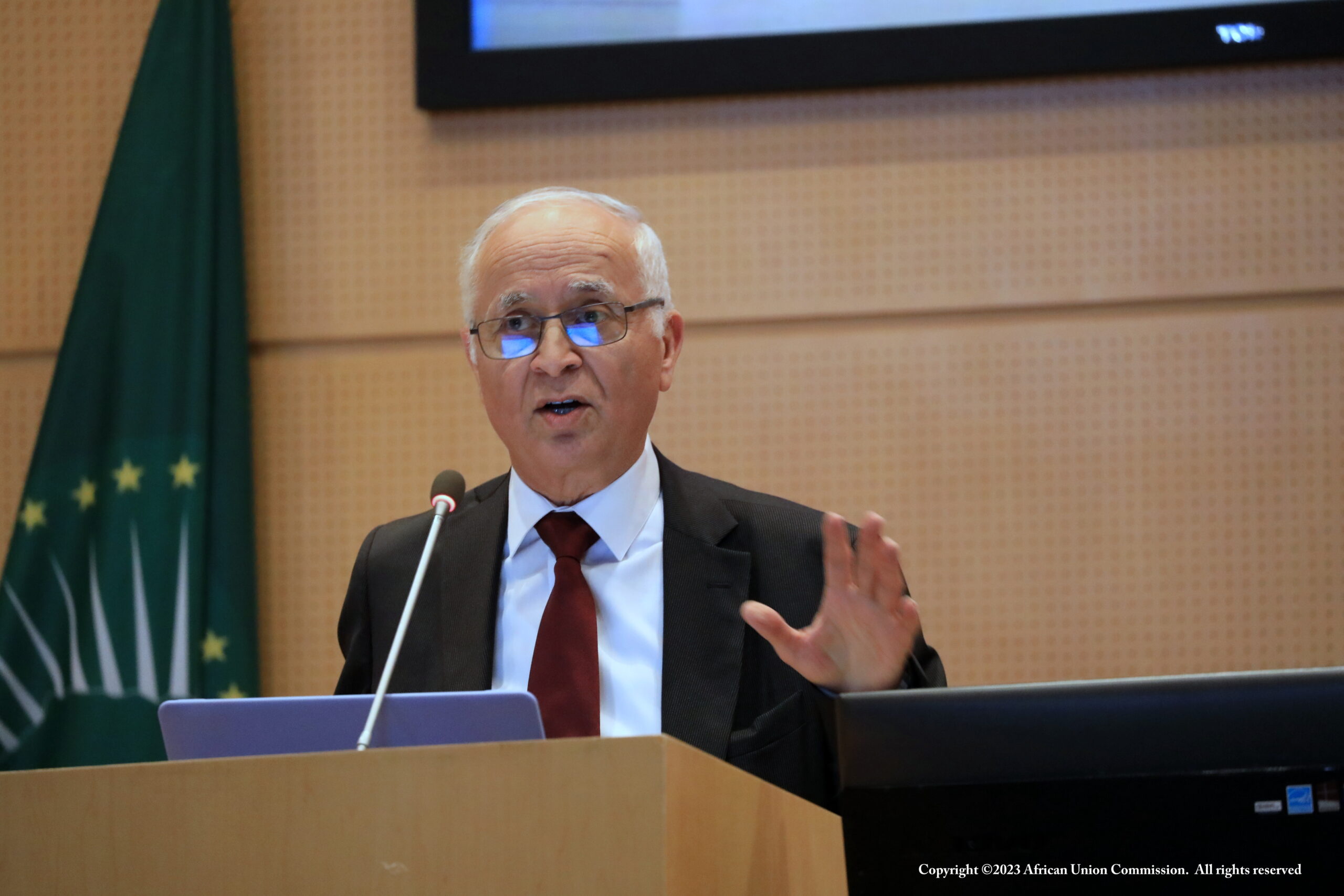
On Tuesday, 11th February, policymakers and experts convened at the African Union (AU) headquarters in Addis Ababa, Ethiopia, to deliberate on strategies to strengthen investment in girls’ education across the continent. The high-level dialogue, themed “Investing in Girls’ Education Systems as a Form of Reparation, Justice, and Sustainable Development for African Communities,” underscored the vital role of education in achieving gender equality and fostering long-term socio-economic development.
Mohamed Belhocine, the AU Commissioner for Education, Science, Technology, and Innovation, emphasised the urgency of policy reforms to advance girls’ education in Africa. He advocated for increased financial investment in educational systems, the development of safe school environments and infrastructure, and the provision of gender-responsive data to improve access to quality education.
“This year, in line with the AU theme of the year, greater emphasis is placed on education as the cornerstone of an equitable healing and repairing process for long-standing inequalities. It requires us to better understand our past and future socio-cultural and economic environment,” stated Belhocine.




The dialogue coincided with the launch of a joint report by the AU and UNESCO on the status of girls’ and women’s education in Africa. The report provides a comprehensive analysis of progress towards achieving inclusive and equitable quality education while promoting lifelong learning opportunities. It serves as a platform for policymakers, experts, and activists to exchange ideas, share successful practices, and develop actionable strategies to address the challenges facing girls’ education across the continent.
The timing of this discussion is significant, as it precedes the 38th AU Summit, set to take place from 12th to 16th February at the AU headquarters. The summit will feature meetings of the AU Executive Council, comprising foreign ministers from AU member states, followed by the assembly of African heads of state and government. The focus on girls’ education aligns with the AU’s 2025 theme: “Justice for Africans and People of African Descent Through Reparations,” reinforcing the role of education as a fundamental component of justice and reparation efforts.
Investment in girls’ education has far-reaching implications for African societies. Research indicates that educating girls yields numerous socio-economic benefits, including improved health outcomes, increased economic productivity, and enhanced civic participation. According to the World Bank, each additional year of schooling for girls can increase their future earnings by up to 20%. Moreover, educated women are more likely to invest in their children’s education, fostering a positive intergenerational cycle of learning and empowerment.
Despite these benefits, significant barriers persist. Many African girls face challenges such as early marriage, cultural norms that devalue female education, inadequate sanitation facilities in schools, and economic constraints that prioritise boys’ education. Addressing these issues requires comprehensive strategies that engage communities, governments, and international partners.
The AU’s commitment to enhancing girls’ education is evident in its Continental Education Strategy for Africa 2016-2025 (CESA 16-25), which seeks to “reorient Africa’s education and training systems to meet the knowledge, competencies, skills, innovation, and creativity required to nurture African core values and promote sustainable development.” Gender equality and equity remain central pillars of this framework, with a strong push to eliminate disparities at all levels of education.
Furthermore, international frameworks such as the United Nations’ Sustainable Development Goals (SDGs) reinforce the significance of girls’ education. SDG 4 aims to “ensure inclusive and equitable quality education and promote lifelong learning opportunities for all,” while SDG 5 focuses on achieving gender equality and empowering all women and girls. These global commitments provide a crucial framework for African nations to prioritise education as a tool for social transformation.
The AU dialogue serves as a critical reminder of the urgent need for sustained investment in girls’ education to address historical injustices and drive sustainable development. By implementing targeted policy reforms, increasing financial investments, and fostering safe and inclusive learning environments, African nations can unlock the potential of millions of girls, shaping a more equitable and prosperous future for the continent.


