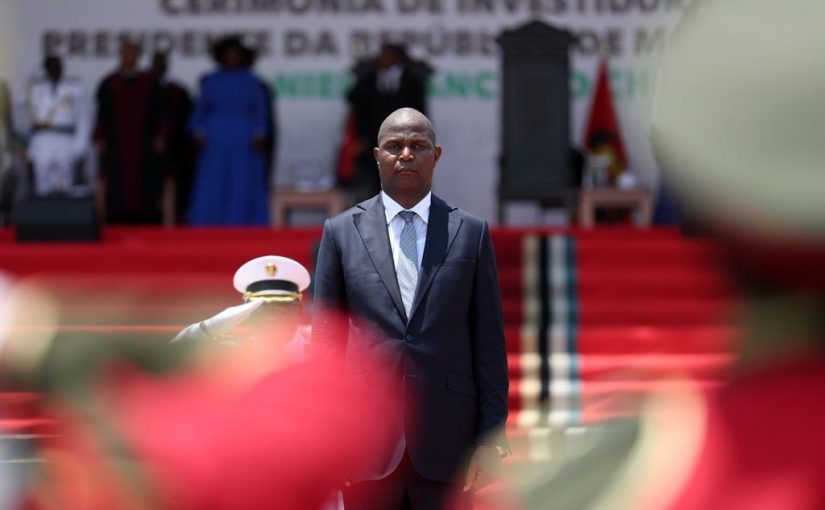
Mozambique’s new president, Daniel Chapo, announced on Friday that his government is not interested in revisiting contract terms with major energy companies such as TotalEnergies or ExxonMobil. These firms are spearheading multi-billion dollar liquefied natural gas (LNG) projects essential to the country’s economic transformation.
Chapo, leader of the long-dominant Frelimo Party, assumed office on Tuesday amid ongoing opposition protests challenging his disputed election victory. Civil society groups report over 300 casualties linked to post-election unrest.
The Mozambican government views the LNG projects by TotalEnergies and ExxonMobil as critical to revitalising the nation’s economy and stabilising public finances. The TotalEnergies $20 billion project, paused in 2021 due to an Islamist insurgency, remains a focal point for recovery efforts. “The contracts are new, and operations haven’t yet started, so there’s no basis for contract reviews,” stated Chapo during an interview.



Chapo, who formerly governed the gas-rich province of Inhambane, faces challenges in asserting authority amidst opposition demonstrations. These protests have disrupted the operations of foreign firms, including Syrah Resources and Gemfields Group.

Nevertheless, the president remains optimistic about the resumption of LNG construction, citing improvements in security conditions in Cabo Delgado despite sporadic insurgent attacks. With support from the Rwandan army and other allies, Mozambique continues its fight against extremist groups.
On political tensions, Chapo emphasised dialogue as the pathway to resolving opposition protests. He also expressed regret over the humanitarian fallout from South African police operations at the Stilfontein mine, where over 1,000 Mozambican nationals were rescued after being cut off from water and food supplies.
As Mozambique takes cautious steps towards stability, the government remains committed to fostering an investment-friendly environment for its burgeoning energy sector. For further updates, visit The Southern African Times at www.southernafricantimes.com.