

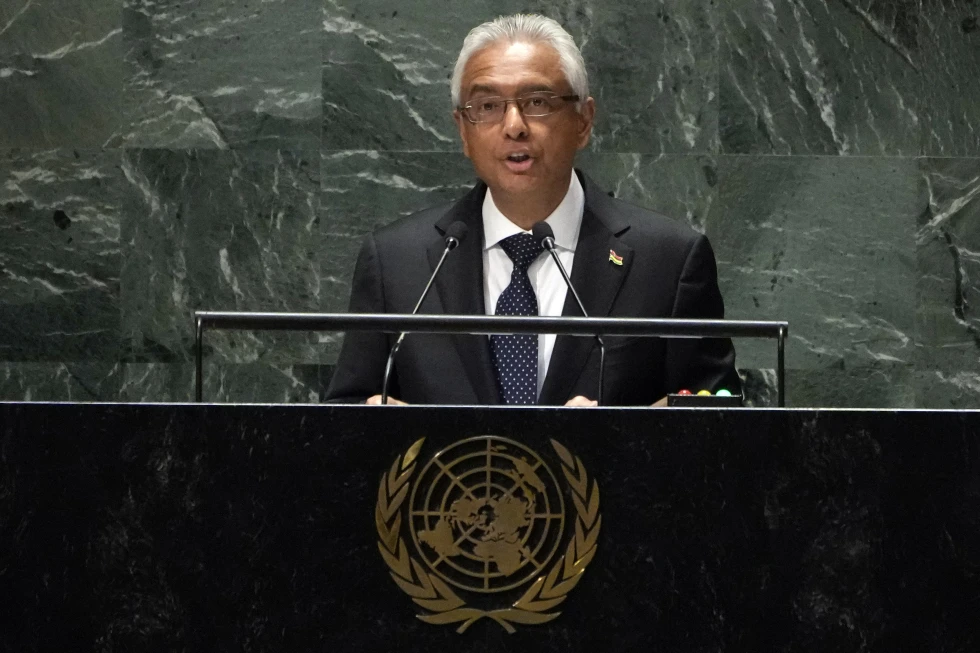
In a crucial electoral moment for Mauritius, the Indian Ocean island nation often celebrated as a model of stability and economic success within Africa, prepares for a national election set for Sunday. Prime Minister Pravind Kumar Jugnauth, who has held the premiership since 2017, will campaign for a second term at the helm of a government that has overseen steady growth and maintained the country’s reputation as one of the continent’s most enduring democracies.
Mauritius, situated some 2,000 kilometres off the eastern coast of Africa, has become known for its strategic approach to economic diversification, with thriving sectors in finance, tourism, and agriculture contributing to sustained national prosperity. Independence from Britain in 1968 laid the groundwork for a political landscape marked by coalition-building and electoral alliances, a tradition that persists as Jugnauth’s centre-left Militant Socialist Movement (MSM) leads a five-party coalition—the People’s Alliance—into the upcoming election.
Jugnauth, 62, succeeded his father, Sir Anerood Jugnauth, as prime minister and has remained a key figure in Mauritian politics through coalition-led governance. His administration is being challenged by the Alliance for Change, headed by opposition leader Navin Ramgoolam, a former prime minister with considerable political stature in Mauritius. Ramgoolam’s coalition seeks to unseat the MSM-led government by presenting itself as a dynamic alternative to what it describes as a prolonged period of single-party dominance.




The structure of the Mauritian Parliament comprises 62 directly elected seats, with the victorious party or alliance required to command a majority to form a government. An additional eight parliamentary seats are allocated by the Electoral Supervisory Council, a unique mechanism aimed at ensuring balanced representation across the country’s diverse demographic makeup.
Jugnauth’s government has navigated a challenging landscape over recent years, including managing the repercussions of the COVID-19 pandemic, maintaining economic stability, and addressing rising concerns over corruption. Mauritius, while enjoying a reputation for economic resilience and political continuity, has faced scrutiny in recent years over governance issues and public sector transparency. Critics argue that Jugnauth’s government has failed to adequately address these challenges, with opposition voices pointing to instances of alleged financial misconduct and pressing for reform.
Despite these criticisms, Mauritius remains among the highest-ranking African nations on indices of political stability, economic competitiveness, and governance. Observers attribute this success to the country’s commitment to constitutional democracy and its pragmatic approach to economic management. With a GDP per capita far exceeding the African average and a diversified economy bolstered by a robust financial services sector, Mauritius has carved a distinctive niche in Africa.
This election underscores the importance of coalition politics in Mauritius. Since the MSM first ascended to power in 2009, it has capitalised on alliances to consolidate its position. Jugnauth’s People’s Alliance has brought together an amalgamation of parties to appeal across the island’s multicultural electorate. The opposition’s Alliance for Change similarly embodies the coalition approach, combining multiple party perspectives to create a unified electoral platform aimed at challenging the MSM’s political hegemony.
While economic stability remains a cornerstone of the Jugnauth administration’s policy appeal, the upcoming election will also serve as a referendum on leadership style, governance integrity, and policy efficacy in addressing both national and global challenges. Mauritius, with a tradition of peaceful and transparent elections, is expected to showcase once again its role as a regional exemplar of democratic governance.
The results of this election will shape the future trajectory of Mauritius, potentially consolidating the MSM’s influence or ushering in a new era of political recalibration. For a country whose success is often lauded as an outlier on the African continent, the world will be watching closely as Mauritians head to the polls, weighing continuity against the prospect of change.
Meta Description:
Tags:


