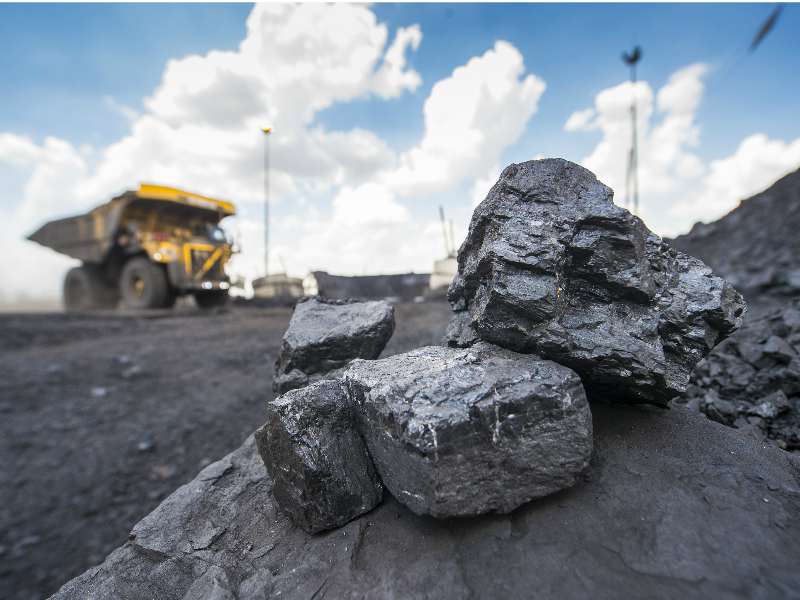
The coal mining industry in South Africa, long a stalwart of the national economy, now stands at the precipice of an uncertain future. Faced with a confluence of declining commodity prices, operational inefficiencies, and an inexorable global shift towards cleaner energy, the sector finds itself in a precarious position, with far-reaching implications for the country’s economic stability and the livelihoods of thousands.
At the heart of this crisis is a significant decline in the logistical performance of South Africa’s rail and port infrastructure, critical to the export of coal and other bulk commodities. Historically, the state-owned enterprise Transnet provided reliable and cost-effective transport services, underpinning the profitability of the mining sector. However, in recent years, Transnet’s operations have deteriorated markedly, leading to severe bottlenecks that have stymied the export potential of coal miners, particularly those reliant on the North Corridor rail line leading to the Richards Bay Coal Terminal.
The economic repercussions of these inefficiencies have been staggering. According to recent estimates from the GAIN Group, South Africa’s logistical underperformance has resulted in a loss of R353 billion in economic activity, a figure that underscores the scale of the crisis. The ramifications extend beyond coal; iron ore producers, dependent on the Ore Corridor from the Northern Cape to Saldanha Bay, have similarly struggled to get their products to market. Given the bulk nature of these commodities, road transport presents no viable alternative, exacerbating the industry’s woes.




The Bureau of Economic Research (BER) has highlighted the profound opportunity costs incurred by these logistical failures. During the commodity boom of 2020 and 2021, when coal and iron ore prices soared to historic highs, South African miners were hamstrung by infrastructure bottlenecks, unable to fully capitalise on the surge in global demand. The resultant loss of revenue not only stunted the sector’s earnings but also deprived the country of critical foreign exchange inflows, further straining an economy already under duress.
The coal mining sector’s significance to South Africa extends beyond its contribution to GDP; it is a vital source of employment, directly sustaining tens of thousands of jobs and indirectly supporting many more through ancillary industries. However, the spectre of job losses looms large. The South African Reserve Bank (SARB) has warned of catastrophic consequences should the coal industry collapse, projecting the loss of up to 92,000 direct jobs. The multiplier effect could see total job losses approaching a quarter of a million, as each lost coal job triggers additional layoffs across the broader economy. The social ramifications of such a collapse would be dire, with increased poverty, social instability, and heightened pressure on government resources to support affected communities.
Compounding these economic and logistical challenges is South Africa’s commitment to transitioning towards a low-carbon economy, a goal that, while environmentally imperative, presents significant risks. With coal accounting for 83% of the country’s electricity generation, the sector is deeply entrenched in the nation’s energy matrix. However, as part of global efforts to mitigate climate change, South Africa has pledged to reduce its greenhouse gas emissions and is on track to meet its commitment to limit global warming to below 2°C.
The financial risks associated with this transition are considerable. A study by SARB estimates that South Africa faces a transition risk of over $120 billion (R2.2 trillion) between 2013 and 2035, driven largely by its coal dependency. Of particular concern is the projected loss of $83.7 billion (R1.5 trillion) in coal export revenues, a blow that could have devastating implications for the country’s balance of payments.
As the world marches inexorably towards a cleaner energy future, the question is not whether South Africa will transition away from coal, but how it will manage this transition. The stakes are high, and experts agree that the process must be carefully controlled to minimise economic disruption and job losses. Reskilling workers for employment in the burgeoning renewable energy sector will be crucial. Pierre Monnin, a researcher at the South African Reserve Bank, has emphasised the importance of proactive policies to support coal-dependent regions. “The decline of coal must be managed appropriately. Workers should not be left behind as the country shifts towards a low-carbon economy,” Monnin noted.
South Africa’s coal industry now finds itself at a crossroads. The confluence of declining commodity prices, logistical failures, and the global transition to cleaner energy sources is creating an uncertain future for the sector. The decisions made in the coming months and years will determine not only the fate of this vital industry but also the broader trajectory of South Africa’s economy.
In this pivotal moment, the country must navigate these challenges with strategic foresight, balancing the imperative of environmental sustainability with the need to protect jobs and livelihoods. The stakes could not be higher.