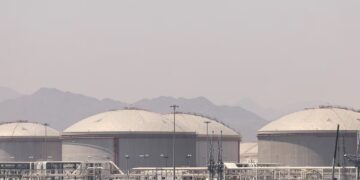
Angola’s new Cabinda crude oil refinery is on track to commence operations by the end of this year, with a planned ramp-up to full first-phase production of 30,000 barrels per day (bpd) by July 2025, according to the refinery’s Chief Executive Marcelo Hofke. The refinery, situated in Cabinda province, is currently two-thirds through its construction phase.
As Sub-Saharan Africa’s second-largest oil producer, Angola is relying on this new facility, among others, to reduce its dependency on imported refined products. The Cabinda refinery is set to play a pivotal role in this strategy.
“The idea is to start commissioning by the end of this year and achieve full production by the end of July next year,” Hofke told Reuters on Thursday.



The $473 million first phase of the modular refinery will focus on producing naphtha, jet fuel, diesel, and heavy fuel oil (HFO). While naphtha and HFO will be primarily exported, as Angola has limited domestic use for these products, the refinery’s output is expected to fulfil about 10% of the country’s domestic fuel market. This market share is projected to double with the completion of the second phase, which aims to increase production capacity to 60,000 bpd.

Engineering work for the second phase is slated to begin as soon as the initial commissioning starts by the end of this year, according to Felipe Berliner, Group Chief Investment Officer at Gemcorp Holdings. Gemcorp, which holds a 90% stake in the refinery, alongside state-owned Sonangol with the remaining 10%, has indicated that banks involved in the first phase are enthusiastic about funding the expansion.
The total investment for the second phase is anticipated to bring the project’s cost to approximately $1 billion. Among the initial financial supporters are Africa Finance Corporation and the African Export-Import Bank.
Berliner highlighted that the refinery has the potential to surpass the planned 60,000 bpd capacity, potentially reaching between 90,000 and 120,000 bpd at the same site.