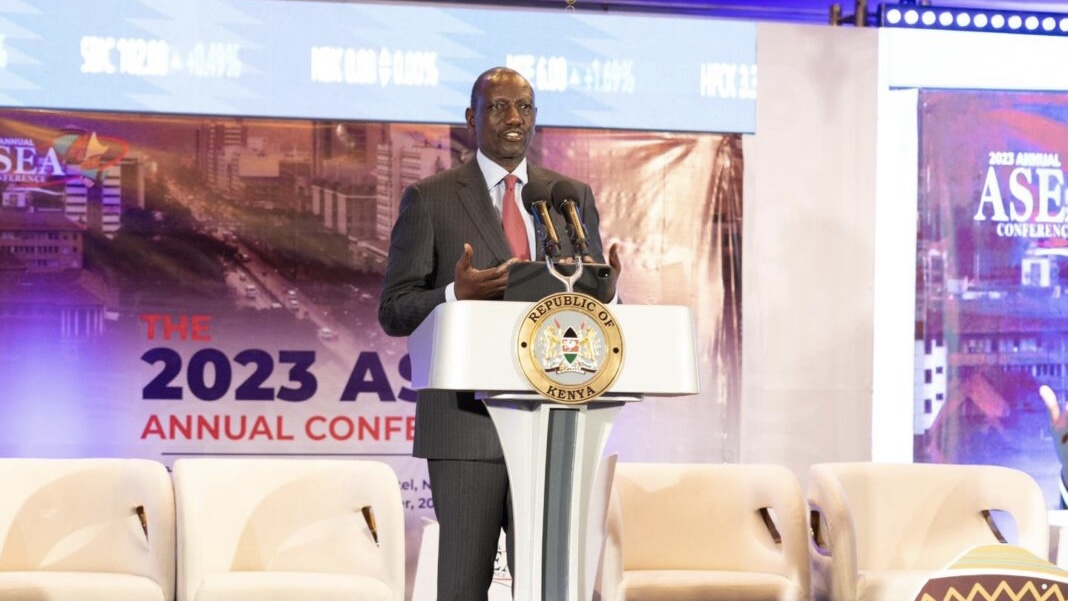
An initiative aimed at bolstering Africa’s financial landscape, representatives from 25 stock exchanges gathered in Nairobi for the 26th Annual African Securities Exchanges Association (ASEA) Conference. The focal point of this two-day meeting, which commenced on Thursday, was to promote cross-trading in listed securities and expedite the integration of capital markets across the continent.
Kenyan President William Ruto, delivering the conference’s opening remarks, underscored the potential transformative impact of trading listed securities among African countries. “Cross-trading in securities will create a larger pool of investors in the continent’s capital markets,” President Ruto affirmed. He emphasized that this collaborative approach would not only enhance liquidity but also foster the exchange of best practices among diverse African nations.
The heart of the matter lies in the acknowledgment that a united African capital market could significantly strengthen the region’s financial standing. Thapelo Tsheole, ASEA president and CEO of the Botswana Stock Exchange, revealed that seven securities exchanges across Africa have already established digital links for the electronic trading of listed equities. This technological integration represents a substantial leap forward in fostering liquidity, a key challenge faced by many of these exchanges.




The overarching goal, according to Tsheole, is to create a more inclusive and robust pan-African financial markets ecosystem. This aspiration aligns with the broader theme of the conference, where participants are actively engaged in formulating concrete solutions to sector challenges. The focus extends beyond mere cooperation; it aims to lay the groundwork for sustainable growth and development in Africa’s financial markets.
Oscar Onyema, CEO of the Nigerian Exchange Group, echoed these sentiments, emphasizing that seamless cross-trading of securities in Africa could pave the way for the continent to evolve into a single capital market. “Capital market integration will amplify the influx of foreign investors into the continent,” Onyema asserted. This statement sheds light on the broader economic implications of such integration, suggesting that a united front may attract more international investments.
However, amidst the optimism, it’s crucial to recognize the challenges inherent in this ambitious undertaking. The diversity of regulatory frameworks, economic conditions, and political landscapes across African nations presents a complex tapestry that requires careful consideration. The nuances of each market must be navigated, and harmonizing these disparate elements will undoubtedly be a formidable task.
Moreover, questions arise regarding the potential impact on smaller, less-developed exchanges. While the integration could bring about positive change for many, there’s a need to ensure that the benefits are distributed equitably across the continent. Striking a balance between promoting inclusivity and avoiding the concentration of power in larger markets will be a key aspect of the integration process.
The commitment to addressing these challenges head-on reflects a collective recognition of the potential benefits that a united African capital market can bring. As discussions unfold in Nairobi, stakeholders are mindful of the need for a nuanced approach that considers the unique dynamics of each participating nation.
The 26th ASEA Conference marks a pivotal moment in the journey toward a more integrated African capital market. The collaborative spirit exhibited by representatives from diverse stock exchanges underscores a shared vision for a financially resilient and globally competitive Africa. As the deliberations continue, the world watches with anticipation, recognizing the significance of this endeavor for the future of the continent’s economic landscape.