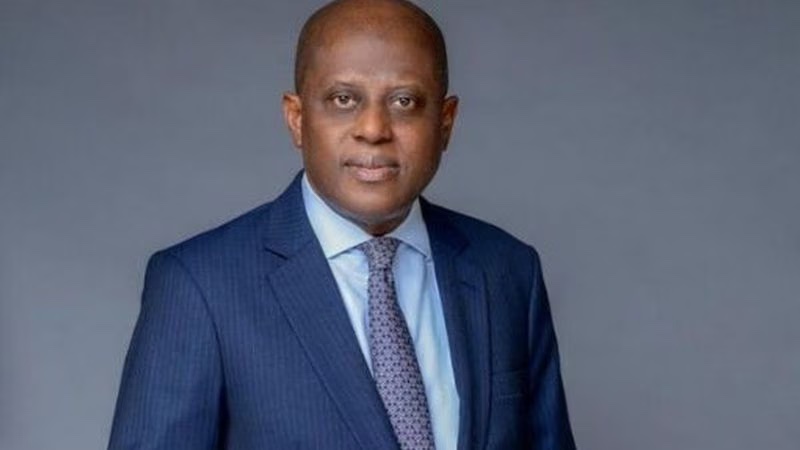
President Bola Tinubu of Nigeria has put forth the nomination of Olayemi Cardoso, the former head of Citibank in Nigeria, as the country’s prospective new central bank governor. This announcement comes just days before the Central Bank of Nigeria’s upcoming interest rate meeting. A spokesperson for the presidency confirmed this development on Friday.
Olayemi Cardoso’s potential appointment would mark a pivotal transition, potentially replacing Godwin Emefiele, who was suspended by President Tinubu back in June. Emefiele’s subsequent detainment by the country’s state security agency has left a cloud of uncertainty regarding his official status within the central bank. It remains unclear whether Emefiele has resigned or if this nomination is a formal replacement.
President Tinubu has sent Cardoso’s nomination to the Nigerian Senate for confirmation, alongside the submission of nominations for four new deputy governors, as indicated by presidential spokesperson Ajuri Ngelale.




In a statement, Ngelale expressed the President’s expectations for these nominees, emphasizing their role in implementing critical reforms within the Central Bank of Nigeria. These reforms are anticipated to boost the confidence of both Nigerian citizens and international partners.
The Central Bank of Nigeria had recently raised interest rates by a modest 25 basis points in July, contrary to the predictions of analysts. This move occurred under the leadership of acting Governor Folashondun Shonubi, one of Godwin Emefiele’s deputies. The central bank is scheduled to convene again to determine interest rates on September 26, with some analysts anticipating a more hawkish stance.
President Tinubu, during his inauguration in May, pledged a comprehensive review of monetary policy, expressing a desire for the central bank to work towards lower interest rates. This stance was articulated after his critique of Emefiele’s management of the currency.
Under Godwin Emefiele’s tenure, the Central Bank of Nigeria pursued unconventional policies, including the maintenance of an artificially strong currency. This policy received backing from former President Muhammadu Buhari and facilitated government borrowings on international markets.
The new Nigerian government is striving to encourage investments as an alternative to heavy reliance on borrowing to stimulate job creation. This shift in economic strategy is in response to the challenges of a struggling economy burdened by record debt, a weakened currency, double-digit inflation, and fragile power supplies.
Notably, Olayemi Cardoso played a pivotal role in developing an economic blueprint for the new government. He previously served as the commissioner for economic planning and budget in Lagos state during President Tinubu’s gubernatorial tenure between 1999 and 2007.